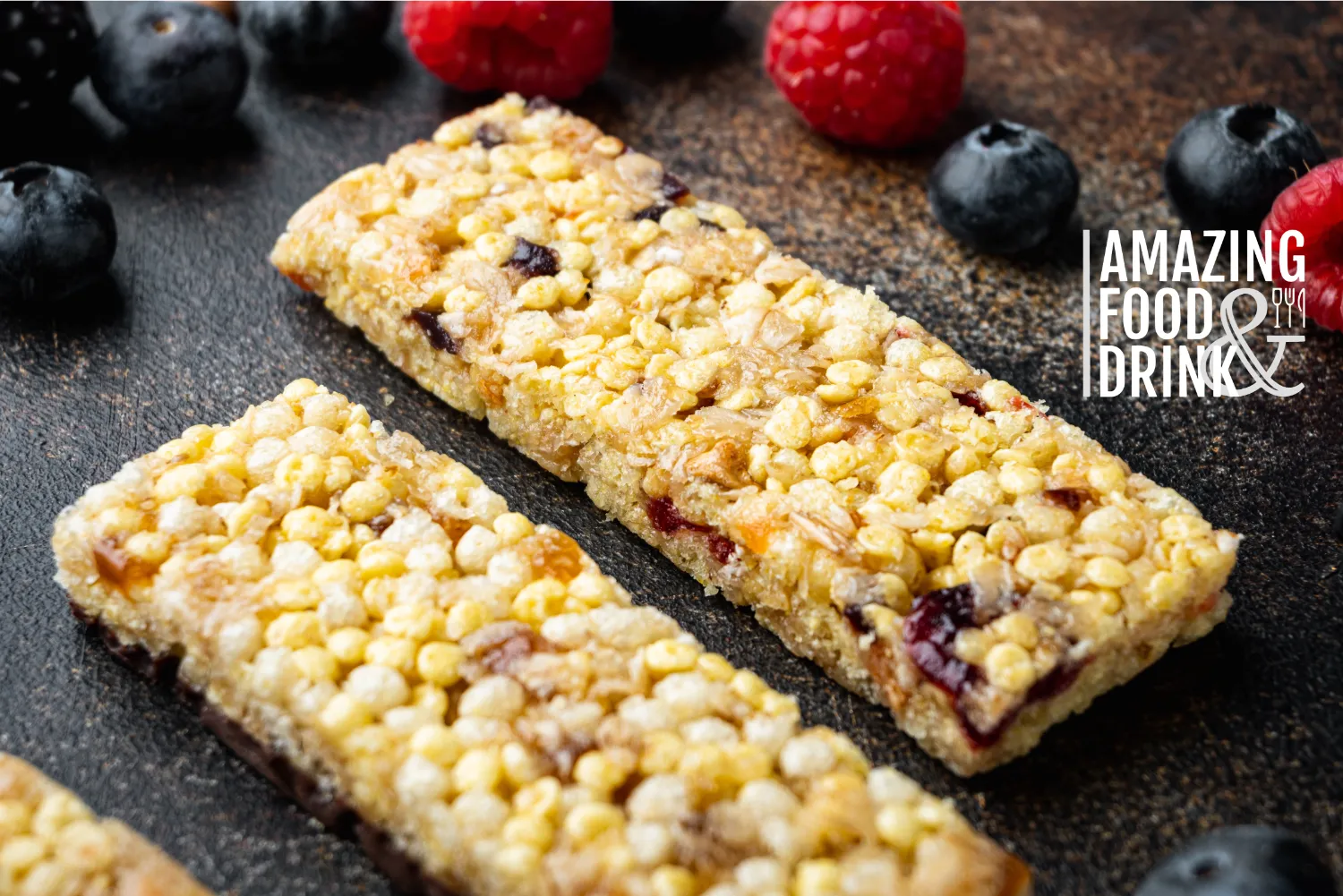
Are protein bars and energy bars considered the same thing? We all have this question when we stroll down the supermarket’s healthy food aisle. An energy bar contains carbs and sugars that deliver an immediate burst of energy; think of it as a bar-sized energy boost. While a protein bar contains much protein and can be used as a yummy meal replacement, think of it as a bar-sized protein that your body needs.
Those with food restrictions often have difficulty choosing the right energy bar or protein bars because it might be difficult if you are allergic to nuts. After all, most protein bars on the market contain nuts. We’re here to tell you that many other fantastic ingredients can be used in place of nuts, including fruits and seeds, chocolate, and superfoods.
So, for all of you who are vegan or nut-free, we have some great news: We will share 14 nut-free vegan energy and protein bars on the market that prove you don’t need dairy, nuts or nut butter to make an effective energy bar.
Amrita Energy Bars
httpss://www.youtube.com/watch?v=KYeGNkg0ciI
The only question you’ll have with Amrita energy bars is which flavour to choose. It has a plethora of variants. The nut-free and vegan protein bar comes in six wonderful flavours. Are you prepared to read the list? Some flavours are available for Apricot Strawberry, Apple Cinnamon, Mango Coconut, Cranberry Raisin and Pineapple Chia.
The second great thing about these bars is that they are made with organic ingredients, including brown rice protein, sunflower seed butter, date paste, tahini, chia seeds, and, depending on the flavour, dried fruit or cacao. Each raw bar is gluten, soy and peanut-free. As a result, you can consume as much as you want without fear of your allergy acting up. In terms of reviews, everyone loves it and can’t get enough of it.
Bearded Brothers Radical Raspberry Bars
httpss://www.youtube.com/watch?v=vhiqYdR-ZZM
Some joked that an energy bar brand can help you grow a beard. We’re talking about the Bearded Brothers. The energy bar promises to provide you with the exact quantity of energy that you require. The Bearded Brother offers nut-free bars such as the Radical Raspberry Lemon bar, which everyone who has tried it raves about, and Colossal Coconut Mango and Bodacious Blueberry Vanilla. They also provide nut-filled bars such as Astonishing Almond Butter Vanilla, Awesome Almond Butter Chocolate, Mega Maca Chocolate, Amazing Almond Butter Berry, and Luscious Lemon Cashew.
The nut-free and vegan energy bar is created with organic figs, dates, hemp seeds, raspberries, lemon and a small amount of sunflower seed butter; it is mostly raw except for the sun butter and is gluten, soy, GMO and nut-free. Why do we love this brand so much? Some other flavours Bearded Brothers provides are fully raw if you strictly follow a raw diet.
Clif Bar Chocolate Chip
A nut-free and vegan protein bar made primarily of organic ingredients. Clif bar chocolate chip bar contains all your body’s nutrients, including brown rice syrup, soy rice crisps, organic rolled oats and vegan chocolate chips. In addition, each bar provides 23 vitamins and minerals, 10 grams of protein, and 44 grams of carbohydrates.
Everyone who has tried them agrees that they are delicious and filling despite being heavy in sugar. So, depending on your diet, you may decide whether to consume it once a week or how to incorporate it into your diet. But it is undeniably a protein bar that will not leave your bag.
CoffeeBar Energy Bars
We all know your morning cup of coffee is importance since it offers instant energy, allowing you to start your day fresh and cheerful. CoffeeBar Energy Bars will provide you with all that but in the shape of a nut-free and vegan energy bar. Each bar contains organic dates, organic brown rice syrup, organic, gluten-free oats, organic vegan dark chocolate, organic sunflower seed butter, organic coffee, organic crisp brown rice, organic quinoa, organic agave fibre, organic chia seeds and sea salt in addition to coffee.
Consider Coffebar energy bars the perfect balance of flavour, performance and nutrition. Reviewers agree that these energy bars provide energy and that once you taste them, you will become addicted to them. Be aware that you must make a budget for your new healthy addiction.
Gnu Foods Fiber Love Bars
The Gnu Foods Fibre Love Bars are a nut-free and vegan energy bar that will provide you with the recommended daily fibre intake. These energy bars contain components that are extremely helpful to your body, such as high-fibre grains like whole rolled oats, whole wheat flour, wheat bran, kamut, psyllium, flax, millet fruit juices, raisins, apples, cranberries, and a few other ingredients.
Most reviews agree that these energy bars taste orangey, so we can confidently state that the flavour is bold. Some also think it’s a little moist, but in our defence, you must try it and decide for yourself.
Go Raw Spirulina Energy Bars
Go Raw Spirulina Energy Bars are not only nut-free and vegan energy bars, but they are also gluten-free and wheat-free. These energy bars contain only five ingredients: sprouted organic sesame seeds, organic banana, organic coconut, organic date, and organic spirulina. The benefits of this little bar include 350 milligrams of omega-6, three grams of protein, and high fibre content.
Most reviews agree that these energy bars satisfy hunger, are high-quality and fresh-tasting, and are highly healthful. So, what are you holding out for? If we were in your shoes, we’d rush to the nearest market to try them.
Inbar Cinnamon Swirl Bars
httpss://www.youtube.com/watch?v=FHMe4Z-q1Zs
Inbar Cinnamon Swirl Bars are organic protein bars that are high in protein high in fibre and offer you a boost of energy all in one bite. They are nut-free and vegan, as well as gluten-free. Inbar Cinnamon Swirl Bars are made with organic sunflower seed butter, organic brown rice protein, organic crispy brown rice, organic rice bran, organic blue, amber agave, organic pea fibre, organic caramel concentrate, organic cinnamon concentrate, and monk fruit extract.
If you’re watching your calorie intake, the nut-free and vegan protein bar has 173 calories. Most people who try it say it’s good, nutritious, and sweet. Still, because it’s made from agave, it’s not overpowering. So, would you consider it after a workout?
Jumpstarter Bodyfuel Bars
Jumpstarter Bodyfuel Bars are nut-free and vegan protein bars that are a terrific way to start your day if you want it to be full of yummy nutrition and protein. It is a protein bar with 12% of the daily fibre intake and a low glycemic index. It also has no refined sugars, cholesterol, or preservatives. So, what exactly are the ingredients? Whole grain rolled oats, organic pure cacao, oat flour, unsweetened apple powder paste, grape seed oil, unrefined raw cane sugar, unsulfured molasses, pure vanilla extract, and organic agave nectar are used to make this wheat-free, soy-free, and non-GMO bars.
The name describes how it is a terrific way to start the day. It is safe to state that these protein bars are delicious, undoubtedly nutritional, and flavorful. The downside is that most people dislike the size, which is 1.7 ounces. Another plus is that this bar does not taste like milk chocolate; because it is created with pure cacao, it has a more profound and slightly bitter chocolate flavour.
Luna Bar Lemon Zest Bars
httpss://www.youtube.com/watch?v=Mvbe_q7yX9A
Most nut-free and vegan energy bars are generally chocolate-flavoured; however, Luna bar lemon zest bars are entirely another story. Instead of chocolate, this gluten-free energy bar has a nice zesty flavour. They are non-GMO bars consisting mainly of soy rice crisps, organic toasted oats, organic dried cane syrup and organic roasted soybeans. Each delicious bar has 9 grams of protein.
You’d think it’d be sour because it’s lemon-flavoured but extremely sweet. Another thing that people noticed is that gluten-free food often has a strange taste, or you can tell it’s gluten-free. Still, it’s difficult to know with Luna Bar Lemon Zest Bars.
Manitoba Harvest Hemp Heart Bars
Manitoba Harvest hemp heart is the nut-free and vegan protein bar you should always have on hand, with 10 grams of protein and 10 grams of omega-6 and omega-3. Manitoba Harvest hemp heart is everything you’re looking for in a tiny bar, as it’s filled with proteins and will give you a boost of energy with instant fullness from the first bite. These bars are made with hemp Hearts, organic coconut palm sugar, brown rice syrup, dried apple, cinnamon, apple flavour, pectin, sunflower oil, caramel flavour, and rosemary extract.
The chewy and moist Manitoba Harvest Hemp Heart Bars are not overly sweet or bitter; they have just the proper sweetness. After eating it, there will be no guilt trip because it is a highly nutritious snack you can be proud of.
Perfect Fuel Dark Chocolate Energy Bite
Perfect Fuel Dark Chocolate Energy Bite is a bite-sized, nut-free, vegan protein bar. Aside from its bite-size, what most people love about it is that it is a soy-free, gluten-free, and organic snack designed to provide long-lasting endurance. The protein bar is small but contains many nutrients:
One gram of protein
6% of your daily iron need
Antioxidants
50 milligrams of caffeine
So, what are the ingredients used in these small bites? The five simple ingredients are chocolate, cacao butter, coconut sugar, espresso bean, and vanilla bean.
People like the size; another essential factor is the protein bar’s caffeine and high-quality chocolate flavour. A perfect size for when you’re running low on energy or hungry; just have one in your pocket for any low-energy emergency.
Sheffa Savory Bars
This is a new concept in the energy and protein bar industry; most protein and energy bars are sweet. Sheffa Savoury Bars, a complete innovation everyone enjoys, are savoury bars. So, what ingredients are used to make this creation? These bars are created with whole grains such as brown rice, quinoa, amaranth, millet sunflower seeds, chickpeas, plant-based dietary fibre, whole sesame seeds, tapioca starch, olive oil, poppy seeds, onion powder, dried carrot, garlic powder, sea salt, and spices.
We know what you’re thinking: these bars must taste terrible. However, don’t judge a book by its cover because most people who taste it enjoy how distinctive they are, how energising it is, and how great it is when you’re hungry but don’t want a full meal.
That’s It Nutrition Bars
Do you know how when you go to the grocery store to get a protein or energy bar, you must check the label to ensure it is nut-free and vegan or if you have any other food restrictions or preferences? Consider those days over because the package of That’s It Nutrition Bars specifies the two components they employ. If you guessed apples and pears, you are correct. It is the safest, nut-free, vegan protein bar you will ever eat. Pears contain vitamins C and B, while apples provide fibre and other trace vitamins and minerals. The bars are raw and non-GMO.
Most people who tried it all agreed it was the most delicious thing they ever had. It tastes like munching on raw fruit, isn’t excessively sweet, and is ideal for taking on the go.
Zego Organic Seed and Fruit Bars
httpss://www.youtube.com/watch?v=2qjOTozYh9Q
An energy bar that ditches the nuts, which means it is a nut-free and vegan energy bar, Zego Organic Seed and Fruit Bar. So, what else does it have if it doesn’t have nuts? Many seeds include sunflower seed butter, sorghum syrup, date paste, Sanchi Inchi seed protein, dried apples, pumpkin seeds, poppy seeds, cinnamon, and vanilla extract. These bars are paleo, organic, kosher, and glycemic index-friendly.
Consider the Zego bars a fantastic answer for people with multiple allergies who want something that will give them an instant energy boost. The nut-free energy bar is popular among active people who run, surf and bike because of its taste, effect and, lastly, the suitable size to eat on the go.
What Is the Best Way to Choose a Vegan Protein Bar?
There are various factors to consider and check for. The first is to avoid extensive chemical and preservative lists. Second, look for a bar with natural food ingredients like nuts, seeds, and fruit to add flavour while providing nutrients like fibre, healthy fats, vitamins, and minerals.
Let us go over the protein situation in greater detail. Complete protein contains plenty of all the essential amino acids to enhance protein synthesis in the body. Most animal products include proteins, but many plant sources are not. This isn’t a problem, but search for bars with various plant proteins, such as seeds, lentils, nuts, cereals, and soy. The following protein bars are preferred: hemp protein, hemp seeds, chia seeds, pea protein, sunflower seeds, and rice protein bars. These components are thought to be entire or substantially complete protein sources.
On the Run, Have Nut-Free and Vegan Energy and Protein Bars on Hand
If you are usually on the go and looking for healthy snack options and have food limitations, consider nut-free and vegan energy or protein bars. They are ideal for you because they can be thrown into your bag and eaten anytime. We can’t forget how much a small bat can offer an astonishing amount of protein, is packed with healthy components, and provides an instant energy boost. So, which of the bars on our list will be your go-to? If we had to pick one, we’d go with the savoury Sheffa Savoury Bars and the lemony ‘Luna Bar Lemon Zest Bars’.

 Noha Basiony