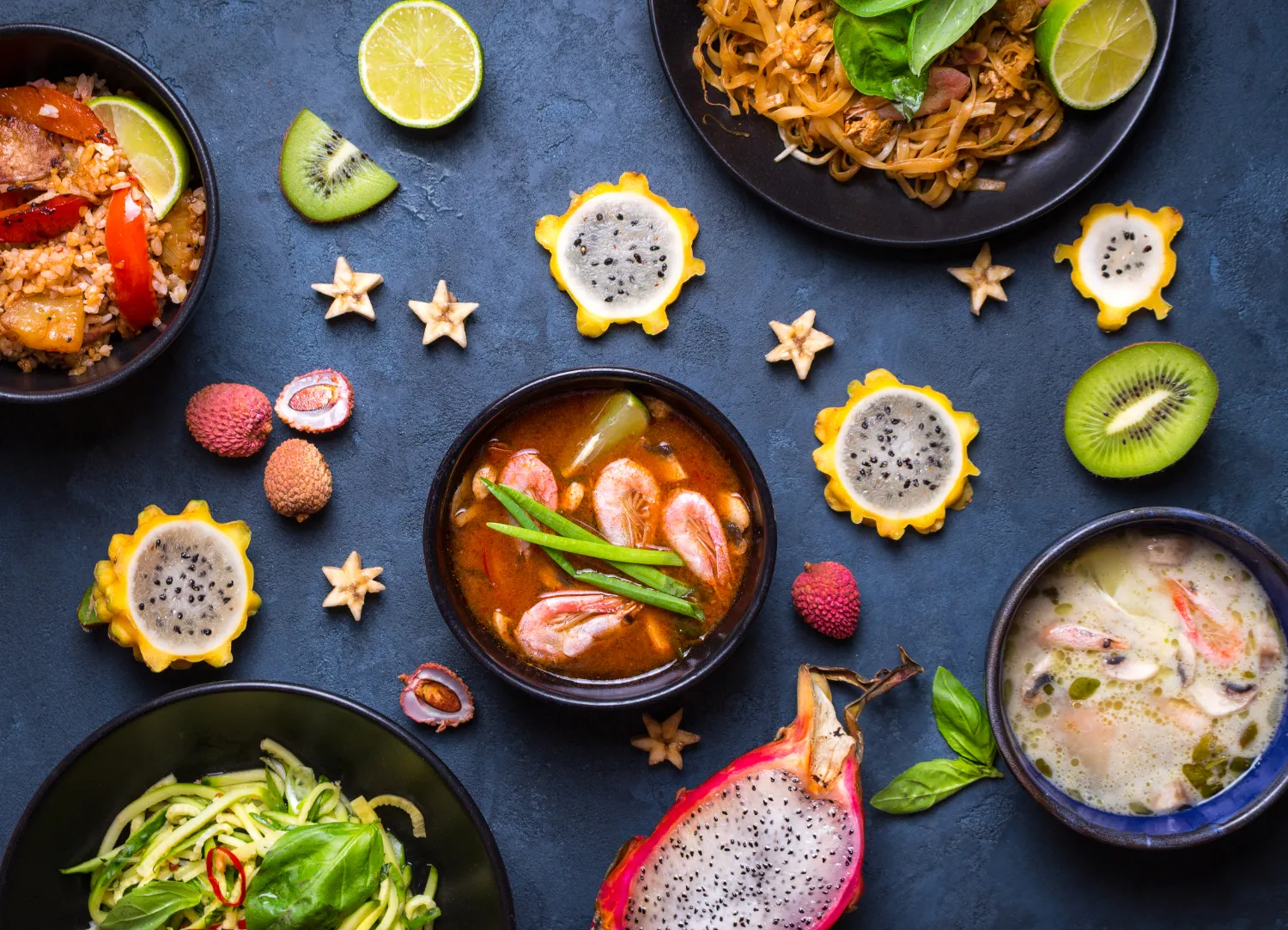
Thai Dishes

Must-Try Thai Dishes: Regional Guide to Authentic Flavours

Author Avatar

Updated on January 23, 2026

Reviewed by Salma Ihab

Sweet, sour, salty, bitter and spicy are the five fundamental taste senses we all know. But to balance them all in a single meal is a secret you can only find in Thai dishes, a secret that has captured the hearts and palates of many food enthusiasts around the world.

When most people think of Thai dishes, they picture coconut curries and Pad Thai. But Thailand’s cuisine is far more diverse than restaurant menus suggest. The country’s four distinct culinary regions, Central, Northeast (Isan), Northern (Lanna), and Southern, each offer unique flavours shaped by geography, climate, and cultural influences.

This guide explores authentic Thai dishes from all regions, teaching you proper techniques for preparing them at home and understanding the cultural significance behind each recipe. Whether you’re planning to visit Thailand or simply want to master traditional Thai dishes, this regional approach will deepen your appreciation for one of the world’s most satisfying cuisines.

Understanding Thai Flavours

Before diving into specific Thai dishes, it’s essential to understand the flavour principles that make Thai cuisine so distinctive and beloved worldwide. These foundational elements guide every dish, from simple street food to elaborate royal court recipes

What Are Thai Dishes Famous For?

Thai cuisine uses a broad range of ingredients, some of which are unique to the region. These include Thai basil, galangal, lemongrass, tamarind, fresh herbs and spices and a variety of chillies, which together create distinctive and hard-to-replicate tastes.

The foundation of Thai cooking rests on achieving the perfect balance of the five taste elements in every dish. This sensory experience distinguishes Thai dishes from other Southeast Asian cuisines.

The Five Flavour Balance

  1. Sweet (Wan): Palm sugar and coconut milk provide natural sweetness that mellows heat
  2. Sour (Preaw): Tamarind, lime juice, and fermented fruits add bright acidity
  3. Salty (Kem): Fish sauce (nam pla) and shrimp paste (kapi) form the savoury backbone
  4. Spicy (Phed): Bird’s eye chillies deliver heat with floral notes
  5. Bitter (Kom): Bitter melon and certain herbs cleanse the palate

If you are a skilled home cook who loves playing around with exotic ingredients, then these Thai dishes are for you.

First, familiarise yourself with the 4 main Thai cuisine categories:

  • Kaeng (curry)
  • Tam (pounded food)
  • Yam (mix)
  • Tom (boiled food)

The Role of Curry Pastes

Unlike Indian curries that rely on dried spices, Thai curry pastes are built on fresh aromatics pounded in a mortar and pestle. The “holy trinity” of Thai cooking, lemongrass, galangal, and kaffir lime, provides the citrusy, earthy base found in most traditional Thai dishes.

When frying curry paste properly, wait for the “oil split” to appear. This happens when coconut milk separates, and oil rises to the surface, signalling that the aromatics are toasted and flavours are fully released.

Central Thailand Classics

Central Thai cuisine represents the cooking style most recognised globally. Influenced by the Royal Courts of Ayutthaya and Bangkok, these Thai dishes feature refined techniques, frequent use of coconut milk, and aromatic jasmine rice.

Pad Thai (Stir-Fried Noodles)

Thai Dishes

Pad Thai is a stir-fried noodle dish bursting with a combination of sweet, tangy, and savoury flavours. It is one of the most famous and loved Thai dishes due to its enticing taste and the satisfying textures of its ingredients. A key component of Pad Thai is tamarind, a tropical fruit known for its sweet-and-sour flavour profile, adding a unique, tangy twist that distinguishes the dish.

The Authenticity Marker: Real Pad Thai balances sweet and sour without being cloying. The tamarind should provide tanginess, not just sweetness.

Ingredients for One Serving

  • 1 pack of rice noodles (soaked in warm water)
  • 2 tablespoons of tamarind concentrate
  • 1 tablespoon of brown palm sugar
  • 1 tablespoon dark soy sauce
  • 2½ tablespoons of fish sauce
  • A handful of chicken, cut into cubes
  • A handful of shrimps, peeled and deveined
  • 2 cloves garlic, diced
  • Tofu (about an egg), diced
  • 1 small shallot, diced
  • 1 egg, beaten
  • A handful of bean sprouts
  • 1 stalk of green onion, diced
  • Roasted peanuts for garnish

Instructions

  1. Mix the tamarind, sugar, soy sauce, and fish sauce and set aside.
  2. In a pan, stir the chicken for two minutes, add the shrimp, and stir for another two minutes over medium heat.
  3. Add the garlic, tofu, shallots and cook for 1 to 2 minutes.
  4. Add the soaked noodles and the sauce and cook together for 1 to 2 minutes.
  5. Push the noodles aside, add the egg, stir until lumpy, then mix with the noodles.
  6. Add the bean sprouts and green onions, stir for 1 minute.
  7. Serve garnished with peanuts.

Prep Time: 15 minutes | Cook Time: 10 minutes | Servings: 1

Chef’s Tip: The key to restaurant-quality Pad Thai is high heat and quick cooking. Your wok must be extremely hot before adding ingredients to create the slight char that defines authentic street food.

Pad Kra Pao (Holy Thai Basil Stir-Fry)

Thai Dishes

Pad Kra Pao is a simple yet flavourful dish famous for its fusion of hot chillies and fragrant holy basil, creating a savoury, spicy, and slightly sweet taste. This popular Thai street food offers a quick and satisfying meal that bursts with authentic Thai flavours.

The Authenticity Marker: The basil must be holy basil (bai krapao), which has a peppery, almost clove-like flavour. The dish should include a fried egg with lacy, crispy edges.

Ingredients

  • 3 Thai chillies
  • 6-7 cloves of garlic
  • 2 Fresno chillies
  • 1 cup of ground beef (or minced pork)
  • 1 tablespoon fish sauce
  • 1 tablespoon sugar
  • A handful of coloured mild chilli pepper, shredded
  • A handful of Thai holy basil
  • 1 deep-fried egg

Instructions

  1. In the mortar and pestle, grind the garlic and chillies into a rough paste.
  2. In a hot wok without oil on high heat, cook the beef until light brown.
  3. Lower the heat, push the beef aside, add some oil, then sauté chilli paste.
  4. Mix the beef with the paste, then add the fish sauce, sugar and about 4 tablespoons of water and cook for a couple of minutes.
  5. Turn off the heat, add the coloured peppers and basil, then mix.
  6. Serve alongside white rice and the fried egg.

Prep Time: 10 minutes | Cook Time: 8 minutes | Servings: 1

Tom Yum Goong (Hot and Sour Shrimp Soup)

Thai Dishes

Tom Yum Goong is a well-known hot and sour shrimp soup celebrated for its harmonious blend of spicy, sour, and umami flavours. One of the essential herbs in this dish is galangal, which has a complex flavour often described as citrusy and slightly peppery, with hints of pine and earthiness.

Ingredients

  • ½ cup shrimp
  • 2½ cups water
  • 2-3 lemongrass stalks
  • 3 teaspoons sliced galangal
  • ½ cup shredded straw mushroom
  • 5 hot chillies
  • 1-2 tablespoons chilli paste (nam prik pao)
  • 4 tablespoons fish sauce
  • 5 kaffir lime leaves
  • 2 tablespoons lemon juice
  • 2 tablespoons chopped coriander

Instructions

  1. In a pot filled with water, add the lemongrass, kaffir lime leaves, galangal, and hot chilli and bring to a boil.
  2. Once boiling, add the chilli paste and fish sauce.
  3. Add mushrooms and shrimp, and cook for only 2 minutes to keep the shrimp tender.
  4. Turn off the heat, then add the coriander and lemon juice. Serve hot.

Prep Time: 10 minutes | Cook Time: 15 minutes | Servings: 2

Important Note: Do not eat the woody chunks of galangal, lemongrass, or kaffir lime leaves. These aromatics infuse the broth with flavour but remain too tough to consume.

Kaeng Luang (Yellow Curry)

Thai Dishes

This aromatic Thai curry dish has pieces of chicken cooked in creamy soup infused with a mixture of herbs, making it a comforting dish beloved by many. Yellow curry incorporates turmeric for its golden hue and earthy flavour.

Ingredients

  • 6 chicken thighs, boneless, skinless, cut into cubes
  • 1 large shallot, shredded
  • ½ pound of potatoes, cut into cubes
  • 3-4 tablespoons yellow curry paste
  • 1 can of coconut milk
  • 1 cup chicken broth
  • 6-8 leaves of Thai basil, shredded
  • 1 tablespoon sugar
  • 2 tablespoons fish sauce

Instructions

  1. Soften the onions in an oiled pot for a couple of minutes.
  2. Add the curry paste and stir, then add 3 tablespoons of coconut milk and stir for a couple of minutes.
  3. Add the chicken and stir to cook for 2 minutes.
  4. Add the potatoes, remaining coconut milk, and broth.
  5. Once the soup simmers, bring the heat down and cook for 15 minutes.
  6. Finally, add the sugar and fish sauce. Serve beside white rice.

Prep Time: 15 minutes | Cook Time: 25 minutes | Servings: 4

Thai Panang Chicken Curry

Thai Dishes

Thai Panang chicken curry is a rich, savoury dish loved for its creamy coconut base. It offers a subtly sweet and nutty flavour with milder heat than other Thai curry dishes, with ground peanuts adding body and subtle nuttiness.

Ingredients for the Curry Paste

  • 10 chillies
  • ¼ cup shallots, cut into small pieces
  • 4-5 coriander roots
  • 1 stalk of lemongrass, cut into pieces
  • 5 cloves garlic, chopped
  • 1½ tablespoons kaffir lemon zest
  • 1 inch galangal, chopped
  • 1 tablespoon of shrimp paste
  • 1½ tablespoons of roasted coriander seeds
  • ¾ teaspoon roasted cumin seeds
  • 2 tablespoons roasted peanuts
  • 1 tablespoon salt
  • ¼ tablespoon white pepper powder
  • Half a cup of water

Ingredients for the Chicken Curry

  • 1½ cups of coconut milk
  • 1 tablespoon palm sugar
  • 3-4 kaffir lime leaves
  • 2 chicken thighs, boneless, skinless, cut into pieces
  • 1 tablespoon of fish sauce
  • A handful of spurs chilli, shredded

Instructions

  1. Grind the herbs and spices with 1/2 cup of water in the food processor until a soft paste forms.
  2. Add half a cup of coconut milk to a pan and cook until reduced to half the amount over medium heat, then add 5 tablespoons of the curry paste.
  3. Add the sugar, kaffir leaves and cook for 2 minutes.
  4. Add the chicken, mix, and let it cook until well done.
  5. Add 1 cup of coconut milk, then cook for 5 minutes.
  6. Finally, add the fish sauce and spur chilli, then serve hot beside white rice.

Prep Time: 25 minutes | Cook Time: 15 minutes | Servings: 2

Tom Kha Gai (Spicy Thai Chicken Soup)

Thai Dish

Tom Kha Gai is a delicious fusion of tangy, spicy, and aromatic flavours, featuring a lemongrass-infused coconut broth and tender chicken pieces. This is one of the most comforting Thai dishes you can enjoy besides white rice.

Ingredients

  • 3 lemongrass stalks, diced
  • 1 thumb-size galangal, thinly sliced
  • 1 cup full-fat coconut milk
  • 1 cup water
  • 500g chicken thighs, boned and skinned, cut into pieces
  • A handful of button mushrooms, diced
  • 2 kaffir lime leaves
  • 2 tablespoons fish sauce
  • 2 chillies, shredded
  • Juice of 1 lime
  • Freshly chopped coriander for garnishing

Instructions

  1. In a pot, pour the milk and water. Over medium heat, stir quickly to prevent the milk from splitting.
  2. Add a pinch of salt, lemongrass, and galangal and bring the soup to a simmer.
  3. Place the chicken in the pot and cook for 5 minutes.
  4. Add the mushrooms and kaffir leaves, and cook for 2 more minutes.
  5. Add the fish sauce, serve in a bowl, squeeze lime juice on top, add the chillies and garnish with coriander.

Prep Time: 10 minutes | Cook Time: 15 minutes | Servings: 2-3

Regional Thai Specialities

Thai Dish

Beyond Central Thailand, three other regions offer distinctive Thai dishes that showcase the country’s culinary diversity.

Northeast Isan Thai Dishes

Isan cuisine is bold, fermented, and fiery. These Thai dishes are designed to be eaten with sticky rice and often feature pla ra (fermented fish sauce), which adds pungent umami depth.

Som Tum (Green Papaya Salad): Fresh green papaya is bruised in a mortar with chillies, garlic, tomatoes, long beans, dried shrimp, peanuts, and lime juice, creating a dish that hits all five flavour notes simultaneously. This is one of Thailand’s most popular Thai dishes, served throughout the country.

Larb Moo (Minced Pork Salad): A warm salad of minced meat seasoned with lime juice, fish sauce, toasted rice powder (khao kua), and fresh herbs. The toasted rice powder provides a distinctive nutty crunch unique to Isan cooking.

Gai Yang (Thai Grilled Chicken): Isan-style grilled chicken marinated in garlic, coriander root, black pepper, and fish sauce, then slowly grilled over charcoal. Typically served with sticky rice, som tum, and a spicy dipping sauce called nam jim jaew.

Northern Thai Dishes

Northern Thailand’s Lanna cuisine reflects Burmese and Chinese influence. These Thai dishes are milder, more herbal, and less reliant on coconut milk than Central Thai cooking.

Khao Soi (Coconut Curry Noodle Soup): This Chiang Mai speciality is a rich coconut curry soup served over wheat noodles with crispy fried noodles on top. The combination of soft and crunchy textures makes it Northern Thailand’s most famous dish. Essential toppings include pickled mustard greens, fresh shallots, lime wedges, and chilli oil.

Sai Oua (Northern Thai Sausage): Minced pork mixed with red curry paste, lemongrass, kaffir lime leaves, and fresh herbs, stuffed into casings and grilled. This sausage has an intense herbal flavour unlike any European-style sausage.

Southern Thai Dishes

Southern Thai cuisine is the spiciest and most intensely flavoured. With coastlines on both seas, seafood features prominently in these Thai dishes.

Massaman Curry: Southern Thailand’s mildest curry, showing strong Persian and Indian influences through warm spices like cardamom, cinnamon, and star anise. This curry typically features beef or lamb with potatoes and peanuts, reflecting Islamic dietary practices.

Gaeng Tai Pla: This intensely flavoured curry uses fermented fish entrails (tai pla) as its base, creating an umami-rich sauce. Mixed with vegetables like bamboo shoots and yard-long beans, it showcases the bold flavours Southern Thailand is known for.

Thai Desserts

Thai Dish

Thai desserts offer a delightful conclusion to any meal, featuring coconut milk, sticky rice, and tropical fruits.

Khao Niao Mamuang (Mango Sticky Rice): Thailand’s most famous dessert combines warm coconut-infused sticky rice with ripe mango slices. Best during Thailand’s hot season (March-May) when mangoes reach peak ripeness. The sticky rice must be soaked overnight, then steamed and mixed with warm coconut milk and sugar.

Ingredient Sourcing Guide

Finding authentic Thai ingredients is essential for creating genuinely flavourful Thai dishes at home.

Finding Ingredients in the UK

Major UK supermarkets have expanded their international sections, making ingredients for Thai dishes more accessible.

Supermarkets and Asian Grocers:

  • Waitrose and Sainsbury’s stock fresh galangal, lemongrass, and kaffir lime leaves
  • Tesco and Asda carry Thai curry pastes, coconut milk, and fish sauce
  • Chinese supermarkets often stock Southeast Asian ingredients
  • Online retailers like ImportFood.com ship throughout the UK

Essential Ingredient Substitutions

When authentic ingredients aren’t available, these substitutions help maintain the character of traditional Thai dishes.

  • Holy Basil: Use Thai sweet basil plus a pinch of mint for a similar aromatic quality. Italian basil works in a pinch but lacks the peppery notes.
  • Galangal: Fresh ginger can substitute, but it is sweeter and less complex. Dried galangal slices soaked in warm water work better than fresh ginger.
  • Kaffir Lime Leaves: Combine regular lime zest with a small amount of lemon zest for a closer approximation.
  • Palm Sugar: Light brown sugar or coconut sugar provides a similar flavour.
  • Fish Sauce (Vegan): Mix 2 tablespoons light soy sauce with 1 teaspoon white miso paste and a pinch of sugar for fermented umami depth.

Sourcing in the United States

American markets offer good access to ingredients for Thai dishes, especially in metropolitan areas.

  • Whole Foods stocks fresh aromatics and Thai curry pastes
  • Trader Joe’s offers affordable Thai basics
  • H Mart and 99 Ranch Market carry comprehensive Thai ingredients
  • West Coast cities have excellent Thai ingredients access

Sourcing in the Philippines

Filipino markets often stock ingredients that overlap with Thai cooking.

  • Palengkes (public markets) stock fresh aromatics and chillies
  • Chinatown areas in Manila have specialised Thai ingredient shops
  • SM and Robinson’s supermarkets carry Thai curry pastes and coconut milk

Dietary Adaptations

Thai Dishes

Thai dishes can be adapted for various dietary requirements without losing their authentic character.

Vegan Thai Cooking

Traditional Thai dishes rely on fish sauce and shrimp paste, but authentic vegan versions exist through Gin Jay Thailand’s Buddhist vegan tradition.

Vegan Substitutions: Use light soy sauce mixed with miso paste for fish sauce, mushroom-based oyster sauce, and tofu or tempeh for proteins. Vegan-friendly Thai dishes include Pad Thai (omit egg and shrimp), green curry with vegetables, tom yum with vegetable broth, and som tum without dried shrimp.

Gluten-Free Thai Cooking

Most Thai dishes are naturally gluten-free since rice forms the staple grain. However, check soy sauce (use tamari), some curry pastes, and oyster sauce labels. Rice noodles, fresh aromatics, coconut milk, and pure fish sauce are naturally gluten-free.

Managing Heat Levels

Adjust Thai dishes for spice tolerance by removing seeds and membranes from chillies, starting with fewer chillies, using milder varieties like red Fresno instead of bird’s eye, and serving with cucumber slices and jasmine rice.

If you are planning on visiting Thailand in the future or are just curious to experiment with new recipes, keep these Thai dishes in mind, as they are bound to provide you with a unique culinary experience.

Understanding Thai dishes by region transforms them from individual recipes into a coherent culinary tradition shaped by geography, climate, and cultural exchange. Central Thailand’s royal refinement, Isan’s bold fermented flavours, Northern Thailand’s herbal mildness, and Southern Thailand’s fiery intensity each tell stories of the people who created them.

When you prepare these Thai dishes at home, remember that Thai cooking is about balance rather than following recipes rigidly. Taste constantly, adjust seasoning, and trust your palate. The five-flavour balance, sweet, sour, salty, spicy, and bitter, should guide your cooking more than precise measurements.

Start with the Thai dishes that appeal to you most, gradually building your pantry with authentic ingredients. As your confidence grows, explore the regional variations and techniques that make Thai cuisine endlessly fascinating. Whether you’re frying curry paste until the oil splits, pounding som tum in a mortar, or balancing the perfect pad krapow, you’re connecting with centuries of culinary tradition.

FAQs

1. Is Thai food always spicy?

No. Whilst many Thai dishes feature chillies, spice levels vary by region. Northern Thai dishes tend to be milder and more herbal, whilst Southern and Isan cuisines are typically the spiciest. You can always adjust recipes at home.

2. What’s the difference between Thai basil and holy basil?

Thai basil (bai horapa) has purple stems and an anise-like flavour. Holy basil (bai krapao) has a peppery, clove-like taste. They’re not interchangeable; holy basil is essential for pad krapow, whilst Thai basil suits curries.

3. Can I substitute regular ginger for galangal?

In a pinch, yes, but galangal has a sharp, citrusy, pine-like taste whilst ginger is sweeter. If substituting, use less ginger. Dried galangal slices work better than fresh ginger.

4. What rice should I use for Thai dishes?

Jasmine rice accompanies most Central, Southern, and Northern Thai dishes. Sticky (glutinous) rice is essential for Isan and Northern cuisine. Don’t rinse jasmine rice before cooking; the slight starch helps it clump perfectly.

5. What’s the best fish sauce brand?

Squid brand from Thailand is of excellent quality and readily available. Megachef and Red Boat are premium options. The ingredient list should only contain fish, salt, and water.

Share with our social media

Leave a Reply

Your email address will not be published. Required fields are marked *