Afternoon tea represents more than a simple beverage break; it’s a cherished ritual spanning continents and cultures. From the buttery scones of British teatime to the spicy pakoras served with Indian chai, choosing the right snacks to have with tea elevates simple refreshment into meaningful connection.
This guide explores traditional snacks to have with tea from around the world, providing authentic recipes and cultural context to transform your tea-drinking experience.
Table of Contents
The Art of Tea Pairing
Understanding why certain snacks complement specific teas enhances your appreciation of this global tradition. Tea contains tannins, natural compounds that create a slightly bitter taste. Pairing high-tannin black teas with rich, buttery treats creates balance, as fats bind with tannins, softening the tea’s intensity. Delicate green or white teas pair best with lighter accompaniments that won’t overpower their subtle flavours.
The best tea snacks also provide textural contrast, crisp biscuits against smooth tea, soft cakes that absorb moisture and meld flavours. Consider the time of day: heartier options suit afternoon tea, whilst sweeter treats shine during morning elevenses.
British Heritage Tea Traditions
The British Isles established afternoon tea as a refined social custom in the 19th century. From Scotland’s buttery shortbread to Ireland’s tender scones, British teatime snacks emphasise rich, satisfying treats that complement strong black teas.
Irish Scones Recipe
Scones are a teatime staple that originated in Scotland and became popular across Britain and Ireland. These fluffy treats are usually enjoyed with clotted cream and jam, making them a deliciously rich companion to tea. Whether for a special afternoon tea or a simple morning snack, scones showcase traditional Irish food culture.
Ingredients
250 gm self-raising flour
3 Tbsp heaped caster sugar
1 tsp baking powder
60 gm soft butter
100 ml buttermilk
1 large egg
A handful of dried fruits (currants, raisins, sultanas, almonds)
Instructions
In a large bowl, add the flour, sugar and dried fruits. Using your hands, mix the dried ingredients well until thoroughly combined; this will make your scones fluffy and airy.
Add the butter and rub it into the dry ingredients until the mixture resembles coarse crumbs.
In a small bowl, whisk together the buttermilk and egg. Pour the egg mixture over the flour, and set aside about 1 tablespoon to brush the scones with at the end.
Mix the egg with the flour, but do not over-mix, as it may harden your scones.
Flour your table a little, then spread your scone dough about 1 inch thick.
Using your scone cutter, cut your scones and place them in a greased and floured baking tray.
Brush only the surface of the scones with the egg mixture. Sprinkle some demerara sugar on top of the scones, then bake them in a 180-degree C oven for 15 to 20 minutes, until golden on top.
Original Scottish Shortbread Recipe
Scottish shortbread is a buttery, crumbly biscuit with roots in Scotland. Made with a simple blend of butter, flour, and sugar, this classic treat is often enjoyed during holidays and special occasions. Its rich flavour and melt-in-the-mouth texture make it a timeless favourite, pairing beautifully with robust black teas.
Ingredients
375 gm plain flour
250 gm room temperature butter
125 gm caster sugar
Pinch salt
Instructions
Blend the ingredients together with your hands for 5 minutes until the dough becomes pliable. You can use a mixer, but do not overdo it; otherwise, it will become hard.
Spread your dough and cut it into your favourite shapes.
Place the shortbread on the lined sheet pans. Bake them at 160 degrees C (320°F) for about 20 to 25 minutes.
Take them out when they are a little coloured around the edges.
English Crumpets Recipe
One of the most common snacks to have with tea is English crumpets, a beloved breakfast staple in British households. Originating in the United Kingdom, these griddle cakes are characterised by their spongy texture and signature holes on the top surface, making them perfect for soaking up butter, jam, or other spreads.
Ingredients
180 gm plain flour
235 ml lukewarm water
1 tsp instant dried yeast
1/2 tsp salt
1 tsp baking powder
1 tsp sugar
1 Tbsp olive oil
30 gm soft butter
Instructions
Add the sugar to the lukewarm water (about 104 degrees F) and mix it in.
Add the yeast, stir well to combine and set it aside to activate.
In a bowl, add the yeast, all-purpose flour, salt and the sifted baking powder.
Beat the mixture with the electric beater for one minute.
Cover the bowl and leave it to proof for 45 minutes in a warm spot.
You know the mixture is ready when it is bubbly and frothy.
Heat a non-stick pan to about 375°F.
Grease the inside of the ring moulds with a mix of oil and butter.
Place the rings in the pan and fill them halfway up with the mixture.
As the edges start to cook, they will firm up, and bubbles will form on top.
Remove the moulds and turn the crumpets over to cook on the other side.
Remove them from the pan and enjoy eating them with butter and jam.
Traditional Flaky Biscuits Recipe
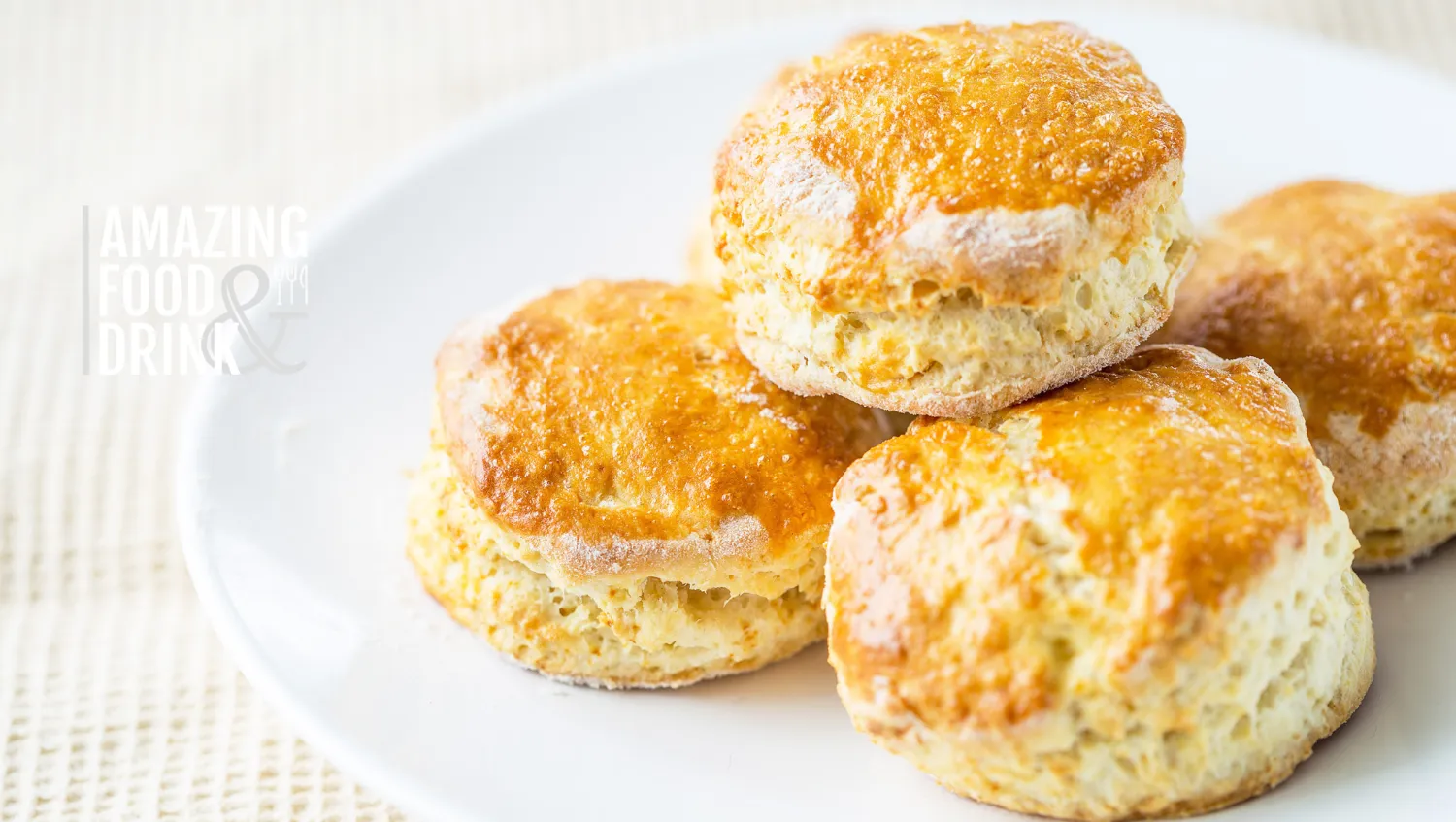
British biscuits are popular choices to enjoy with afternoon tea. These biscuits are known for their golden colour, super flaky texture, and strong buttery taste. They pair perfectly with soft butter and jam, adding a sweet and comforting touch to any teatime spread.
Ingredients
4 cups flour
1 Tbsp baking powder
2 tsp salt
2 Tbsp sugar
226 gm cold butter
320 ml milk
Instructions
In a sizable bowl, add the flour, baking powder, salt, sugar and butter.
Use your hands to break the butter into small pieces and rub it into the flour until well combined.
Add the milk gradually to the dough and mix until it forms a firm dough, but be careful not to knead it; otherwise, it becomes hard.
Place your dough on a powdered surface and use your hands to form it into a one-inch-thick rectangle.
Fold the dough over, cut it in half, and then stack the two halves on top of each other. This step is very important because it creates layers and makes your biscuits flaky.
Form the dough into a one-inch-thick rectangle again and repeat the previous steps three more times.
Form the dough into a rectangular shape, one inch thick, one last time.
Grab your biscuit cutter, dip it in flour and then cut the dough. Arrange the biscuits on a lined baking pan.
Insert the baking sheet in the freezer for at least 20 minutes before baking.
Place the baking pan in the oven and cook the biscuits for 20 minutes, until golden brown.
Spread some butter and jam, and enjoy them alongside other delicious snacks with tea.
Asian Tea Culture
Asia’s diverse tea traditions span millennia, with each culture developing distinctive snacks that reflect local ingredients and preparation methods. From India’s spiced chai served with crispy pakoras to Japan’s meditative tea ceremonies featuring delicate wagashi, Asian teatime demonstrates the profound connection between food, ritual, and community.
The Indian Chai Tradition
Indian chai represents one of the world’s most beloved tea traditions, where strong black tea simmers with aromatic spices, milk, and sugar. The snacks accompanying chai must stand up to these bold flavours.
Pakoras, crispy fritters made from vegetables dipped in spiced chickpea batter, are quintessential chai accompaniments. The hot, crunchy exterior and soft interior create a perfect contrast with sweet, creamy chai. Samosas, triangular pastries filled with spiced potatoes and peas, offer another classic pairing. Their flaky, golden crust and savoury filling balance the sweetness of chai. Sweeter options like jalebi spirals of deep-fried batter soaked in sugar syrup or ladoo also pair beautifully.
Filipino Merienda Culture
In the Philippines, merienda refers to a light meal or snack taken between main meals, often accompanied by tea or coffee. This tradition reflects Spanish colonial heritage whilst incorporating indigenous ingredients. Filipino cuisine offers unique teatime treats.
Bibingka, a soft rice cake traditionally cooked in banana leaves, provides a subtly sweet, slightly salty flavour profile. The spongy texture comes from rice flour and coconut milk, often topped with salted duck eggs and cheese.
Puto, steamed rice cakes, come in numerous regional variations ranging from plain white to vividly coloured versions flavoured with ube (purple yam) or pandan. Their mild sweetness and soft texture make them ideal afternoon refreshments.
Ensaymada, a buttery brioche-style pastry coiled into a spiral and topped with butter, sugar, and grated cheese, represents Spanish influence. Despite the cheese topping, the overall taste leans sweet, pairing perfectly with strong black tea.
Japanese Wagashi Artistry
The Japanese tea ceremony elevates teatime to a meditative practice, where carefully crafted wagashi (traditional sweets) complement matcha’s distinctive bitterness. These sweets are integral to the ceremony’s aesthetic and flavour balance.
Wagashi typically feature subtle sweetness from anko (sweet red bean paste), crafted to offset matcha’s natural astringency. Popular varieties include mochi filled with sweet bean paste, yokan (a jellied dessert), and dorayaki (small pancakes with anko filling).
The visual presentation reflects seasonal changes through colours and shapes, cherry blossoms in spring, autumn leaves in fall, connecting the tea ceremony to natural cycles.
European Continental Classics
Beyond the British Isles, Continental Europe offers rich teatime traditions that showcase regional baking expertise. Latin American tres leches cake demonstrates Spanish colonial influence, whilst simple apple sponge cakes reflect Central European traditions of fruit-forward desserts.
Tres Leches Cake Recipe
Tres Leches Cake is a decadent dessert from Latin America known for its ultra-moist texture. “Tres leches” means “three kinds of milk”The cake is soaked in evaporated, condensed, and whole milk or cream. It’s a celebration favourite, loved for its creamy, rich flavour, pairing wonderfully with light, fruity teas.
Ingredients
For the Cake:
1 1/4 cup heavy cream
12 oz can of evaporated milk
14 oz can of sweetened condensed milk
1/2 tsp almond extract
Seeds from 1 vanilla bean
3 extra-large eggs
1 cup sugar
2 tsp vanilla extract
1 1/2 cups flour
2 tsp baking powder
3/4 tsp kosher salt
Powdered sugar
8 cups of mixed berries
5 Tbsp sugar
The Whipped Cream:
1 1/2 cups cold heavy cream
1/4 cup confectioner’s sugar
2 Tbsp granulated sugar
2 Tbsp creme
1 tsp vanilla extract
Instructions
In a bowl, whisk together the 3 types of milk, then add the almond extract and vanilla seeds. Mix well and leave it aside.
To prepare the cake, add the eggs, sugar, and vanilla, then mix at high speed for 10 minutes until the mixture becomes pale and fluffy.
Sift the dried ingredients: flour, baking powder and salt.
While the eggs are being mixed, reduce the speed to low, then add half the flour mixture and half a cup of whole milk. Then, add the second half of the flour, mix for a couple of minutes, then switch off the mixer.
Pour the batter into a greased 9x13x2-inch baking pan and bake at 350 degrees F for 25 minutes.
Take the cake out and let it cool for 30 minutes. Poke the cake with the blunt end of a skewer. This step will allow the milk to soak into the cake well.
Mix the berries with 5 tablespoons of sugar, then let them sit for a couple of minutes before serving.
Pour the three milk mixtures over the cake slowly. Cool the cake in the fridge for 6 hours.
With a little sifter, dust the cake with a thin layer of powdered sugar.
To make the whipped cream ahead, whisk the ingredients together and beat on high speed until soft peaks form.
Serve the cake with whipped cream on top and a couple of tablespoons of mixed berries.
Apple Sponge Cake Recipe
The Apple sponge cake combines the sweetness of ripe apples with a light, fluffy sponge, creating the perfect dessert or snack. It’s a simple recipe using basic ingredients like flour, sugar, eggs, and apple chunks for extra flavour. Serve warm or cool with whipped cream for one of the tastiest snacks to have with tea.
To Prepare the Apple
2 apples, peeled and sliced
25 gm butter
15 gm lemon juice
20 gm sugar
Cake Ingredients
2 eggs
130 gm sugar
60 gm milk
60 gm oil
60 gm yoghurt
Vanilla
200 gm flour
8 gm baking powder
Instructions
Add the butter to a medium-heat pan. When it melts, add the apples, lemon juice and sugar. Let them cook for only 5-7 minutes.
In a bowl, combine the sugar, milk, oil, yoghurt, eggs and vanilla. Stir them well with a whisk to combine.
Add the sifted flour and whisk until well combined. Pour the batter into a small baking sheet lined with parchment paper.
Spread the cooked apples gently on the surface of the cake. Stick the pan in a preheated oven for 40 to 45 minutes at 180 degrees C.
Let the cake cool down before removing the paper.
Dust the cake surface with powdered sugar and enjoy the taste.
Middle Eastern Hospitality
Throughout the Middle East and North Africa, serving tea represents one of the highest expressions of hospitality. Strong black tea, often sweetened and flavoured with fresh mint, accompanies both sweet and savoury treats that showcase the region’s mastery of nuts, dates, and aromatic spices.
Tea Traditions of the Levant
Throughout the Middle East and North Africa, tea service represents hospitality at its highest level. Guests receive small glasses of strong black tea, often sweetened and sometimes flavoured with fresh mint. The accompanying snacks balance the tea’s intensity with rich, nutty flavours.
Dates stuffed with nuts exemplify this tradition’s elegance. The natural sweetness complements tea’s tannins, whilst walnuts or almonds add texture. In Levantine cuisine, ma’amoul, delicate shortbread cookies filled with dates, pistachios, or walnuts, are traditional offerings during celebrations.
Baklava makes an equally good teatime treat. Layers of phyllo pastry, chopped nuts, and sweet syrup create an indulgent experience that pairs beautifully with unsweetened black tea.
Savoury options include za’atar-spiced flatbreads or cheese-filled sambousek, providing contrast to sweet tea.
Turkish Tea Culture
Turkey boasts one of the world’s highest per-capita tea consumption rates, with distinctive tulip-shaped glasses and strong black tea (çay) anchoring social interactions. Turkish desserts demonstrate sophisticated sweet-making traditions.
Turkish delight (lokum) is a soft, gelatinous cube flavoured with rosewater, lemon, or pistachios. The delicate sweetness and perfumed notes create perfect harmony with strong, unsweetened tea.
Simit, sesame-encrusted bread rings, provide a savoury alternative with chewy texture and nutty sesame flavour.
Seasonal & Cultural Considerations
Traditional tea snacks reflect the rhythms of agricultural seasons and cultural celebrations. Understanding these seasonal patterns and ingredient sourcing requirements helps recreate authentic teatime experiences whilst adapting recipes to local availability.
Seasonal Adaptations
Traditional tea snacks often reflect seasonal availability and cultural celebrations. In Britain, hot cross buns appear during Easter, whilst mince pies mark Christmas. These seasonal specialities connect teatime to agricultural cycles, adding depth to the simple act of sharing refreshments.
Spring brings lighter, fruit-forward treats, summer features cucumber sandwiches and lemon cakes, autumn welcomes spiced biscuits and apple-based treats, whilst winter calls for richer offerings like fruitcakes and butter-laden pastries.
Regional Ingredient Sourcing
Authentic tea snacks require specific ingredients:
British Recipes: Clotted cream is essential for proper scones (substitute crème fraîche if unavailable). Self-raising flour can be made by adding 1½ teaspoons of baking powder per cup of plain flour.
Asian Specialities: Rice flour for Filipino puto is available in Asian markets as both glutinous and non-glutinous varieties. Japanese wagashi ingredients, such as anko, are increasingly available in supermarkets. Indian spices for pakora maintain better flavour when purchased whole and ground fresh.
Middle Eastern Treats: Za’atar, a spice blend, combines dried thyme, sumac, and sesame seeds. Orange blossom water and rosewater provide authentic flavouring but require sparing use. Phyllo dough is best purchased fresh from Middle Eastern bakeries.
Teatime transcends simple refreshment, offering moments of connection, tradition, and cultural appreciation. Whether you’re preparing traditional Irish food for celebrations or exploring Middle Eastern culinary traditions, these authentic recipes provide pathways to global tea cultures.
The recipes shared here, from buttery Irish scones and Scottish shortbread to Latin American tres leches cake and English crumpets, represent centuries of tradition. Each region’s approach reflects local ingredients, historical influences, and the universal human need for connection.
FAQs
1. What makes a good tea snack?
The best tea snacks balance flavour intensity with the tea being served and provide textural contrast without overpowering the tea’s natural character. Rich, buttery treats pair well with strong black teas, whilst lighter snacks suit delicate green or white teas. Consider both sweet and savoury options to provide variety.
2. How do you pair snacks with different types of tea?
Black teas with high tannin content pair well with fatty, rich accompaniments such as scones with clotted cream, shortbread, or chocolate cake. Green teas pair beautifully with lighter, less sweet options such as rice cakes, fruit-based treats, or delicate biscuits. Herbal teas complement honey-based sweets, fruit tarts, or mild pastries. Match the intensity: bold teas need substantial snacks, subtle teas require restraint.
3. Can tea snacks be made ahead of time?
Most traditional tea snacks store well. Shortbread keeps for weeks in airtight containers, whilst scones freeze beautifully and can be reheated. Cakes generally improve after a day as flavours meld. However, items like crumpets are best served fresh and warm. For entertaining, prepare doughs and batters ahead of time, then bake close to serving time.
4. What are traditional tea snacks in different cultures?
British teatime features scones, finger sandwiches, and small cakes. Indian chai pairs with pakoras, samosas, and sweet treats like jalebi. Japanese tea ceremonies showcase delicate wagashi made from sweet bean paste. Filipino merienda includes rice cakes like bibingka and puto. Middle Eastern traditions offer dates, baklava, and nut-filled pastries.
5. How do you make tea snacks healthier?
Reduce sugar content gradually; most recipes tolerate a 25% reduction without significant texture changes. Substitute whole-grain flours for refined varieties to increase fibre. Replace some butter with Greek yoghurt or apple sauce in cakes. For fried items like pakoras, try baking at a high temperature instead. Choose naturally sweet accompaniments like fresh fruit, dates, or dried apricots.