Welcome to Greece, one of the most tourist-attractive countries overlooking the Mediterranean basin. If you are coming to watch the Acropolis and sunbathe over Santorini Island, filling your tummy with delicious Greek street food is all that you need to indulge in the remarkable local culture and the true essence of Greece. It is the infusion of olive oil, goat cheese, and mastic that makes Greek street food special and ultimately delicious. So, forget about lavish hotel meals, and let’s go food hunting on foot.
Famous Greek Street Food Breakfast
Breakfast options in Greece abound for those ready to start their day the Hellenic way. Although most of the options are pies and pastries such as Bougatsa, Koulouri, custard, cheese, or spinach-filled pastry, they are fresh, flaky and perfect for a quick on-the-go breakfast. So grab a cup of Greek coffee and enjoy the feast.
Koulouri
Koulouri, often likened to a Greek bagel, is a popular street food item you can easily find in local streets. This circular bread is typically encrusted with sesame seeds and has a deliciously chewy texture. Enjoy it paired with juice as a quick breakfast or snack, eat it plain, or have it split and filled with spreads or cheese. With its origins dating back to the Byzantine Empire, the koulouri is a staple in Greek culinary tradition.
Tiropita (Cheese Pie)
Tiropita is a delectable Greek pastry that tantalises the taste buds with its rich and savoury flavours. It is a little hard and flaky on the outside but soft and creamy on the inside, featuring a flaky, buttery phyllo dough filled with a delightful blend of cheeses like feta, ricotta, and sometimes cottage cheese.
This traditional dish is often served as a snack, appetiser, or even as a part of a scrumptious Greek meal, pleasing both locals and visitors alike. One of the best places to buy one of these cheese pies is Mam, a renowned bakery in Panepistimiou, Athens, favoured by many tourists.
Bougatsa
Bougatsa is a delightful Greek pastry that is often enjoyed during breakfast or a snack. Made from layers of buttery phyllo dough, it is typically filled with a sweet semolina custard or a savoury mixture of spinach and feta cheese. Have it either way, and you will enjoy the crunchiness and the rich, flavourful filling. Bougatsa is usually served in warm, small bites that you can pop into your mouth with a toothpick while wandering around.
Spanakopita
Spanakopita is a beloved Greek street food dish known for its mouthwatering combination of flavours. This savoury pastry features layers of flaky dough filled with a delectable mixture of spinach, feta cheese, onions, herbs, and spices. Baked to golden perfection, spanakopita has a delicious fluffy and chewy texture that you can devour in a minute. It offers a delightful taste of Greece and is often enjoyed as an appetiser, side dish, or light meal.
Famous Greek Street Food Dinners and Snacks
Owing to Greece’s diverse and distinctive history, its cuisine reflects a fusion of various cultures. The distinct blend of fresh dairy products and olive oil prevalent in numerous Greek dishes and pastries differentiates it from other cuisines. This uniqueness stems from Greece’s reputation for owning the highest goat population in Europe and some of the finest olive trees globally. If you’re feeling hungry and seeking a genuine dining experience, consider these meals:
Gyros
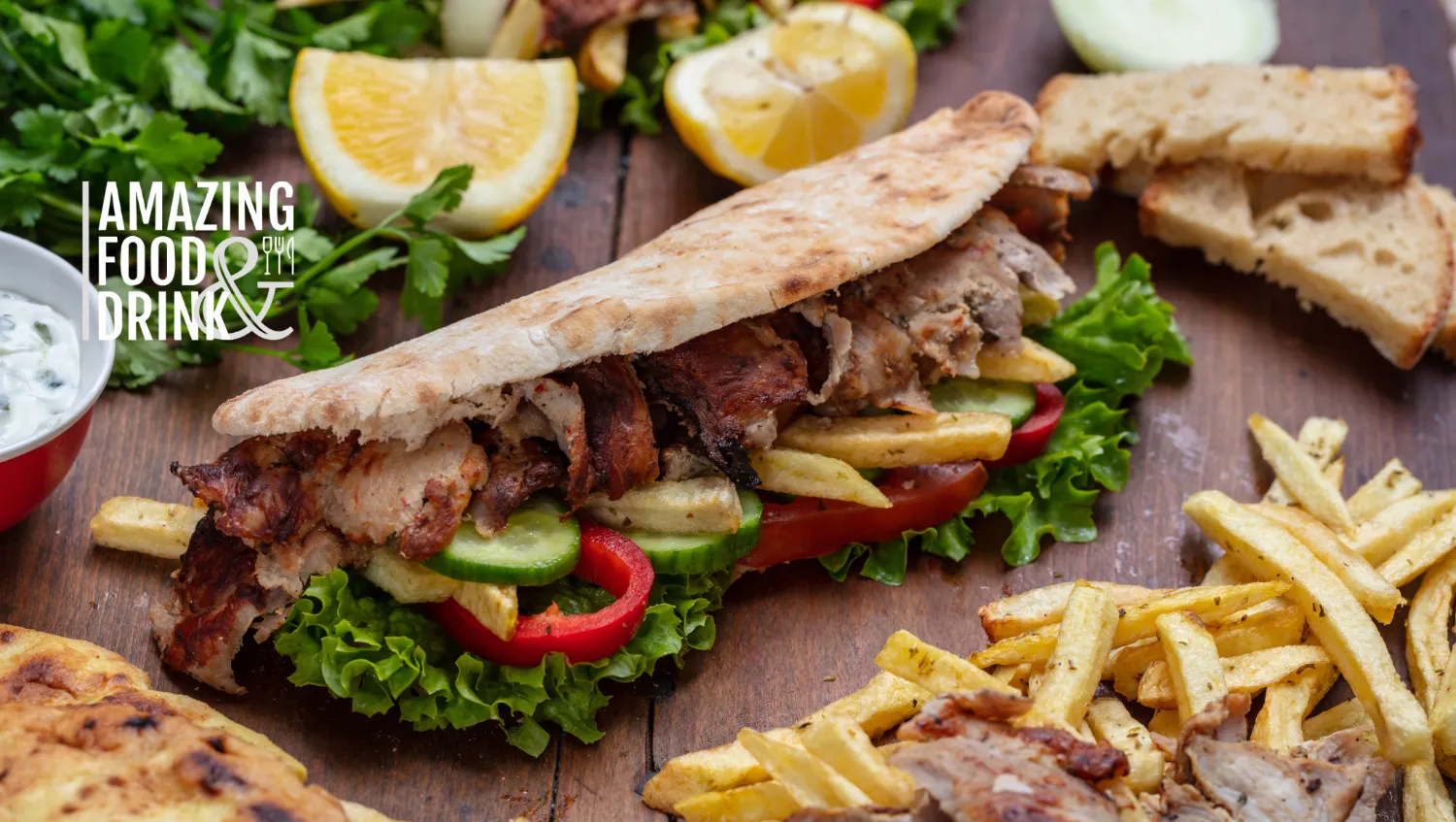
Gyros is a scrumptious Greek street food that bursts with different textures and flavours. It consists of thinly sliced meat, traditionally from pork, lamb, or chicken, seasoned with herbs and spices and roasted on a vertical rotisserie. Served in warm pita bread and garnished with fresh lettuce, tomatoes, french fries (sometimes) and tzatziki sauce.
Tzatziki sauce is a famous Greek sauce made of Greek yoghurt, cucumber, dill, lemon juice and garlic blended together into a rich and creamy consistency that brings all tastes together in the sandwich. Gyros offer a delightful and satisfying taste of Greece that’s enjoyed in many parts of the globe, especially in the US.
Souvlaki
Like Gyros, Souvlaki is small pieces of meat (usually pork or chicken) grilled on a skewer and served wrapped in pita bread with tomatoes, onions, and tzatziki sauce. If you feel ravenous and have no energy to eat on the go, you can relax and order Souvlaki as part of a platter besides white rice and other beloved side dishes of your choice. Souvlaki is one of the most famous Greek street foods that you do not want to miss during your visit to Greece.
Dolmades
Dolmades are delightful Greek delicacies that showcase a harmonious blend of flavours and textures. These stuffed vine leaves are typically filled with a savoury mixture of rice, herbs, spices, and sometimes minced meat. The rolls are then cooked to perfection and often served with a drizzle of lemon juice or yoghurt sauce. Dolmades are a popular appetiser or side dish, beloved for their unique taste and cultural significance in Greek cuisine, that you can easily find at local street food stalls.
Saganaki
Saganaki is a famous Greek street food that captures the heart with its simple preparation, making it a delightful comfort meal enjoyed by many. This dish usually features a slice of hard cheese, such as kefalograviera, kasseri, or halloumi, pan-fried till golden brown in an olive oil-glossed pan. It’s typically served straight from the heat, often with a squeeze of fresh lemon, and devoured while still sizzling, creating a harmonious blend of salty, tangy, and creamy flavours.
Greek Cold Cuts and Cheese
Greek cold cuts are popular among tourists looking to sample traditional street food, offering a taste of Greece’s rich culinary heritage. These cured meats, including delicacies like louza, camel pastrami, apaki, and sausage served as quick, flavourful snacks that are easy to enjoy on the go. Often paired with local cheeses and fresh bread, they make for a satisfyingly simple yet delectable meal. One of the most visited delis where you can have an authentic snacking experience is Miran Deli, featured in the My Fat Greek Wedding movie.
Moussaka’
Moussaka is a treasured dish in Greek street food culture made of a layered casserole of rich and hearty ingredients like eggplant, potatoes, and spiced minced meat, all topped with a creamy béchamel sauce. You can easily find this meal sold at various food stalls and small eateries throughout Greece.
Grilled Lamb Chops
Lamb chops, a quintessential Greek street food, offer a flavourful fusion of succulent meat marinated with herbs, olive oil, and lemon juice, grilled to perfection. These chops are often accompanied by spicy cheese dips, fried zucchini, crusty fresh bread and a side of fresh Greek salads.
Famous Greek Street Food Desserts
One of the beloved and most enjoyed parts of your food tour around Athens is going to be the desserts, where you get to explore more of the country’s culinary traditions. Many Greek desserts, such as Baklava and Galaktoboureko, heavily rely on phyllo pastry – thin, crispy layers of dough – creating a unique texture and flavour. Additionally, Greek yoghurt is a common ingredient used to add creaminess and balanced sweetness, highlighting the simplicity and versatility of these Greek staples.
Loukoumades
Loukoumades are traditional Greek pastries characterised by their light and fluffy texture. They are deep-fried dough spheres or doughnut-like rings that are drenched in sugar syrup. Frequently sprinkled with cinnamon, chopped nuts, or sesame seeds, loukoumades are a popular Greek indulgence, consumed as a dessert or a satisfying snack, particularly during festive events and gatherings. They are abundant in almost every corner of Greece, so you can easily pick them to warm your soul during the tour.
Greek Yoghurt
Feeling like a special treat without ruining your diet? Indulge in a classic Greek yoghurt dessert, a treat that’s light yet rich and creamy. Greek yoghurt is famous all over the world for being both healthy and really delicious. However, in Greece, they serve it with honey and crushed nuts, a combo that is hard to resist.
Looking for the best place to try it? Go for Stani, a spot that’s been in business for over 60 years. It has been praised for serving authentic Greek yoghurt desserts with starters that are just as old.
Baklava
Baklava, a classic Greek dessert, is a testament to the artistry of traditional Greek baking. Each delicate layer of the dessert is crafted from paper-thin sheets of phyllo dough, a generous sprinkle of chopped nuts, and a sweet mixture of honey and spices. In Athens, renowned spots like Phleïbor and Feyrouz are particularly famous, offering a taste of this millennia-old recipe and drawing in visitors and tourists with their reputation for the most irresistible baklava in the city.
Galaktoboureko
Galaktoboureko, a sublime Greek dessert, is a marvel of creamy custard enclosed within flaky phyllo pastry, all soaked in a sweet and aromatic syrup. The delicate balance between the smooth, semolina-based custard and the crisp pastry is a joy to savour. This custard pie is best sampled fresh from local bakeries where it’s made daily. If you are seeking the most authentic experience, Panorama – Zarras Bros and Liondi are among the well-renowned destinations cherished for their mastery of this sweet Greek delicacy.
Greek street food provides an exploration into the heart of Greek culture, offering a vibrant combination of flavours and textures through a delectable range of dishes. If you plan on visiting Greece, a foray into its bustling street food scene is a cornerstone of an authentic Greek experience.











 Nouran Ashraf
 Asmaa Alhashimy