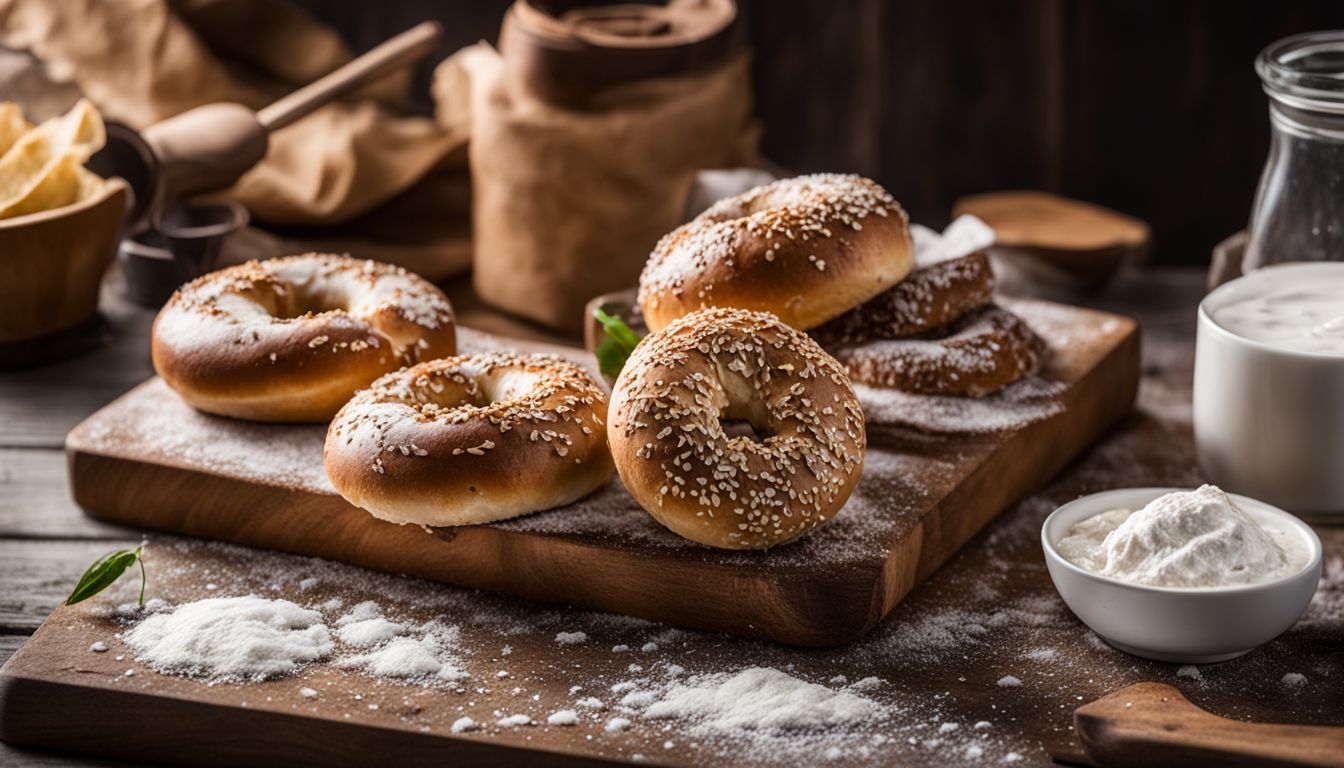
Are you yearning for that bona fide New York bagel but are miles away from the beloved Big Apple? There’s no need to fret, my friend. We have been in your trainers, and the jolly good news is that with a smidgen of elbow grease, we can transport New York straight into our cosy kitchens.
This blog post provides you with an easy-peasy recipe demonstrating how to rustle up crusty, toothsome and absolutely scrummy New York bagels at home. Are you prepared to turn this dream into a doddle? Let’s crack on!
Key Takeaways
New York-style bagels are known for their chewy texture and crusty exterior.
To make homemade New York-style bagels, you will need ingredients like bread flour, yeast, sugar, salt, barley malt syrup, water, and oil. You can also use honey as an alternative to barley malt syrup or sugar.
The dough is mixed and shaped using specific techniques to achieve the desired texture.
Boiling the bagels before baking gives them their unique taste and chewiness. This step helps form a gel on the exterior of the bagel while keeping the middle soft.
Homemade New York-style bagels can be topped with various classic toppings like cream cheese, lox (smoked salmon), red onion slices, and capers.
Bagels can also be turned into delicious sandwiches by adding fillings such as eggs, cheese, avocado or deli meats.
Storing homemade bagels properly will help keep them fresh. They can be stored in an airtight container at room temperature for up to two days or frozen for longer preservation.
Bagel dough can be made ahead of time and stored in the freezer for up to three months. Shaped bagels can be refrigerated for up to 2 days before baking.
Overview of New York-Style Bagels
New York bagels are known for their unique qualities, including a chewy texture and a crusty exterior.
What is a New York Bagel?
A New York bagel is a special type of bread. It is round like a doughnut, but it tastes different. This tasty treat stands out because of how you cook it. To make an authentic New York bagel, you first boil it in hot water.
You then bake it till the crust turns blistered and crunchy. Yet, its middle stays soft with a strong yeasty taste, making every bite chewy and yummy! Some people say that these bagels are the best in all of America – even calling New York City the ‘Bagel capital’.
Why are Bagels Boiled First?
Boiling bagels first makes them chewy. This step is a must in the bagel-making process. We put bagels in hot water for about 30 to 60 seconds before we bake them. The boil does more than make the bread chewy, though. It gives bagels an edge over other breads. When we add barley malt to the boiling water, it changes how the bagel tastes and feels.
The starch on its outside turns into a gel when boiled with this mix of water and malt. This makes our beloved leathery crust! So next time you bite into your favourite New York-style bagel, thank the prebaked boil for its unique taste and texture.
Why Do Bagels Have Holes?
Bagels have holes for smart reasons. The hole helps to spread your favourite toppings or fillings with ease. It makes handling the bagel fun and enjoyable. New York-style bagels often have larger holes in them, about 1-1 ½ inches wide.
This is a key part of their charm! Yet, it’s sad that over time, these big bagel holes may get smaller or even vanish. Let’s enjoy this unique feature while we still can!
Homemade New York-Style Bagel Recipe
To make the perfect homemade New York-style bagels, gather ingredients such as lukewarm water, barley malt syrup, yeast, bread flour, and instant dry yeast. Then, mix and shape the dough using specific techniques to achieve that chewy texture we all love.
Increase flavour by boiling the bagels in a water and sugar mixture before baking them.
Ingredients
Let’s share the items you need for a homemade New York-style bagel. It’s a simple list, but each item has a key role in creating that perfect bagel:
Bread flour: The main part of your bagel dough.
Instant dry yeast: This helps your dough rise.
Sugar: Just enough to add a touch of sweetness to your bagels.
Salt: Gives the right balance to the taste.
Barley malt syrup: It’s added for that signature flavour in every bite.
Water and oil: Mixed together as part of the liquid mixture in this recipe.
Brown sugar is another ingredient mixed into the liquid component for a hint of rich caramelised taste!
Baking soda and salt are used in water to boil before baking.
httpss://www.youtube.com/watch?v=W8j-ZUp7KD0
Mixing and Shaping Techniques
Making a homemade New York-style bagel is fun. You can do it in simple steps:
Start by mixing all your needed ingredients together.
Knead the dough until it becomes smooth. This gives your bagels that chewy and dense texture.
Shape the dough into round balls.
Press a finger into the middle of each ball to make a hole.
You can also try a tricky way of shaping called the Turkish Simits Breads method.
To make a bagel sandwich, simply slice a bagel in half and spread your chosen filling on the inside of each half. Then, put the two halves together and enjoy!
Bagel sandwiches are a great way to start your day on a delicious note. They are also a versatile food that can be customized to fit your own taste preferences. So, next time you want a satisfying and flavourful breakfast or brunch option, try a bagel sandwich!
Increasing Flavour
Let’s talk about adding taste to your homemade bagels. Each ingredient in the recipe plays its part. The yeast and barley malt syrup make the dough sweet and tangy. Letting the dough sit overnight adds depth to this tanginess, enhancing the taste of your New York-style bagels even more.
For a same-day bagel recipe, you can opt for a longer rise time at room temperature. This allows the yeast to work its magic on improving flavour! Trying out different toppings also plays a big role in varying flavours; think crunchy sesame seeds, poppy seeds or flaky sea salt sprinkled before baking. Each bite fills you with rich textures that only an authentic NY bagel offers.
Boiling the Bagels
Boiling the bagels is a must for making homemade New York-style bagels. The boiling step is essential for making authentic bagels. Without it, the bagels would not have the same texture, flavour, or appearance. So, next time you enjoy a bagel, remember that the simple act of boiling is what makes it so special. Here are the steps you need to follow:
First, boil a pot of water.
Once the water starts bubbling, drop in your bagels.
Let each side of the bagel boil for 15 to 30 seconds.
The boiling process changes how the starch on the exterior acts. It forms a gel.
This gel helps give your bagel a crusty crust after baking.
It also helps make the middle part soft and chewy.
This soft interior and crusty exterior is what New York-style bagels are known for!
After boiling, place your bagels on a baking sheet to let them dry.
Then, you can add any toppings you like before baking.
Serving Suggestions for New York-Style Bagels
Homemade Toasted Everything New York Bagel with Cream Cheese
For a traditional and delicious combination, top your New York-style bagel with classic toppings such as cream cheese, lox (smoked salmon), red onion, and capers.
Get creative with bagel sandwiches by filling them with your favourite ingredients like egg, cheese, avocado, or deli meats for a hearty meal on the go.
Don’t forget to serve your bagels with accompaniments like pickles, olives, or a side of fresh fruit to complete the experience.
Classic Toppings
One of the best things about New York-style bagels is that they can be topped with so many delicious options. Here are some classic toppings to try:
Cream cheese varieties: Plain, flavoured, or even whipped cream cheese can add a creamy and tangy layer to your bagel.
Traditional bagel toppings: Don’t forget the classics like sliced tomatoes, red onions, and capers for a classic lox and cream cheese bagel.
Delicious bagel combinations: Try pairing your bagel with smoked salmon, avocado, and a sprinkle of everything seasoning for a tasty combination.
Tasty bagel fillings: If you want something more substantial, consider adding sliced deli meats, lettuce, and tomato for a satisfying sandwich-like experience.
New York-style bagel suggestions: Some popular choices in New York include lox (smoked salmon), whitefish salad, or pastrami.
Versatile bagel customisation: Get creative and experiment with different spreads like hummus or pesto, or try topping your bagel with scrambled eggs and bacon for a breakfast twist.
Favourite bagel accompaniments: Add some extra flavour by serving your bagels with pickles, olives, or even a side of coleslaw.
Bagel Sandwich Ideas
A bagel sandwich is a classic breakfast or brunch food that consists of a bagel that is sliced in half and filled with a variety of ingredients. There are many bagel sandwich types, but some are the most popular. We love coming up with different ideas for bagel sandwiches. Here are some tasty combinations you can try:
Classic cream cheese and tomato: Spread a generous amount of cream cheese on your toasted New York-style bagel and top it with slices of fresh tomato.
Cucumber and herb cream cheese: Mix chopped cucumber into your creamy herb-flavoured cream cheese and spread it on your bagel. It’s a refreshing and flavourful option.
Pastrami sandwich: Layer slices of savoury pastrami on your bagel, along with some mustard or spicy mayo for an extra kick.
Lox bagel: A classic combination, spread cream cheese on your bagel and top it with thinly sliced smoked salmon (lox). Add some capers, red onion slices, and a squeeze of lemon juice for the perfect lox bagel.
Breakfast sandwich: Turn your New York-style bagel into a hearty breakfast sandwich by adding scrambled eggs, crispy bacon or sausage, and melted cheese.
Bagel Accompaniments
When it comes to enjoying New York-style bagels, you can try many delicious accompaniments. Here are some tasty options:
Toppings: Spread your favourite cream cheese flavour on top of the bagel. You can also add sliced cheese, lox (smoked salmon), avocado, or tomato for extra flavour.
Spreads: Instead of cream cheese, try spreading butter or jam on your bagel for a sweet and savoury twist.
Condiments: Add some kick to your bagel with condiments like mustard, mayonnaise, or hot sauce.
Storing and Freezing Homemade Bagels
To store homemade bagels, place them in an airtight container or zip-top bag at room temperature for up to two days.
How to Store Bagels?
To keep your bagels fresh and delicious, it’s important to store them properly. After all, no one likes a stale bagel! If you plan on enjoying your bagels within a week, simply keep them in a cool and dry place like your pantry.
They’ll stay nice and fresh for about five days at room temperature. However, if you want to keep your bagels for longer than that, freezing is the way to go. When freezing homemade bagels, make sure they are completely cooled down first. Wrap each bagel individually in plastic wrap or aluminium foil to prevent freezer burn. Then, place them in an airtight container or resealable plastic bags before popping them into the freezer.
When you’re ready to eat one of those frozen delights, simply remove it from the freezer and let it thaw at room temperature for a few hours or overnight. You can also warm it up in the oven or toaster if you prefer your bagel slightly toasted.
Can Bagel Dough be Made Ahead?
Yes, bagel dough can be made ahead to save time and make it easier when you’re ready to bake your delicious New York-style bagels. You can prepare the dough in advance and store it in the freezer for up to three months.
Even after three months, the dough will still be safe to use. If you want to shape your bagels ahead of time, you can refrigerate them for up to 2 days once they pass the float test. This is a great way to have fresh homemade bagels whenever you want them without having to make the dough from scratch every time.
Tips for Freezing Bagels
Freezing bagels is a great way to keep them fresh for longer. Here are some tips for freezing bagels:
Slice the bagels before freezing: Although it is recommended to keep bagels whole to maintain freshness, slicing them before freezing can make it easier to defrost and toast.
Wrap the bagels individually: To prevent freezer burn and maintain their texture, wrap each bagel individually in aluminium foil or plastic wrap.
Use a freezer-safe container or bag: Place the wrapped bagels in a freezer-safe container or resealable freezer bag to protect them from moisture and other flavours in the freezer.
Label and date the package: It’s important to label your frozen bagels with the date they were frozen so you know how long they have been stored.
Freeze immediately: To preserve the freshness of your bagels, freeze them as soon as possible after baking or purchasing.
Avoid defrosting and refreezing: Once you have thawed and toasted a frozen bagel, it is best not to refreeze it, as this can affect its texture and taste.
Conclusion
In conclusion, making your own New York-style bagels at home is easier than you think. With a few simple ingredients and some basic techniques, you can enjoy the authentic taste and texture of these iconic bagels right in your own kitchen.
So why not give it a try and impress your friends and family with delicious homemade bagels that are just like the ones from New York? Get ready to savour every bite of these chewy, crusty delights!
FAQs
1. What ingredients do I need to make New York bagels?
To make New York bagels, you will need flour, yeast, water, sugar, salt, and optionally toppings like sesame seeds or poppy seeds.
2. How long does it take to make New York bagels?
The process of making New York bagels typically takes about 2-3 hours from start to finish, including rising and baking time.
3. Do I need any special equipment to make New York bagels?
No special equipment is required to make New York bagels. However, having a large pot for boiling the dough rings before baking can be helpful.
4. Can I freeze homemade New York bagels?
Yes, you can freeze homemade New York bagels. After they have cooled completely, place them in an airtight container or freezer bag and store them in the freezer for up to 1 month.
5. Are there any variations or substitutions I can try with the recipe?
Sure, here are some variations and substitutions you can try with the Banana Chocolate Chip Power Muffin recipe. Feel free to experiment with different variations and substitutions to find your favourite flavour combinations and dietary needs. Enjoy the deliciousness!



 Asmaa Alhashimy