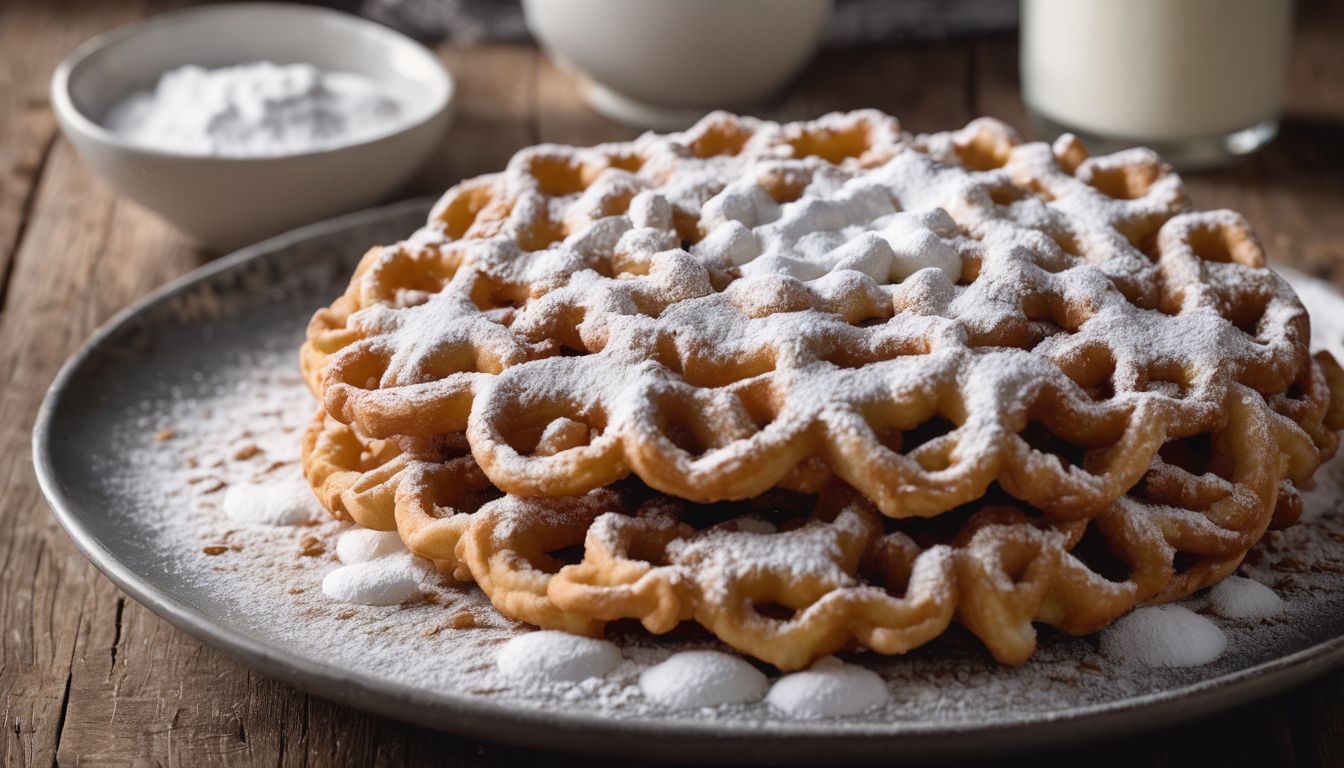
A golden, perfectly crispy funnel cake dusted with powdered sugar is a carnival icon. It’s associated with warmth, sweetness, and a hint of nostalgia. However, what if dairy restrictions stand between you and that golden, sugary bliss?
This dairy-free funnel cake recipe is here to save the day (and your cravings). You can ditch the dairy and still make a fluffy, golden masterpiece that explodes with the same addictive crunch and sweet satisfaction as the original.
So, let’s explore the secrets to crafting a dairy-free funnel cake that delivers explosions of crispy, golden goodness with every bite. We’ll also examine a collage for mouthwatering dairy-free toppings to complement your delicious creation.
What is Funnel Cake?
Funnel cakes, also known as funnel fries or carnival cakes, have a rich history dating back to the late 1800s in Pennsylvania, USA. They were originally street food but became, over time, staples at carnivals and fairs, their sweet aroma and addictive crunch drawing in crowds.
The essence of a funnel cake lies in its simplicity. It’s made with a basic batter of flour, eggs, milk (traditionally), sugar, and leavening agents like baking powder. This batter is then poured through a funnel (which is why it’s called so) into hot oil, creating a swirling, web-like pattern. As it fries, the batter puffs up, resulting in a light, airy interior with a crispy exterior.
The funnel-shaped pouring technique is what truly sets this dessert apart. It allows for thin layers of batter to cook quickly, creating the characteristic crispy edges. The swirling pattern also creates pockets of air within the dough, resulting in a light and fluffy texture.
Defining “Dairy-Free”
Dairy-free simply implies the complete absence of any ingredients derived from the milk of mammals (cows, goats, sheep, etc.). This encompasses everything from lactose to casein, two prominent proteins found in dairy products.
Reasons to Go Dairy-Free
For some, opting for a dairy-free funnel cake is more than just a dietary choice; it’s a necessity. Lactose intolerance, a common condition where our bodies struggle to digest milk sugar, can lead to unpleasant bloating, gas, and discomfort after indulging in dairy-laden delights.
Beyond lactose suffering, dairy-free options cater to a growing movement towards plant-based lifestyles. Veganism, driven by ethical and environmental concerns, embraces a dairy-free diet.
Even for those not bound by dietary restrictions, a dairy-free funnel cake can be a delightful surprise. Often lighter and less greasy than its traditional counterpart, it offers a guilt-free indulgence, a chance to savour the sweetness without the heaviness.
Benefits of Dairy-Free Funnel Cake
Firstly, it opens up a delicious world of allergy-friendly treats, allowing those with dairy sensitivities to savour the crispy-golden joy without worry.
Secondly, it’s a fantastic way to explore the exciting realm of vegan desserts, aligning with plant-based lifestyles and often being lighter on saturated fats.
Lastly, it allows you to experiment with new flavours and textures, discovering how alternative milk options and plant-based ingredients can bring a unique twist to this classic carnival delight.
Dairy-Free Funnel Cake Recipe
Ready to craft your own dairy-free funnel cake? This recipe will guide you on how to make the perfect dairy-free funnel cake at home that’s every bit as golden, fluffy, and irresistible as the original.
Ingredients
1 1/3 cups all-purpose flour
2 1/2 tablespoons sugar
3/4 teaspoon baking powder
1/2 teaspoon baking soda
1/4 teaspoon salt
1 egg
3/4 cup + 2 tablespoons dairy-free milk
1 teaspoon vanilla extract
High-heat oil
Powdered sugar for dusting
Instructions
httpss://www.youtube.com/watch?v=4xX-zz7WHQo
Choose a deep frying pan or Dutch oven and pour in enough oil to reach a depth of about 2 cm. Heat the oil over medium-high heat, aiming for a temperature of 190°C (375°F).
Mix the dry ingredients (flour, sugar, baking powder, baking soda, and salt) in a large bowl.
Whisk together the egg, dairy-free milk, and vanilla extract in a separate bowl until well combined.
Slowly pour the wet ingredients into the dry ingredients and whisk until just smooth. Don’t overmix.
Hold the funnel (a squeeze bottle can work, too!) over the hot oil and slowly pour the batter through, creating a web-like pattern.
Let the funnel cake cook for about 1-2 minutes per side or until golden brown and crispy. Gently flip using a spatula or tongs.
Transfer the cooked funnel cake to a plate lined with paper towels to drain any excess oil.
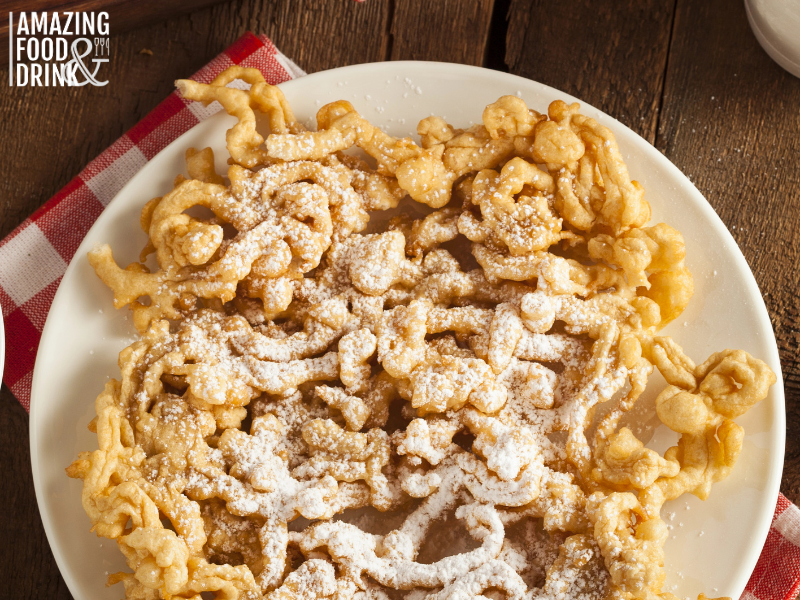
Once golden and crispy all over, give it a generous dusting of powdered sugar on top. Pro tip: Sift the powdered sugar for an even distribution.
Dairy-Free Funnel Cake Toppings
When your golden, crispy funnel cake is ready, don’t stop at the limitations of plain powdered sugar. Ditch the boring and embrace a universe of flavour with these dairy-free topping ideas that will elevate your funnel cake experience.
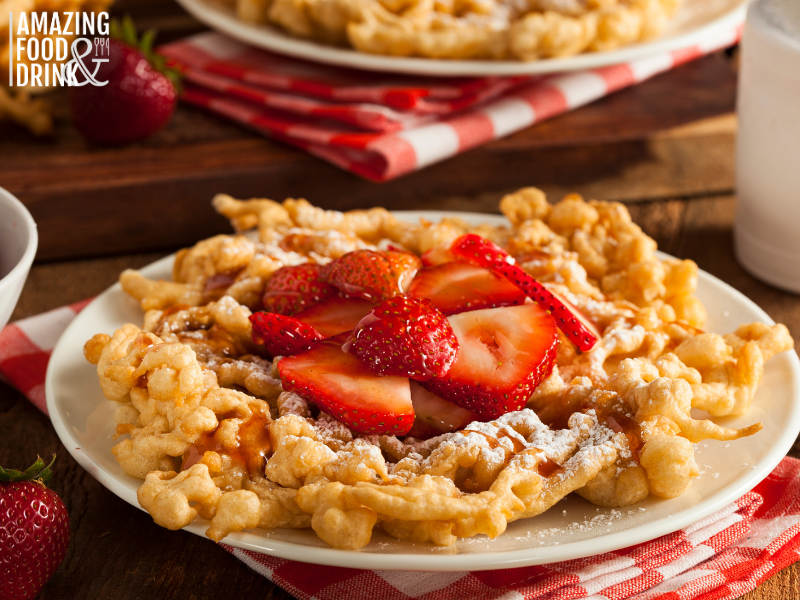
Fresh Berries: Top your funnel cake with a vibrant medley of fresh berries like blueberries, raspberries, strawberries, or blackberries. The burst of sweetness and juicy pops of colour will leave you refreshed and wanting more.
Citrus Flavour: Slices of blood orange, grapefruit, or mandarin orange add a tangy zesty kick. Drizzle with honey-lemon syrup for a refreshing twist.
Tropical Taste: Diced mango, pineapple, and kiwi bring a taste of paradise. For an autumn twist, try a warm compote of apples, cinnamon, and raisins with a dollop of coconut whipped cream.
Chocolate Sauce: Drizzle your funnel cake with rich vegan chocolate sauce for a classic combination. Sprinkle with chopped nuts or a scoop of dairy-free ice cream for an irresistible indulgence.
Salted Caramel: Top your cake with warm vegan caramel sauce and a sprinkle of sea salt for a sweet-salty symphony. Add chopped pecans for a delightful textural contrast.
Peanut Butter: Drizzle with creamy vegan peanut butter and sprinkle with chopped peanuts.
Spiced Yoghurt: Mix plain plant-based yoghurt with ground cinnamon and a touch of honey for a warm and flavorful topping. Top with chopped apples and walnuts for a satisfying autumn treat.
Whipped Cream: Top your funnel cake with a dollop of homemade vegan whipped cream or plant-based yoghurt for tangy sweetness. For a playful twist, swirl in flavoured syrups like raspberry or hazelnut.
Serving Suggestions & Pairings for Dairy-Free Funnel Cake
Your dairy-free funnel cake is a masterpiece on its own, but the true magic unfolds when you pair it with the perfect complement.
Ice Cream: Keep it nostalgic with a scoop of dairy-free ice cream alongside your funnel cake. Vanilla, strawberry, or even mint chocolate chip are perfect partners for a taste of classic carnival joy.
Sundae: Go all out with a DIY dairy-free sundae! Top your funnel cake with ice cream, whipped cream, chopped nuts, and a drizzle of your favourite sauce.
Iced Tea or Sparkling Lemonade: Elevate your funnel cake experience with a refreshing glass of iced tea or sparkling lemonade. The light bubbles and subtle sweetness perfectly complement the crispy texture and rich flavours.
Mulled Magic: On a chilly day, warm up with a mug of spiced mulled cider. The fragrant spices and warm apple notes create a cosy and comforting pairing for your dairy-free funnel cake.
Coffee: Indulge in a cup of rich coffee alongside your funnel cake for a decadent treat. The contrasting flavours and textures create an unexpected and delightful combination.
Tips for a Perfect Homemade Dairy-Free Funnel Cake
The secret of a perfectly crafted dairy-free funnel cake lies in achieving that golden-hued crispness with a light and fluffy interior. These tips will guide you through the process.
Choose a plant-based milk you enjoy the taste of, like almond, soy, or oat milk. Ensure it’s unsweetened to avoid overpowering the batter’s sweetness.
Gently combine the wet and dry ingredients until just incorporated. Overmixing activates the gluten in the flour, resulting in a tough, dense funnel cake.
Aim for a funnel cake batter that’s slightly thicker than pancake batter. It should flow easily through the funnel but not be runny. If needed, adjust the milk by tablespoons until you reach the desired consistency.
Let your batter rest at room temperature for about 15 minutes before frying. This allows the gluten to relax, ensuring a tender and fluffy texture.
Keep the oil temperature consistent for even cooking. Oil that’s too hot will burn the outside while leaving the inside raw, while oil that’s too cold will result in greasy, soggy funnel cakes.
Pour the batter into the oil slowly and steadily in a circular motion, creating a thin and even layer.
Don’t overcrowd the pot while frying; cook the funnel cakes in batches for even browning.
Once golden brown on one side, gently flip the funnel cake using a spatula or tongs. Don’t prod or press, as this can tear the delicate batter.
How to Store and Reheat Your Dairy-Free Funnel Cake
Don’t let the leftover funnel cakes go to waste! With proper storage and reheating techniques, you can enjoy the crispy swirls and fluffy texture even days later. Let’s explore the best practices for extending the life of your homemade funnel cake.
Storing at Room Temperature or Refrigerating
Before storing, ensure your funnel cakes are completely cool at room temperature. Storing warm or hot cakes can trap moisture and lead to sogginess.
Place cooled funnel cakes in an airtight container or wrap them tightly in plastic wrap. This prevents them from drying out or absorbing other flavours in the fridge.
Room-temperature storage is perfectly fine if you plan to enjoy your funnel cakes within 24 hours. However, for longer periods (up to 3 days), refrigerate them for optimal freshness.
Freezing for Long-Term Storage
For long-term storage (up to 1 month), freezing is your best bet. Allow funnel cakes to cool completely, then flash-freeze them individually on a baking sheet lined with parchment paper. Once frozen solid, transfer them to airtight freezer bags or containers.
Label your frozen funnel cakes with the date to help you keep track of how long they’ve been stored and ensure you enjoy them at their peak freshness.
Reheating Options and Instructions
Oven: Preheat your oven to 175°C (350°F). Place frozen or refrigerated funnel cakes on a baking sheet lined with parchment paper and bake for 5-7 minutes or until warmed through and slightly crisp.
Air Fryer: If you have an air fryer, preheat it to 175°C (350°F). Place the funnel cakes in the basket and air fry for 3-5 minutes or until warm and crispy.
Toaster: For a quick fix, use a toaster oven or toaster (if it fits) to gently warm your funnel cakes for a minute or two. This is a great option for individual cravings.
Bonus Tip: When reheating frozen funnel cakes, consider adding a touch of water or plant-based milk to the baking sheet or air fryer basket to prevent them from drying out.
Final Thoughts
The secrets to crafting and enjoying a flawless dairy-free funnel cake are now yours to explore. With this recipe, you can unlock a world of deliciousness without sacrificing flavour or texture.
If you’re hungry for more, our website offers much inspiration to satisfy your sweet tooth and cater to dietary needs. Check our guide to crafting dairy-free macarons with plant-based ingredients, ensuring you achieve that perfect shell and creamy filling without the dairy. You can also dive into our collection of dairy-free muffin recipes for moist and flavourful muffins with non-dairy ingredients, and many more recipes await!






 Shaimaa Olwan
 Nouran Ashraf