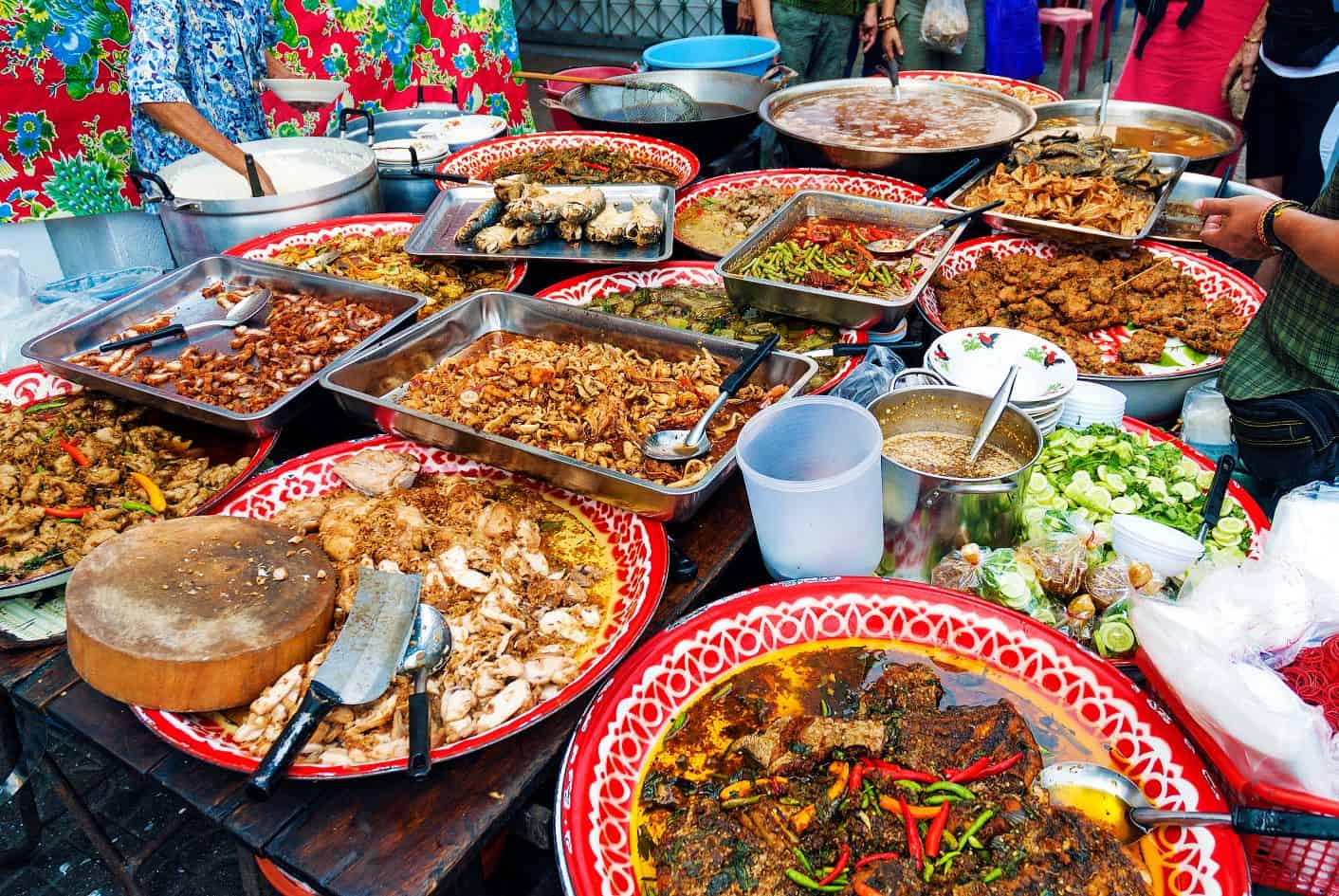
Thai street food, known locally as Ahaan Rim Tang, is the nation’s social adhesive. From finance executives to motorcycle taxi drivers, the street-side plastic stool is the great equaliser. Here, the “Five Flavours” of Thai cuisine, salty, sweet, sour, spicy, and bitter, are balanced with precision on a single-ring gas burner.
Street food captures the essence of Thailand, reflecting its culture and hallmark ingredients. This guide explores regional complexities from the North to the South, offering authentic recipes you can recreate at home.
Table of Contents
The Soul of the Sidewalk: Understanding Thai Street Food Culture
To the uninitiated, a Thai street food stall might look like chaos. In reality, it is a masterpiece of micro-specialisation. Most Thai vendors perfect just one or two dishes over decades.
The Evolution of the Street Food Stall
Thai street food culture accelerated with Bangkok’s urbanisation in the 1960s. The influx of workers created demand for “moveable feasts,” marrying indigenous Thai ingredients with Chinese Teochew techniques such as wok cooking, stir-frying, and noodles.
The Philosophy of the Five Flavours
The hallmark of authentic street food is Ros Chart, the “taste” of the dish. Master street cooks balance five pillars:
Salty (Khem): Fish sauce or fermented salts
Sweet (Waan): Palm sugar’s caramel notes
Sour (Preow): Lime juice or tamarind pulp
Spicy (Phet): Bird’s Eye chillies
Bitter (Khom): Raw herbs or charred garlic
The Etiquette of the Street
In Thailand, street food is a “sit-down” experience. The condiment caddy (Kruang Prung) lets you customise with sugar, dried chilli flakes, vinegar-soaked chillies, and fish sauce after tasting first.
A Regional Journey: Beyond the Bangkok Classics
Thailand’s street food varies dramatically by region, each reflecting distinct cultural influences, climates, and agricultural traditions. Understanding these regional differences is key to appreciating the full spectrum of Thai cuisine.
Central Thailand: The Balance of Sweet and Salty
Central Thailand, anchored by Bangkok, represents the most internationally recognised Thai food. This region showcases the perfect fusion of Chinese techniques with Thai ingredients.
Signature Dishes: Pad Thai, Hoy Tod (oyster omelette), and Boat Noodles. The cooking style emphasises balance, not too spicy, with gentle interplay between palm sugar and fish sauce.
Isan (Northeast): Smoke, Spice, and Fermentation
The Northeast region, bordering Laos and Cambodia, produces some of Thailand’s most distinctive street food. The cuisine here is unapologetically bold with grilled meats, fermented fish, and wild herbs.
Signature Dishes: Som Tam (green papaya salad), Moo Ping (grilled pork skewers), and sticky rice are staples.
The North (Lanna): Aromatic Bitters and Rich Curries
Northern Thailand, particularly around Chiang Mai, showcases cuisine influenced by Burma and Yunnan province in China. The cooler climate allows for different ingredients, with food that’s less spicy but more aromatic.
Signature Dishes: Khao Soi (curry noodle soup), Sai Oua (Northern Thai sausage), and Nam Prik Ong (tomato and pork dip).
The South: Intense Heat and Turmeric
Southern Thai cuisine is perhaps the most challenging for Western palates, featuring aggressive heat from fresh bird’s eye chillies and the distinctive yellow hue of turmeric. Muslim influences bring more lamb and beef dishes.
Signature Dishes: Khua Kling (dry curry with minced meat), Roti with curry sauce, and Massaman Curry.
The Home-Street Kitchen: Essential Equipment and UK Sourcing
Recreating authentic Thai street food at home requires specific equipment and ingredients. Here’s your practical guide to setting up your kitchen for success.
Essential Equipment
The right tools make all the difference when cooking Thai food at home. These items will help you achieve authentic results.
Carbon Steel Wok: A 14-inch carbon steel wok allows you to achieve Wok Hei, the “breath of the wok” that distinctive smoky flavour. Season it properly before first use.
Clay Mortar and Pestle: Thai cooking requires pounding, not grinding. A large clay mortar (Krok) is essential for curry pastes and Som Tam.
Rice Cooker: Ensures perfectly steamed jasmine rice every time.
Sourcing Thai Ingredients in the UK
Finding authentic ingredients is easier than ever in the UK. Here’s what to look for and where to find it.
Essential Pantry Items:
Fish Sauce (Nam Pla): Look for Squid Brand or Megachef
Palm Sugar (Nam Tan Peep): Sold in round discs
Tamarind Paste: Buy seedless tamarind pulp
Thai Basil (Horapa): Available at larger Tesco or Waitrose stores
Holy Basil (Grapao): Essential for Pad Kra Pao
UK Sourcing:
Wing Yip: Comprehensive Thai ingredients, including fresh galangal
13 Delectable Thai Street Food Dishes You Should Try
These 13 iconic dishes represent the heart of Thai street food culture. Each recipe has been tested for home cooking with detailed instructions and authentic techniques.
1. Satay
Origin: Indonesia, adopted throughout Southeast Asia
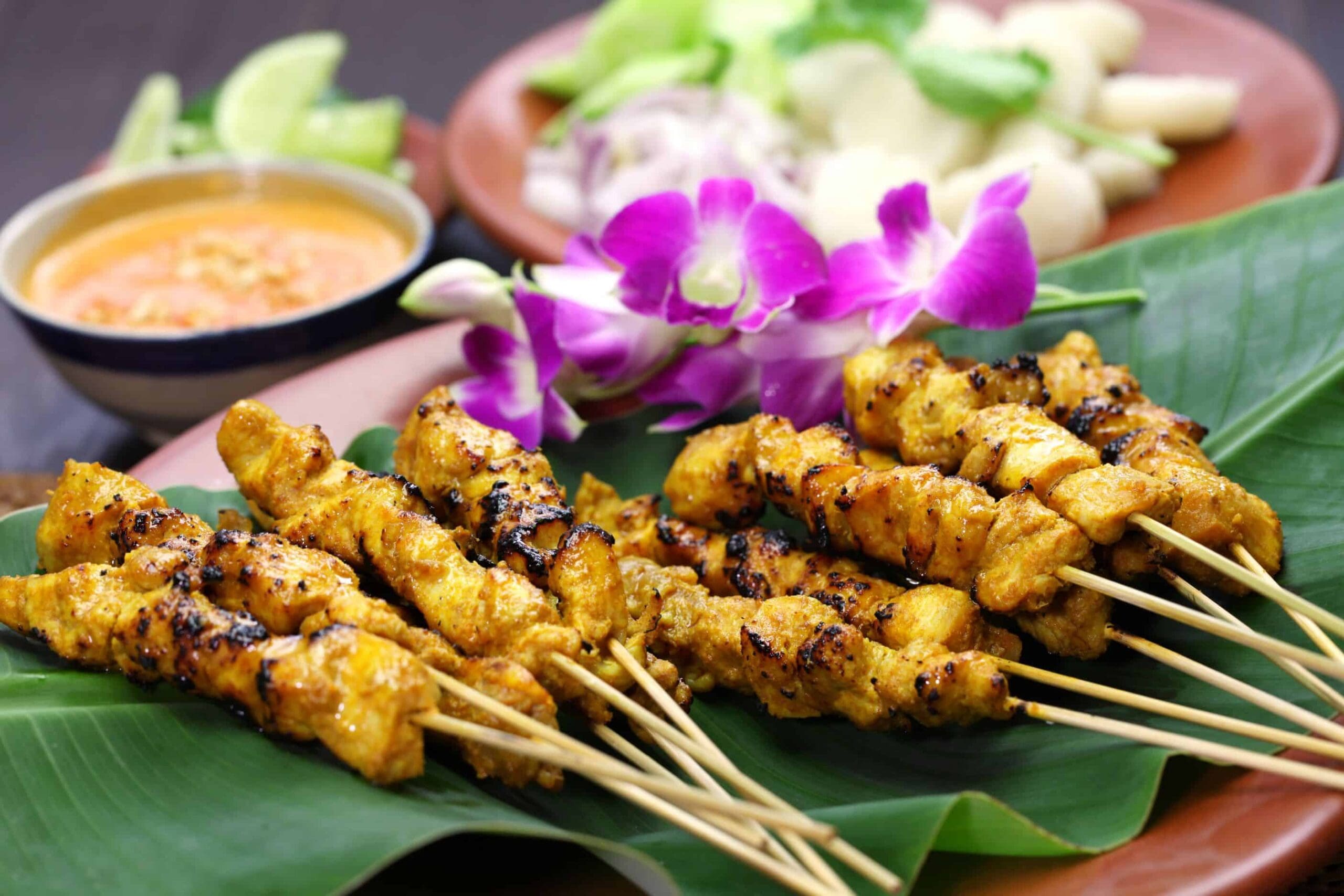
Satay is one of the most popular Thai street foods. This dish features grilled meat seasoned with fish sauce, coconut milk, and curry paste. Pork and chicken are the most commonly used meats, but beef and tofu are often used as well.
The Secret: The authentic peanut sauce is made from scratch with roasted peanuts ground with coconut cream, tamarind, and palm sugar for a sauce that’s simultaneously sweet, sour, and creamy.
Marinate chicken for 2 hours. Thread onto skewers.
Grill 3-4 minutes per side until charred.
For the sauce: Grind the peanuts, then simmer with the remaining sauce ingredients for 5 minutes.
Serve with cucumber relish.
2. Som Tam (Thai Green Papaya Salad)
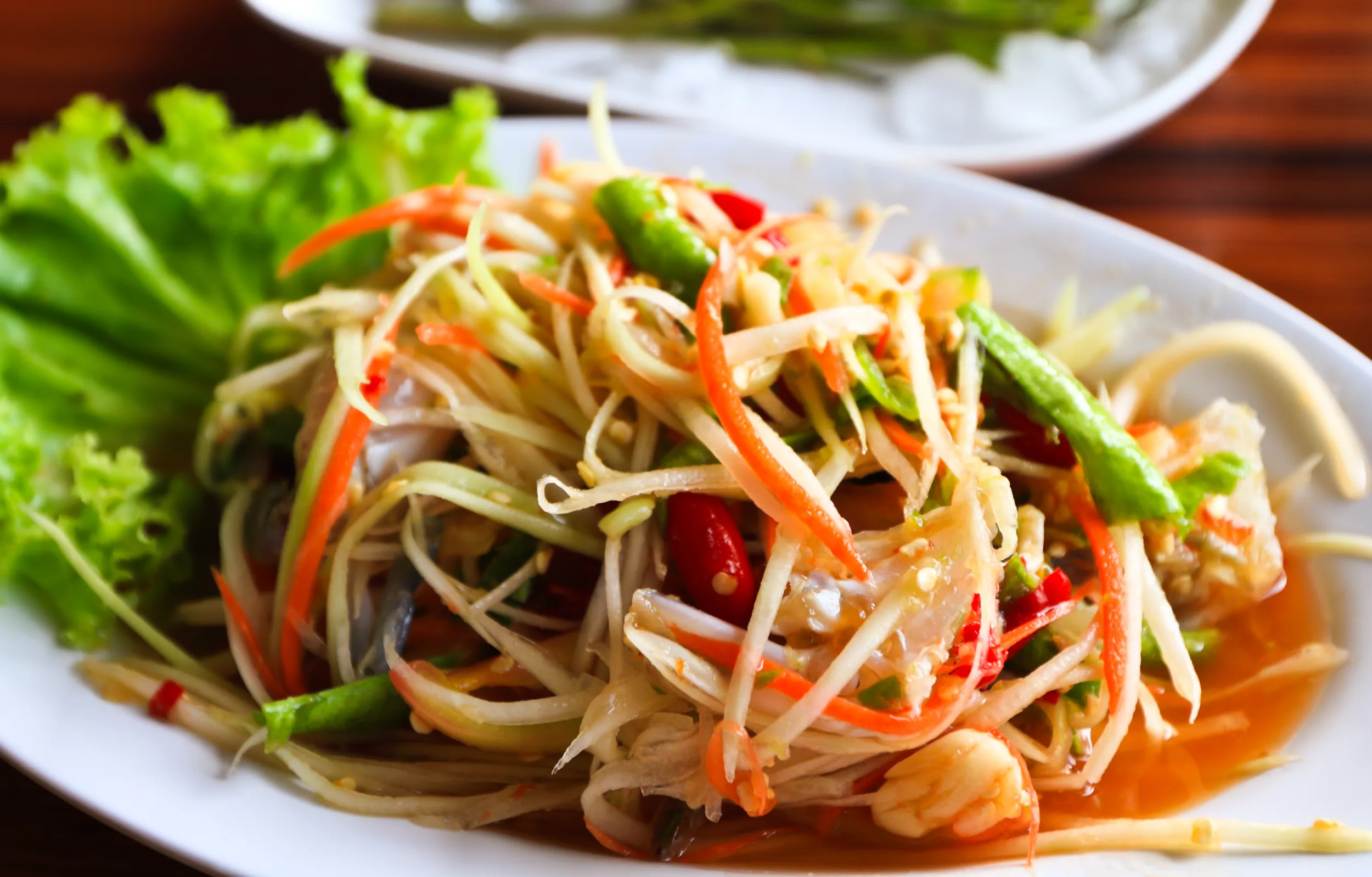
Som Tam, or Thai Papaya Salad, is a famous Thai street food and one of the most loved salads around the world. This refreshing dish features savoury and spicy flavours with fish sauce, toasted peanuts, shredded papaya, dried shrimp, and lime juice.
The Traditional Technique: Authentic Som Tam is made in a clay mortar. The pounding action breaks down the papaya fibres and chillies, releasing their flavours whilst creating the signature bruised texture.
Prep Time: 15 minutes | Servings: 2
Ingredients
400g green papaya (julienned)
2-4 bird’s eye chillies
2 garlic cloves
2 tbsp dried shrimp
3 tbsp lime juice
2 tbsp fish sauce
2 tbsp palm sugar
100g cherry tomatoes (halved)
50g long beans (cut)
2 tbsp roasted peanuts
Instructions
Pound garlic and chillies in a clay mortar.
Add shrimp, pound lightly. Add palm sugar, pound until dissolved.
Stir in fish sauce and lime juice.
Add long beans and tomatoes, lightly bruise.
Add papaya, toss to coat. Garnish with peanuts.
3. Khao Pad (Fried Rice)
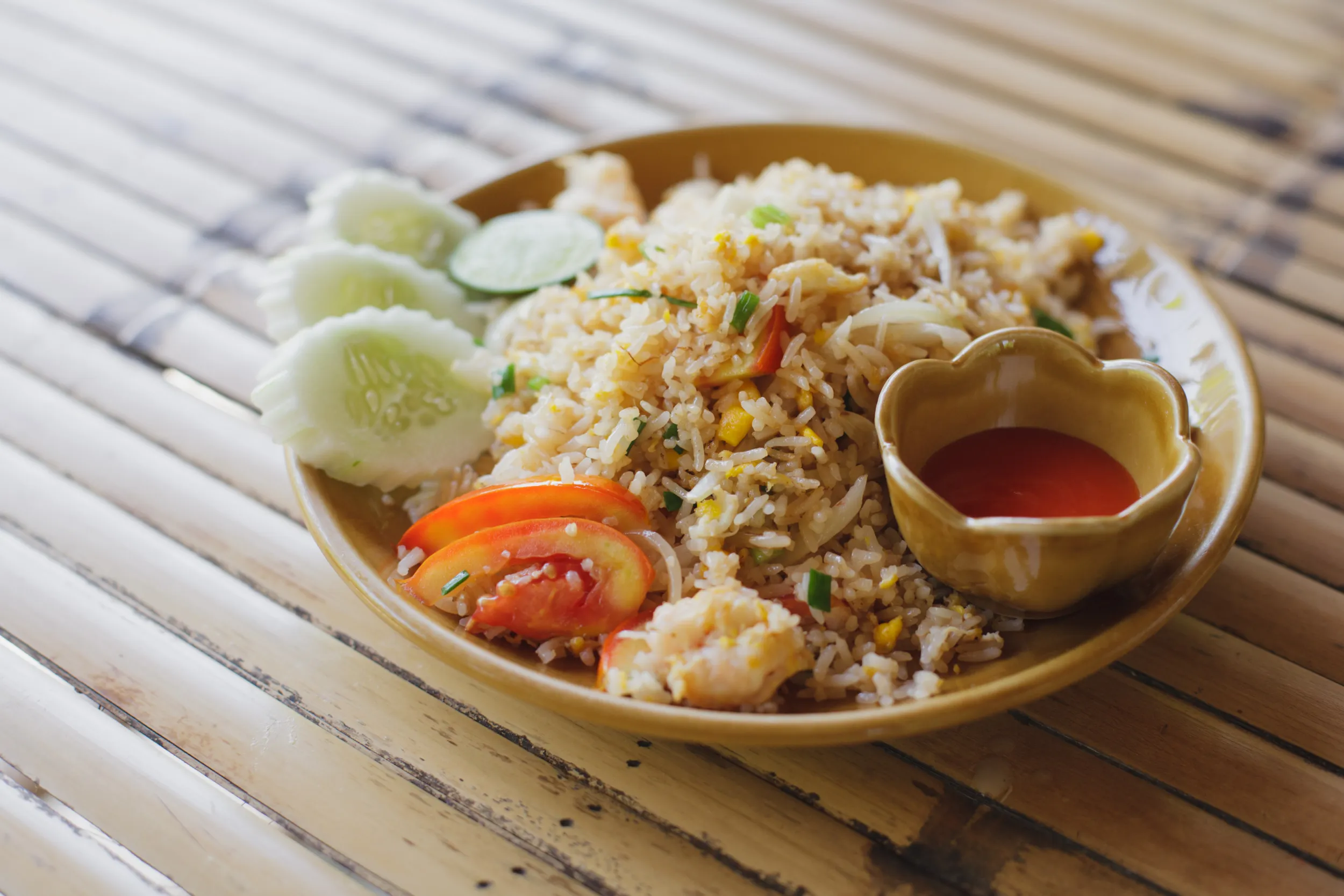
Rice stars in several Thai street food dishes as the main element. This plate features egg, fish sauce, oyster sauce, soy sauce, spring onion, garlic, lime, and chilli. It’s an authentic representation of Thai cuisine’s primary flavours: salty, spicy, and sweet.
The Key to Perfect Fried Rice: Use day-old rice. Freshly cooked rice is too moist and will become mushy. Day-old rice has dried out slightly, allowing each grain to stay separate and crisp up in the hot wok.
Add sauces and sugar. Return eggs, add spring onions, and toss.
Serve with lime wedges.
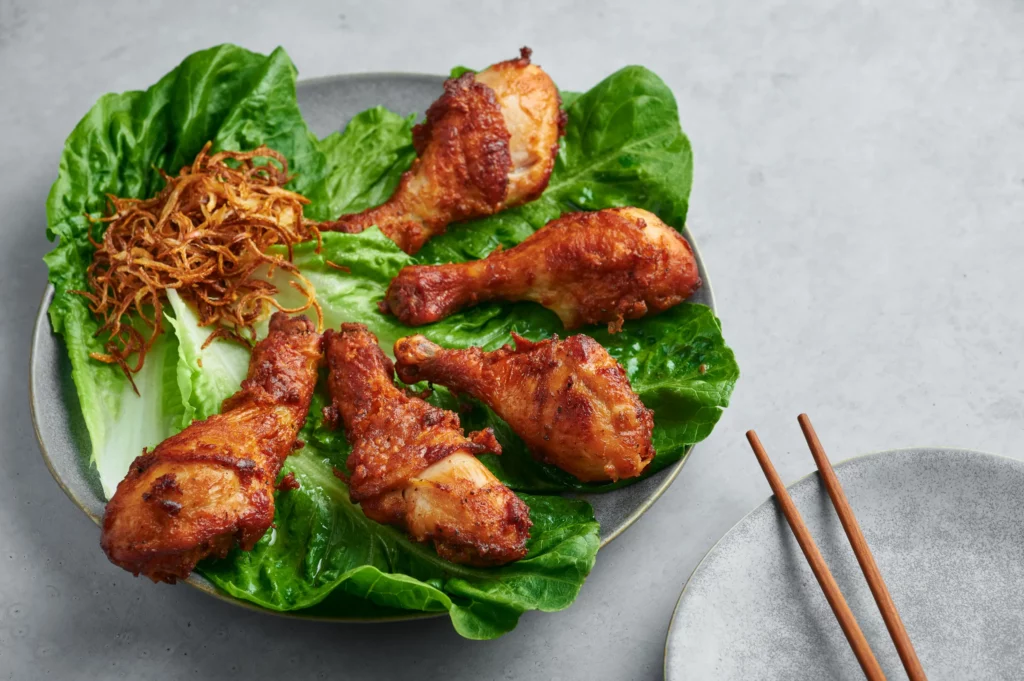
4. Gai Tod (Thai Fried Chicken)
Gai Tod features a deep-fried chicken dish that’s an obsession among Thai people. Street vendors scatter on every corner with this aromatic Thai street food. The dish has delicious flavours and a crunchy texture from its marinade of oyster sauce, fish sauce, ginger, garlic, coriander, and basil.
The Crispy Secret: Thai fried chicken achieves its incredibly crunchy coating through double-frying and the addition of rice flour to the batter, creating a lighter, crispier crust than with regular flour alone.
Marinate chicken 4 hours with fish sauce, oyster sauce, garlic, ginger, coriander, and white pepper.
Mix flours and baking powder. Heat oil to 160°C.
Coat chicken, fry 8 minutes. Drain.
Increase the oil to 180°C, fry for 2 minutes again until extra crispy.
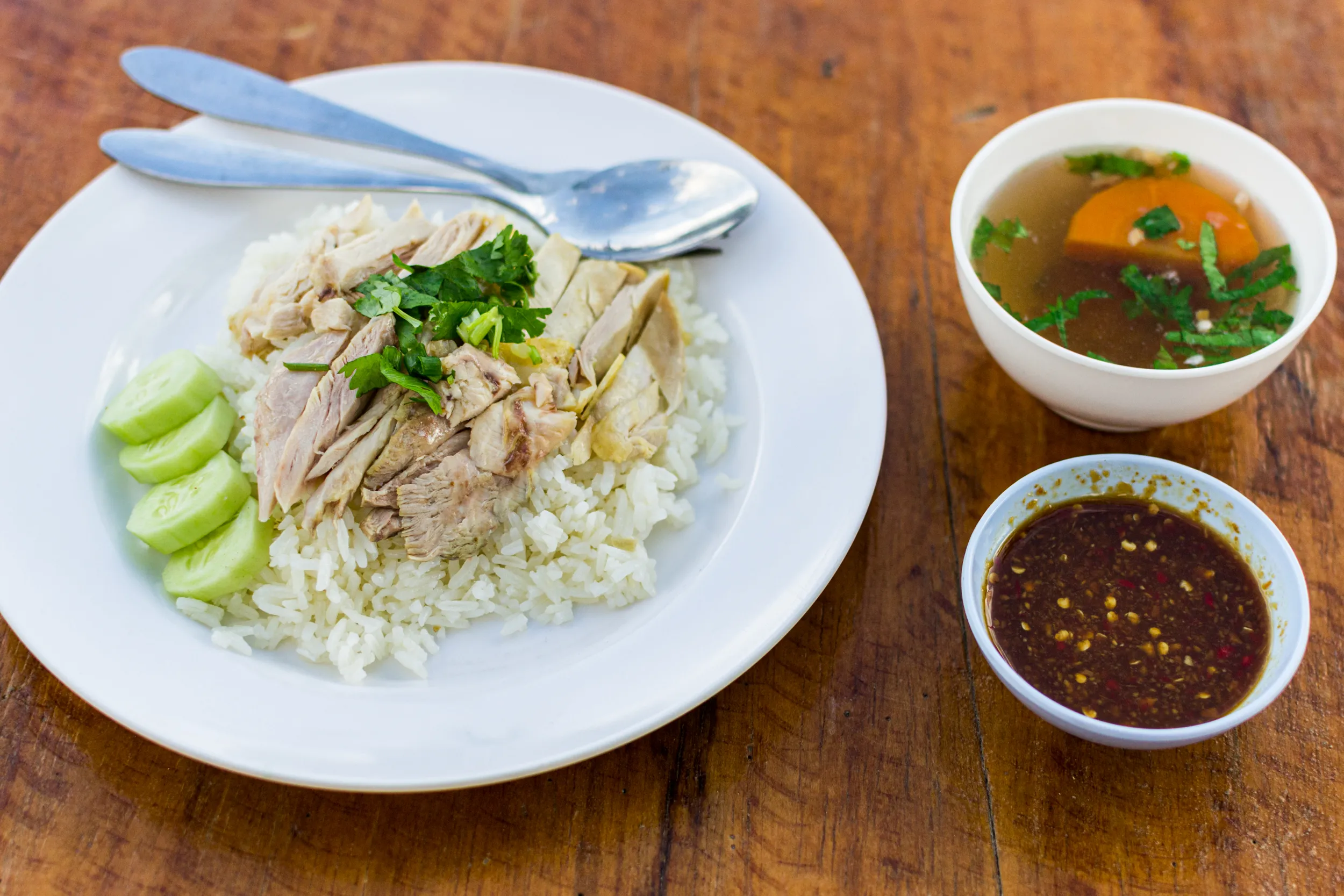
5. Khao Man Gai (Chicken and Rice)
Khao Man Gai is a popular Thai street food that shares its origin with other Asian countries, including China, Malaysia, and Singapore. It’s commonly referred to as Hainanese chicken rice.
The delicious plate features seasoned rice with poached chicken, along with cucumber and chilli sauce garnishes. Unlike many Thai dishes, this doesn’t feature intense spices or flavours.
The Perfect Poach: The chicken must be poached gently, never boiled, to keep it tender and juicy. The poaching liquid is then used to cook the rice, infusing it with chicken flavour.
Simmer water with garlic, ginger, and coriander. Poach chicken for 35 minutes.
Plunge the chicken in ice water for 5 minutes. Reserve 600ml of poaching liquid.
Fry crushed garlic in chicken fat. Add rice, then the poaching liquid and soy sauce. Cook 15 minutes.
Blend all sauce ingredients.
Carve the chicken and serve it with rice and ginger sauce.
6. Kai Jeow (Thai Omelette)
Kai Jeow is an omelette, yet it’s not the regular omelette you’re used to having for breakfast. This Thai culinary delight traditionally accompanies fragrant rice, spring onions, and Sriracha sauce.
The Technique: Unlike Western omelettes cooked gently in butter, Kai Jeow is cooked in very hot oil, causing the eggs to puff up and become crispy around the edges whilst remaining soft in the centre.
Pour egg mixture, fry 2-3 minutes until edges are golden, flip once.
Drain and serve over rice with Sriracha.
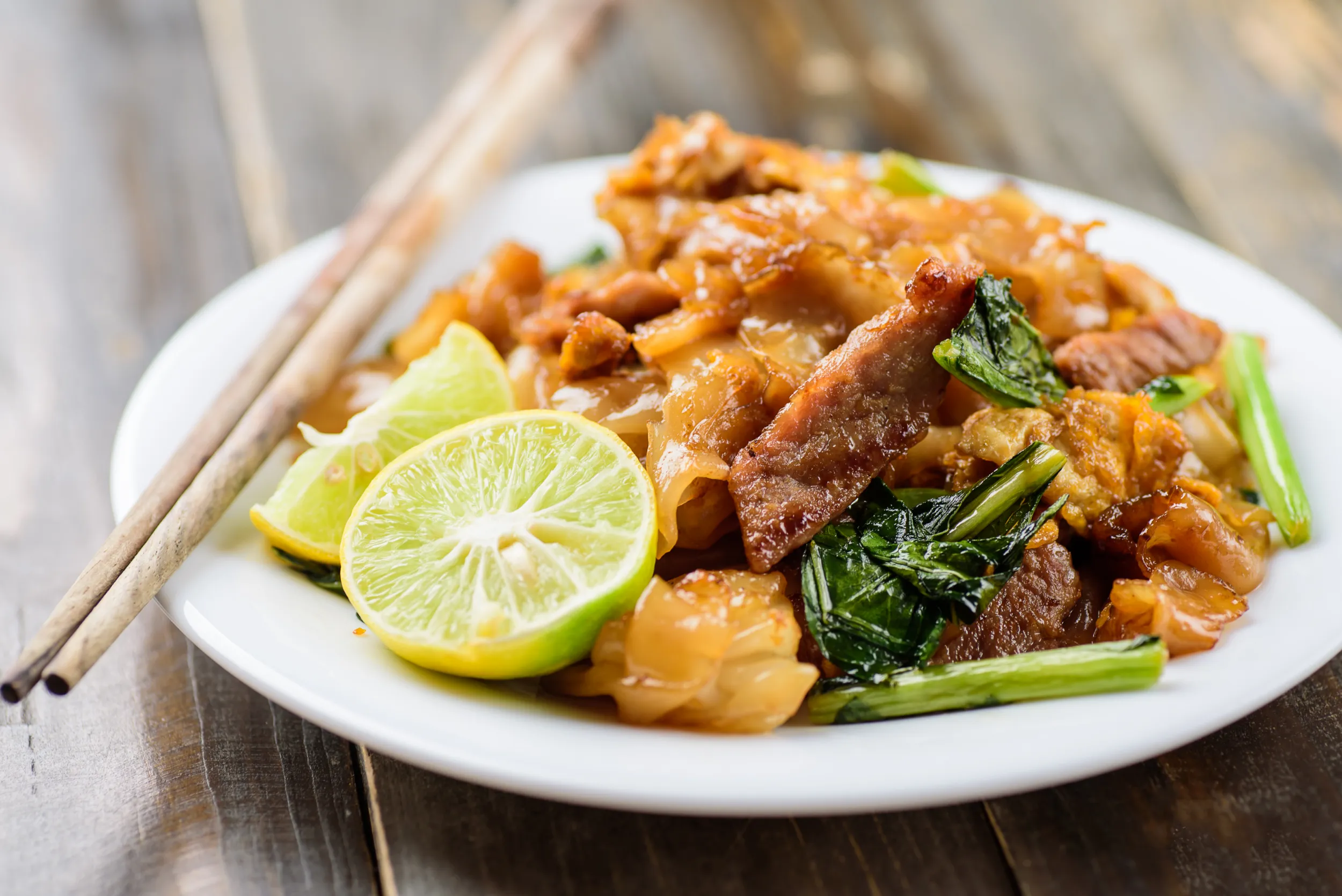
7. Pad See Ew (Wide Rice Noodles)
Pad See Ew is a delightful Thai street food featuring stir-fried wide rice noodles. Its roots can be traced back to China, where the art of noodle stir-frying was first embraced.
Achieving Wok Hei at Home: The key to restaurant-quality Pad See Ew is cooking in small batches over very high heat. This creates Wok Hei, the smoky, charred flavour that defines great stir-fries.
Heat the wok until smoking. Add oil, garlic, and stir-fry for 10 seconds.
Add meat, cook 1-2 minutes. Remove.
Scramble eggs for 30 seconds. Add noodles and sauce, toss.
Add broccoli, toss for 1 minute. Return the meat, season with white pepper.
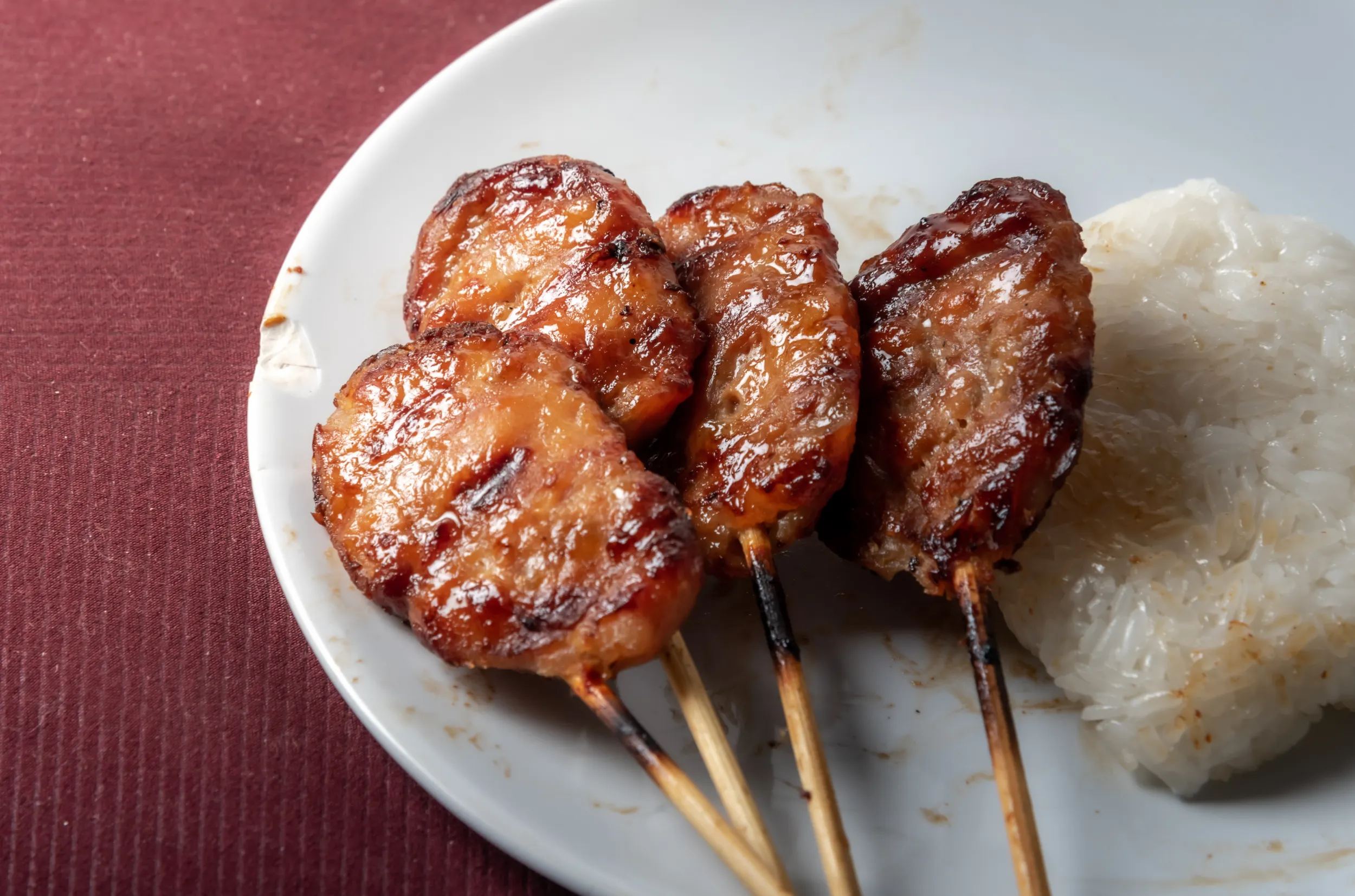
8. Moo Ping (Grilled Pork)
Moo Ping is one of the most popular Thai street foods. It features delicious skewers of seasoned sliced pork grilled to perfection. The pork is marinated in a sauce with sweet and sour elements and cooked over an open flame.
The Marinade Secret: The combination of coriander root, white pepper, and palm sugar creates a marinade that caramelises beautifully on the grill whilst keeping the pork tender inside.
Pound coriander roots, garlic, and white pepper into a paste.
Mix with fish sauce, oyster sauce, palm sugar, and coconut milk.
Marinate pork for 4 hours. Thread onto skewers.
Grill 4-5 minutes per side until caramelised.
9. Ma Laeng Tod (Fried Insects)
Ma Laeng Tod is a local dish that’s not for the faint-hearted. It’s an unusual dish only found in Asian cuisine. Insects are a rich source of protein that many Thai people rely on. Common options include crickets, grasshoppers, bamboo worms, and silk worms, served alongside salad and flavourful sauces.
Cultural Context: In Isan, eating insects has been common for centuries as a sustainable protein source. Cricket farming is now a growing industry in Thailand.
Fry the insects for 3-4 minutes, until golden and crispy.
Toss with salt, chilli powder, and shredded lime leaves.
Serve immediately with Thai chilli sauce.
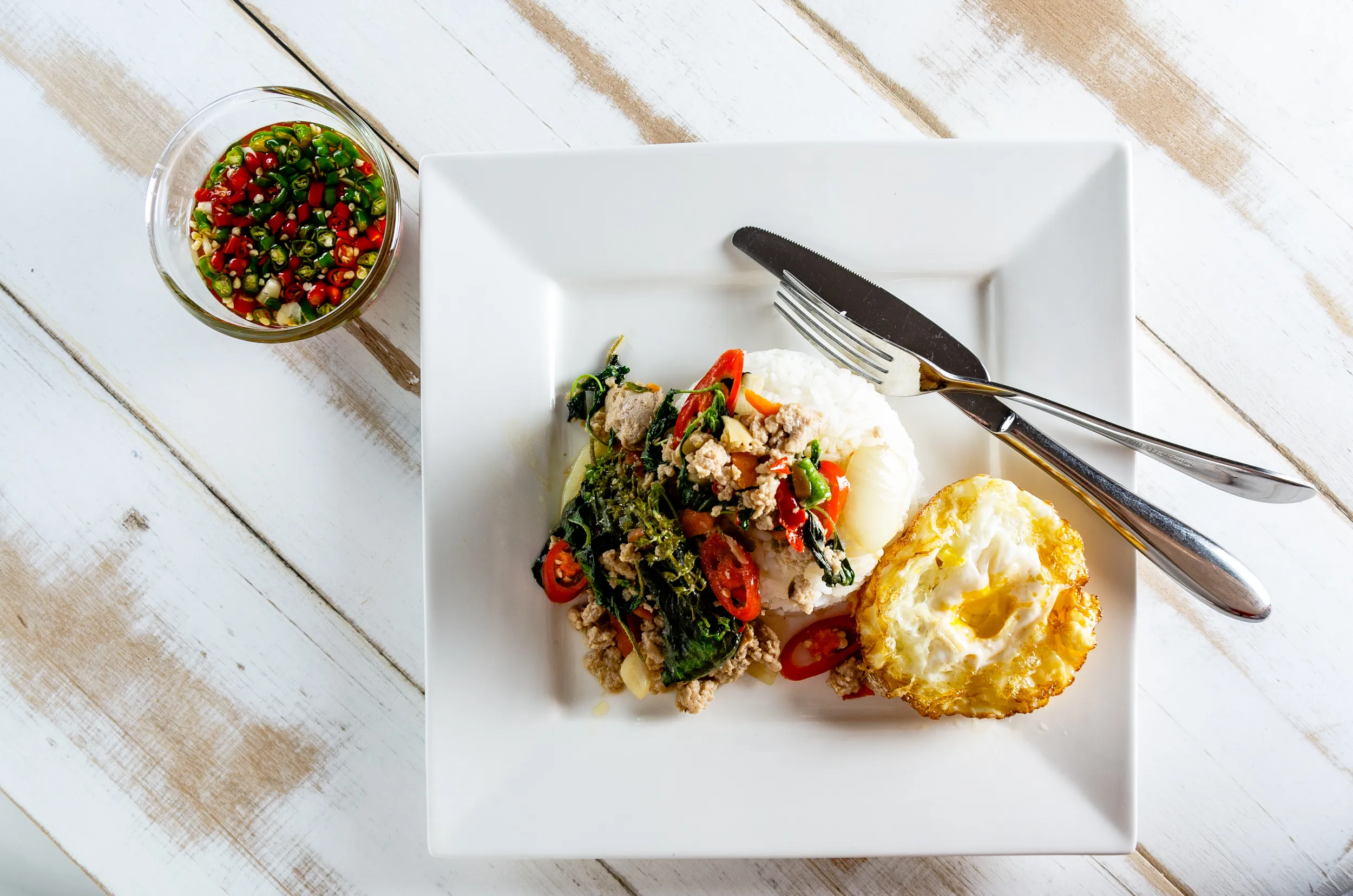
10. Pad Kra Pao Moo (Thai Basil Pork)
Pad Krapao Moo is a famous Thai street food featuring minced pork usually served with eggs and steamed rice. It’s a breakfast staple in Thailand that takes on a spicy turn.
Krapao is a Thai term that means Holy Basil, the main ingredient in this dish. The herb is deemed one of the sacred herbs in Hindu mythology.
The Holy Basil Difference: This dish MUST be made with Holy Basil (Krapao), not Thai Basil (Horapa). Holy Basil has a peppery, almost clove-like flavour that defines the dish.
Heat the wok, add 2 tbsp oil. Stir-fry garlic and chillies for 30 seconds.
Add pork; stir-fry for 3 minutes, until browned.
Add onion, sauces, and sugar. Mix well.
Add Holy Basil, toss for 30 seconds until wilted.
Fry eggs separately. Serve pork over rice, topped with fried egg.
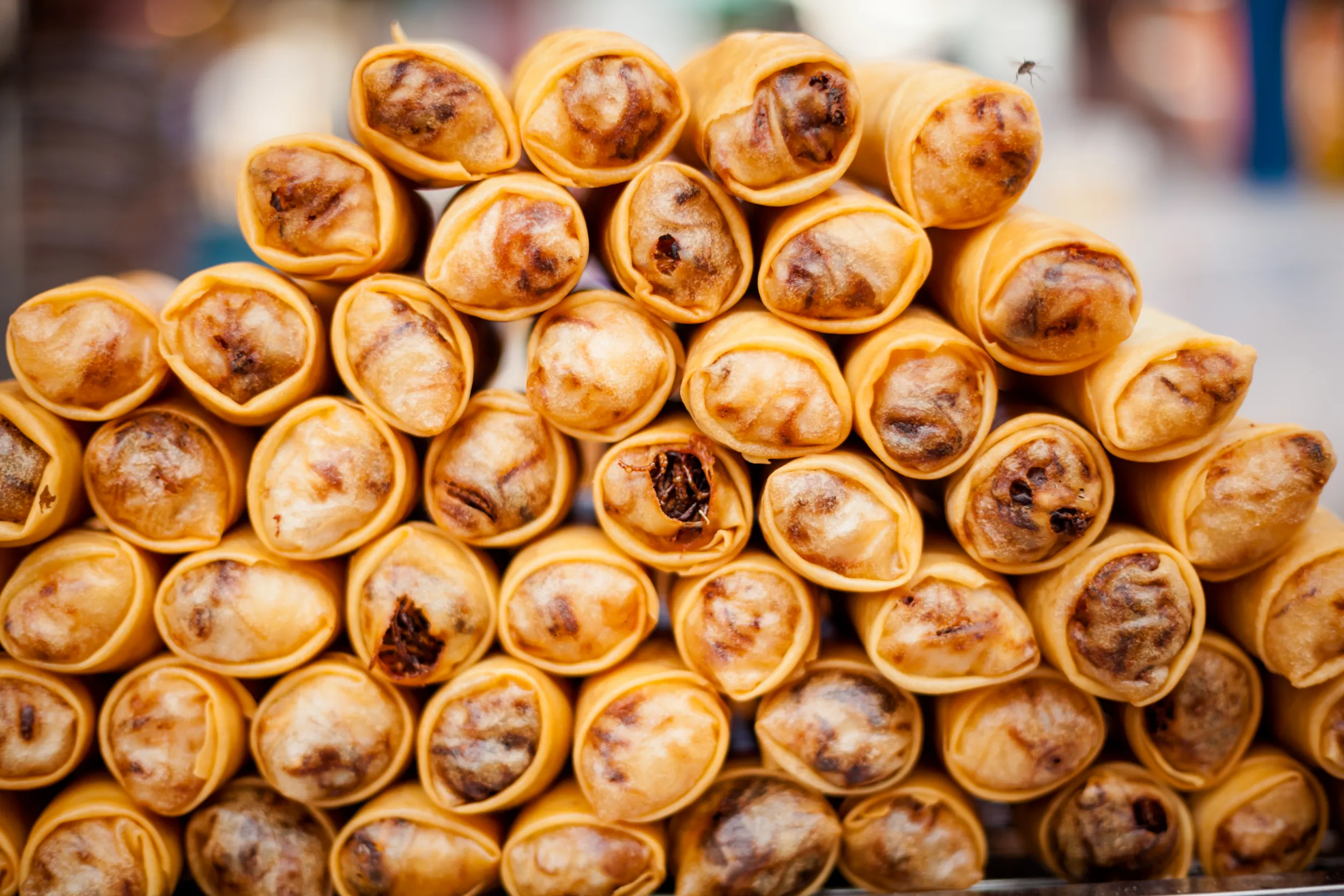
11. Poh Pia Tod (Spring Rolls)
Spring rolls are a Chinese delicacy that has gained massive popularity worldwide. The Thai version is filled with more vegetables inside a sheer thin pastry. You can have the vegetables raw or deep-fried, depending on your preferences.
Thai vs Chinese Spring Rolls: Thai spring rolls are typically smaller and crispier, with a wrapper that shatters when bitten. The filling often includes glass noodles and wood ear mushrooms for texture.
Stir-fry garlic, pork, vegetables, noodles, and sauces. Cool.
Fill wrappers, seal with beaten egg.
Fry at 180°C for 4-5 minutes until golden.
For sauce: Simmer vinegar and sugar, cool, add chillies and fish sauce.
12. Khao Ka Moo (Stewed Pork and Rice)
Khao Kha Mu is a delicious Thai street food that draws inspiration from Chinese cuisine. This culinary dish combines tender stewed pork with sensational seasoning. Thinly sliced portions of mouthwatering pork are laid on a bed of fragrant steamed rice.
The Long Braise: This dish requires patience. The pork leg is braised for 3-4 hours until the meat is fall-apart tender and the skin has a jelly-like texture from dissolved collagen.
Score pork skin. Combine all ingredients except eggs in a pot. Add water to cover.
Bring to a boil, reduce to a simmer. Cover and braise for 3-4 hours, turning occasionally.
Add eggs for the final 30 minutes. Remove pork, slice. Reduce the liquid by half.
Serve pork and eggs over rice with blanched greens. Drizzle with sauce.
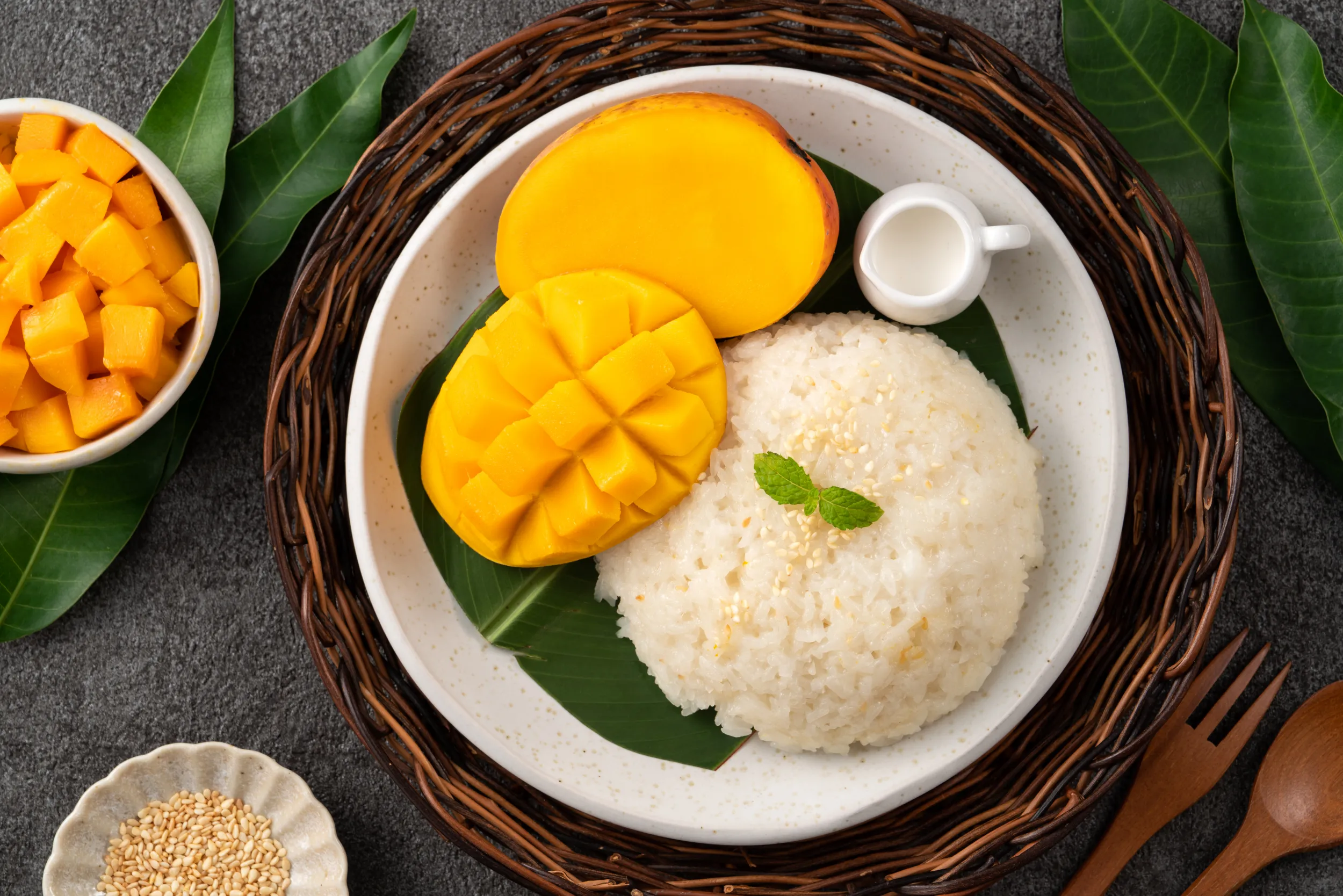
13. Khao Niao Mamuang (Sticky Rice and Mango)
The ever-popular mango sticky rice, commonly known as Khao Niao Mamuang, is a delightful Thai street food dessert found on every corner. It features steamed rice infused with creamy coconut milk, resulting in a wonderfully sticky texture.
Succulent mango slices are served alongside a generous drizzle of coconut milk. Whilst this dessert’s origins remain unconfirmed, Thailand is widely regarded as its birthplace.
Seasonal Timing: This dessert is traditionally made during mango season (March to May) when mangoes are at their sweetest. Look for Nam Dok Mai or Ataulfo mangoes for the best flavour.
Soak rice for 6 hours. Drain and steam 25-30 minutes until translucent.
Heat 300ml coconut milk with sugar and half the salt until sugar dissolves.
Pour over the cooked rice and stir gently. Cover, let sit 30 minutes.
Heat the remaining 100ml of coconut milk with the remaining salt.
Serve sticky rice with mango, drizzle with salted coconut milk.
Dietary Adaptations: Authentic Flavours for Modern Needs
Creating Thai street food that respects both authenticity and dietary requirements is entirely possible. Here’s how to adapt classic dishes without sacrificing flavour.
The Vegan Umami Secret
Fish sauce is the backbone of Thai cuisine. For vegans, here’s an authentic substitute:
Homemade Vegan “Fish” Sauce:
Simmer 100g dried shiitake mushrooms
50g dried kombu in 1 litre of water for 2 hours until reduced by half
Strain, then stir in 3 tbsp light soy sauce
2 tbsp dark soy sauce
1 tbsp miso paste
1 tsp salt
Bottle and refrigerate for up to 3 months
Vegan Adaptations:
Use vegan fish sauce
Replace egg with tofu
omit dried shrimp (add extra peanuts)
Use mushroom oyster sauce.
Gluten-Free Thai Cooking
Many Thai dishes are naturally gluten-free with a few swaps.
Safe Swaps: Replace soy sauce with gluten-free tamari, use gluten-free oyster sauce, check rice noodle labels for wheat additives, and make your own curry pastes.
Naturally Gluten-Free Dishes: Som Tam, Moo Ping, Khao Man Gai, Kai Jeow, Satay (all with gluten-free sauces).
The Traveller’s Toolkit: Eating Thai Street Food Like a Local
Planning to explore Thailand’s street food scene in person? Here’s your practical guide to eating safely and respectfully.
Hygiene and Safety
Knowing what to look for ensures you enjoy safe, delicious street food throughout your visit.
Look For: High customer turnover (fresh food), clean cooking area, vendor washes hands between money and food, and meat stored on ice.
Avoid: Pre-cooked food left at room temperature for hours, visibly dirty equipment, and overly fishy seafood.
Ordering Etiquette
Understanding local customs and communicating with locals enhances your street food experience and shows respect for Thai culture.
Useful Thai Phrases:
“Mai phet” = Not spicy
“Phet nit noi” = A little spicy
“Kep tang” = Takeaway, please
Condiment Caddy: Taste first before adding condiments. Use fish sauce with chillies for salty heat, vinegar with chillies for sour heat, dried chilli flakes for pure heat, and sugar to balance strong flavours.
Street Food Timing
Different dishes are available at different times of day. Timing your visits maximises your culinary adventure.
Best Times:
Breakfast (6-9 am) for Khao Man Gai and Kai Jeow
Lunch (11 am-2 pm) for Khao Pad and Pad Thai
Dinner (6-9 pm) for everything
Late Night (10 pm-2 am) for grilled meats and fried rice
Seasonal and Cultural Context
Understanding Thailand’s seasons and festivals enriches your appreciation of when certain dishes are at their peak and why they matter culturally.
Seasonal Ingredient Availability
Thailand’s three seasons affect ingredient availability:
Hot Season (March-May): Peak mango season for Khao Niao Mamuang, fresh tamarind for Som Tam.
Rainy Season (June-October): Wild mushrooms in Northern dishes, abundant fresh herbs.
Cool Season (November-February): Best for green papayas in Som Tam and citrus fruits in salads.
Festival Food Connections
Thai street food plays a central role in religious and cultural celebrations throughout the year.
Songkran (April): Traditional sweets, especially Khao Niao Mamuang and grilled meats.
Loi Krathong (November): Sticky rice desserts and traditional sweets.
Chinese New Year (January/February): Noodle dishes for longevity, spring rolls.
Regional Preparation Methods
Each region has distinctive cooking techniques that define its street food character.
Central Thailand: Quick stir-frying, emphasis on balance.
Thai street food is more than just delicious food; it’s a window into Thailand’s cultural soul and regional diversity. Whether planning your first trip to Bangkok or mastering these dishes at home, this guide provides the foundation you need.
Remember the core principles: respect the “Five Flavours,” invest in proper equipment, source authentic ingredients where possible, and embrace bold flavours. Start with simpler dishes like Kai Jeow or Khao Pad, then progress to technique-dependent creations like Pad Thai or Som Tam.
FAQs
1. Is Thai street food safe to eat?
Generally, yes, if you follow basic guidelines. Look for vendors with high turnover, clean setups, and proper food storage. The “cook it, peel it, or forget it” rule applies to food cooked fresh in front of you, which is safest.
2. How spicy is Thai street food really?
It varies dramatically. Central Thai food (Bangkok) is generally milder than Isan or Southern cuisine. Always ask for “mai phet” (not spicy) or “phet nit noi” (a little spicy) if you’re sensitive to heat. You can always add more spice via condiments.
3. What’s the difference between Thai Basil and Holy Basil?
Thai Basil (Horapa) has purple stems and an aniseed flavour; it’s used in curries. Holy Basil (Krapao) has green stems and a peppery, clove-like taste. It’s essential for Pad Kra Pao. They’re not interchangeable.
4. Is fish sauce really necessary for Thai cooking?
For authentic Thai flavour, yes. Fish sauce provides the essential umami and salt that define Thai cuisine. Vegan alternatives exist (see our recipe above), but soy sauce alone won’t replicate the depth of flavour.
5. Can I recreate authentic Thai street food without a wok?
Whilst a wok is ideal for achieving proper Wok Hei, a large frying pan over high heat can produce good results. The key is high heat and not overcrowding the pan. Cook in smaller batches if needed.