
5 Ways to Cook Delicious Zucchini with Béchamel Sauce

Many people are constantly in search of ways to elevate their culinary experiences, which they do either by incorporating different spices, trying new ways of cooking, or exploring ingredients they do not often consume. One example of these ingredients not many consume is zucchini, deep green, straight, cylindrical, and long zucchini that looks more like cucumber but is not cucumber.
Despite its relatively wide unpopularity, zucchini is surprisingly one of the most versatile vegetables that can be cooked and enjoyed in various ways. It is also low in calories and rich in multiple nutrients, which makes adding it to our diets a great step to staying healthy.
If you are anything like many others who have not so far given this vegetable a fair chance to display its abilities in making super tasty and healthy dishes, then consider this article as an invitation to explore something that is, in reality, totally better than how it looks. Today, we will demonstrate five different ways to cook mild, tender, and delicious zucchini combined with creamy, elegant béchamel sauce.
Are you ready to satisfy your cravings with luscious bites and discover some magic? Perfect. Let’s hop into it.
The Perfect Béchamel Sauce
Before we jump into our five recipes, we must first shed some light on the witch’s wand that will turn its subtle taste into a savoury heaven, the one and only béchamel sauce.
Also known as white sauce, béchamel is one of the five main sauces in classical French cuisine. It is best known for its creamy smooth texture and rich flavour, making it an ideal accompaniment to a wide range of dishes.
So, let’s first see how to make the perfect béchamel sauce in order for the next five zucchini recipes to turn out great.
Ingredients
- 4 tablespoons of unsalted butter
- 4 tablespoons of all-purpose flour
- 4 cups of whole milk, warmed
- Salt and black pepper to taste
- A pinch of nutmeg (optional)
Recipe
Start by heating the milk in a separate saucepan or in the microwave until warm yet not boiling, then set it aside.
Heat a saucepan over medium-high heat and melt the butter. Once melted, add four tablespoons of flour and whisk continuously to create a smooth paste. Continue cooking the paste for a minute or two, yet make sure it does not brown. Slowly pour in the warmed milk, whisking continuously to avoid any lumps and maintain a smooth consistency.
Let the mixture gently simmer over low to medium heat, stirring frequently. The sauce will gradually thicken as it cooks. Once cooked, season the béchamel with salt and black pepper to taste. If desired, add a pinch of nutmeg for a subtle, aromatic flavour. Taste and adjust the seasoning as needed.
Once your sauce reaches the desired thickness, remove it from the heat. The béchamel should coat the back of a spoon. It will become thicker as it cools. For an extra-smooth texture, you can strain the sauce through a fine-mesh sieve to remove any potential lumps.
Now you have a perfect béchamel sauce ready to elevate your dishes, so let’s move on to our main recipes.
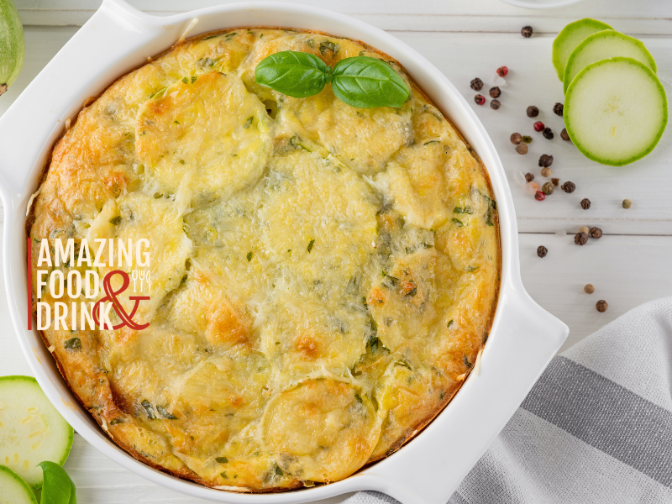
1. Classic Zucchini Casserole

The classic zucchini casserole is a savoury and comforting dish that makes for a delightful side dish or a vegetarian main course, showcasing the freshness of the vegetable combined with the richness of cheese and a savoury béchamel sauce.
No one actually knows to which cuisine this casserole belongs. Some say it is a totally French dish because it has béchamel sauce, and others attribute it to Italy, as zucchini is commonly used in Italian cuisine. Either way, it is delicious, easy to make, and uses accessible ingredients.
So here is your recipe to make this tasty classic casserole. Feel free to customise it with your favourite herbs, spices, or additional vegetables for a personal touch.
Ingredients
- 4 medium-sized zucchinis, sliced into rounds
- 1 onion, finely chopped
- 2 cloves of garlic, minced
- 1 cup of grated cheese (mozzarella, cheddar, or a blend)
- 1/4 cup of grated Parmesan cheese
- 2 tablespoons of olive oil
- Salt and pepper to taste
- 1 batch of béchamel sauce (as per the previous recipe)
Recipe
Preheat your oven to 190°C.
Lightly salt the zucchini slices, and then let them sit for a while to release excess moisture. Pat them dry before using.
Place a pan or skillet, if you have one, over medium heat and heat the olive oil. Add the chopped onions and minced garlic, sautéing until softened and fragrant. Add in the béchamel sauce and stir to combine with the onions and garlic. Next, add the cheese and mix well with the sauce until melted.
In a greased casserole dish, create layers by alternating zucchini slices, then pour the béchamel cheese mixture over the vegetable layers and sprinkle some more shredded mozzarella on top. Cover the casserole dish with foil and bake for 30 to 40 minutes or until the zucchini is tender. For the last 10 minutes of baking, uncover the casserole to allow the top to become golden brown.
Let the casserole rest for a few minutes before serving. This allows the flavours to settle, making it easier to cut and serve.
2. Zucchini Roll-Ups with Béchamel Drizzle
The second recipe we have is zucchini roll-ups with béchamel drizzle, where slices of zucchini are used to encase a flavourful cheese filling, covered with béchamel sauce and then baked until tender.
This is another delightful and elegant dish that combines the mild and tender texture of that deep green vegetable with the creamy richness of béchamel sauce.
Ingredients
- 4 medium-sized zucchinis, thinly sliced lengthwise
- 1 cup of ricotta cheese
- 1 cup of shredded mozzarella cheese
- 1/2 cup of grated Parmesan cheese
- 1 egg
- 2 tablespoons of chopped fresh parsley
- Salt and pepper to taste
- 1 batch of béchamel sauce
- Olive oil for brushing
Recipe
Preheat your oven to 190°C.
Brush the zucchini slices with olive oil, season with salt and black pepper, and grill them on a grill pan or, better, bake them in the oven until they are slightly tender. Set aside.
In a bowl, place the ricotta cheese and combine it with mozzarella, Parmesan, egg, chopped herbs, salt, and pepper. Mix well to create a creamy filling.
Place a spoonful of the filling at one end of a grilled zucchini slice and roll it up. Repeat with the remaining slices and filling. Place the roll-ups seam-side down in a greased baking dish. Pour the béchamel sauce over the arranged roll-ups in the baking dish. Sprinkle some mozzarella on top of the béchamel sauce.
Bake in the preheated oven for almost half an hour or until the top turns golden and the roll-ups are heated through. Allow your dish to cool for a few minutes before serving. Drizzle additional béchamel on top if desired, and garnish with fresh parsley. Serve the roll-ups as a main course or as an impressive side dish at your next gathering.
3. Stuffed Zucchini Boats
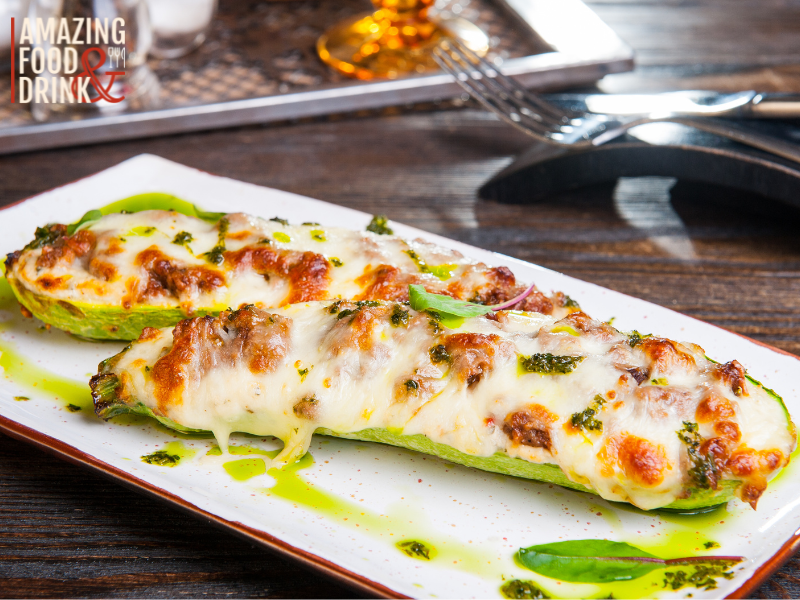
Stuffed zucchini boats are a delicious and versatile dish that enables you to get creative with various fillings. The zucchini serves as a vessel for flavourful stuffing, and the whole dish is typically baked until the vegetable is nice and tender and the filling is cooked to perfection.
Here is your basic recipe:
Ingredients
- 4 medium-sized zucchinis
- 1 cup of cooked quinoa or rice
- 1 cup of cooked and shredded chicken
- Olive oil for brushing
- 1 cup of diced vegetables (bell peppers, tomatoes, onions, etc.)
- 1/2 cup of grated cheese (preferably a mix of cheddar and mozzarella)
- 2 cloves of garlic, minced
- 1 teaspoon of dried herbs (like thyme, oregano or Italian seasoning)
- Salt and pepper to taste
- Fresh herbs (parsley, basil, or cilantro) for topping
- Grated Parmesan cheese
- 1 cup of béchamel sauce
Recipe
Preheat your oven to 200°C.
Start by preparing the zucchini. Cut all four of them in half lengthwise and scoop out both the seeds and flesh, leaving about a 1.5-cm border to create boats. Brush each of the zucchini slices with some olive oil and add black pepper and salt as desired. Place the prepared zucchini boats in a baking dish.
Next is to prepare the filling. In a bowl, combine cooked quinoa or rice, shredded chicken—you can replace it with ground meat, or plant-based protein like lentils or chickpeas—diced vegetables, grated cheese, minced garlic, dried herbs, salt, and pepper. Mix well to create a cohesive stuffing mixture.
Spoon the filling mixture into the hollowed-out zucchini boats, pressing down gently to pack the filling. Once you are done, add a spoonful of béchamel sauce on each boat, sprinkle some shredded Parmesan or mozzarella on top and bake the stuffed zucchini boats in the preheated oven for 20 to 25 minutes or until the zucchini becomes tender and the filling is heated through.
Allow the stuffed zucchini boats to cool slightly and, if desired, garnish them with fresh herbs before serving.
4. Zucchini and Béchamel Stuffed Crêpes
Zucchini and béchamel stuffed crêpes are a delightful balance of flavours and textures. They can serve as a great side dish and can go with multiple other savoury main courses despite actually taking a bit of a long time to make.
Here is a step-by-step guide for making these elegant zucchini and béchamel stuffed crêpes:
Ingredients
- 1 cup of all-purpose flour
- 2 large eggs
- 1 1/4 cups of milk
- 2 tablespoons of melted butter
- 2 medium-sized zucchinis, grated
- 1 onion, finely chopped
- 2 cloves of garlic, minced
- 2 tablespoons of olive oil
- 1/2 cup of grated Parmesan cheese
- 1 batch of béchamel sauce
- Salt, black pepper, white pepper, and nutmeg to taste
Recipe
First, we make the crêpe batter.
In a food processor or blender, if accessible, combine the flour, eggs, milk, melted butter, and salt. Blend until the batter is smooth. Let it rest in the refrigerator for at least 30 minutes.
Heat a non-stick skillet over medium heat. Pour a small amount of batter into the pan, then swirl it around to coat the bottom evenly. Cook the batter until the edges start to brown, then flip and cook the other side. Repeat until all crêpes are cooked.
In a skillet placed on medium heat, heat two tablespoons of olive oil. Add chopped onions and sauté until translucent. Add the minced garlic and the grated zucchini to the skillet. Sauté until the zucchini is tender and excess moisture has evaporated. Season with salt and black pepper. Stir in grated Parmesan cheese and cook until melted. Remove from heat.
Lay a crêpe on a flat surface. Spoon some of the zucchini filling onto the centre of the crêpe. Fold the crêpe over the filling, and then fold the sides to create a rectangular parcel. Place the stuffed crêpes in a baking dish. Pour the béchamel sauce over the stuffed crêpes in the baking dish.
Bake the crêpes in the preheated oven at around 200°C for about 20 minutes or enough until the edges turn golden and the sauce is bubbly. Allow the zucchini and béchamel stuffed crêpes to cool for a few minutes before serving.
5. Zucchini Lasagna
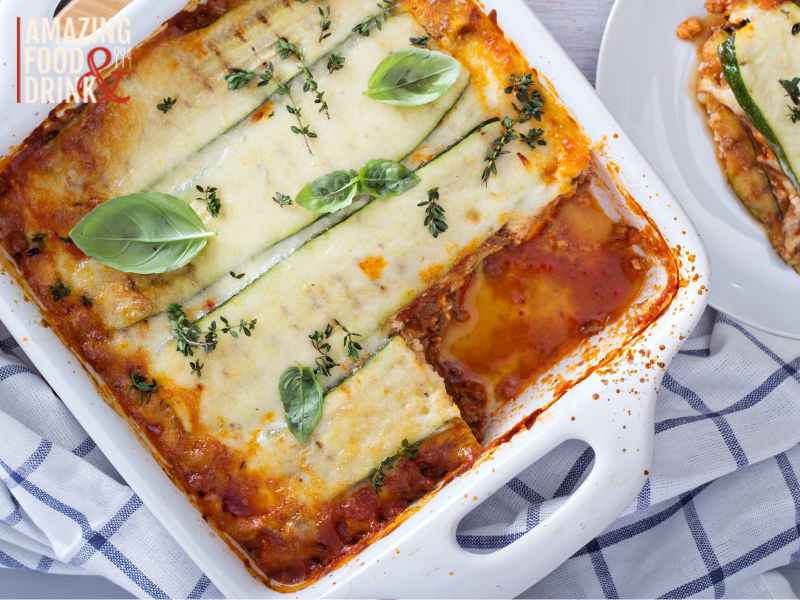
Last but not least, we have zucchini lasagna. This is a low-carb and gluten-free alternative to traditional lasagna, where zucchini slices replace the traditional pasta sheets.
Here is a step-by-step guide on how to make delicious zucchini lasagna. This recipe could be a bit more complicated and use more ingredients than the others we mentioned earlier.
Ingredients
- 4-5 medium-sized zucchinis
- Olive oil for brushing
- Salt and black pepper to taste
- 500 grams of ground beef
- 1 onion, finely chopped
- 2 cloves of garlic, minced
- 1 can of crushed tomatoes
- 1 can of tomato paste
- 1 teaspoon of dried oregano
- 1 teaspoon of dried basil
- 2 cups of ricotta cheese
- 1 cup of shredded mozzarella cheese
- 1/2 cup of grated Parmesan cheese
- 1 egg
- 2 tablespoons chopped fresh basil or parsley
- 1 batch of béchamel sauce
Recipe
Preheat your oven to 190°C.
Slice your zucchinis lengthwise into thin strips, then brush every strip with olive oil and season with salt and black pepper. Grill the oiled slices on a grill pan or bake them in the oven until slightly tender. Set aside.
Next, we make the meat sauce. In a large skillet, brown the ground meat over medium-high heat and drain excess fat if necessary. Add the minced garlic with the chopped onions to the skillet. Sauté until the onions are translucent. Stir in crushed tomatoes, tomato paste, dried oregano, dried basil, salt, and black pepper. Simmer for about 20 minutes or so, allowing the flavours to meld.
To prepare the cheese filling, combine the ricotta cheese in a bowl with shredded mozzarella, grated Parmesan, egg, chopped basil or parsley, salt, and black pepper and mix well. Once you are done, it is time to assemble the zucchini lasagna.
In a baking dish, start layering. Spread quite a thin layer of the béchamel sauce on the bottom. Place a layer of grilled zucchini slices on top of the sauce, then spread a portion of the cheese filling over the zucchini layer and cover that with a layer of the meat sauce.
Add in more layers until you run out of ingredients, finishing with a layer of béchamel sauce on top. Place the shredded mozzarella cheese over the top layer, then cover the baking dish with foil and bake your lasagna in the preheated oven for about half an hour.
Remove the foil, then let the lasagna continue baking for an extra 10 to 15 minutes or until the cheese is golden and bubbly.
Allow the zucchini lasagna to rest for 10-15 minutes before slicing. If preferred, garnish with fresh basil or parsley.
Exploring the diverse ways to cook zucchini with béchamel sauce has opened a gateway to a world of culinary delights . From the comforting embrace of zucchini and béchamel stuffed crêpes to the wholesome goodness of zucchini lasagna, each recipe showcased the versatility of this humble summer deep green vegetable when paired with the velvety richness of béchamel.