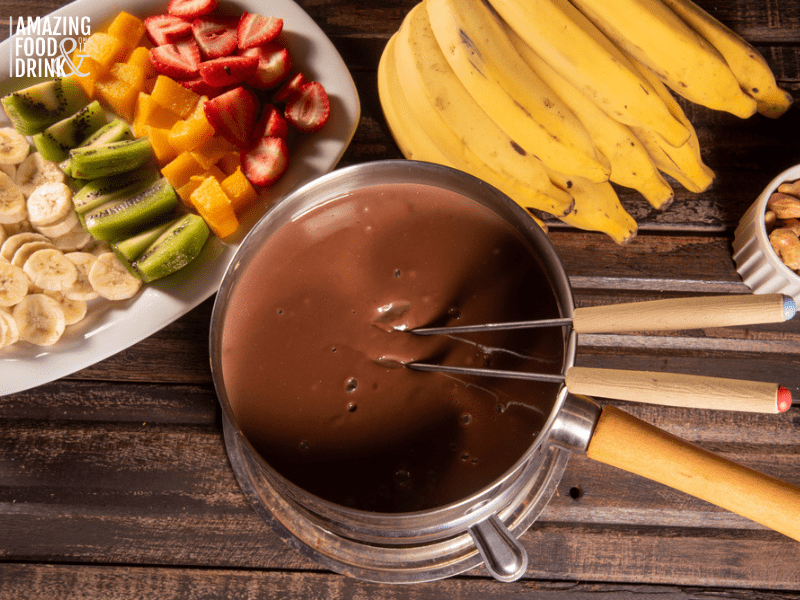
Chocolate fondue is a delightful and indulgent dessert with melted chocolate, typically served with various dippable items. The chocolate is kept warm in a fondue pot or a similar device. You can dip fruits like strawberries, bananas, apples, marshmallows, pretzels, or cake cubes into the smooth, melted chocolate. It’s a social and interactive dessert, perfect for sharing with friends or family.
Indulgence takes on a new meaning with the delectable and communal experience of milk chocolate fondue. This timeless treat remains a beacon of sweetness and togetherness in a world where culinary trends come and go. From the rich, velvety texture to the array of tempting dippables, milk chocolate fondue can turn any gathering into a memorable celebration. Join us as we explore the art of crafting the perfect milk chocolate fondue, unlocking the secrets to a dessert that transcends taste and becomes a symphony of shared joy.
What Do You Use for Fondue?
httpss://www.youtube.com/watch?v=Gi9bmGxqOF4
To make and enjoy chocolate fondue, you’ll need a few key items:
Fondue Pot: This special pot is designed for fondue, often with a heat source at the base. It keeps the chocolate warm and at a consistent, dippable consistency.
Chocolate: Choose high-quality chocolate with a cocoa content that suits your taste: dark, milk, or white chocolate.
Liquid: Heavy cream or milk is typically used to achieve the desired consistency when melting the chocolate.
Dippables: Select a variety of items for dipping into the chocolate. Popular choices include strawberries, bananas, marshmallows, pretzels, and cubes of cake or brownies.
Fondue Forks or Skewers: Long forks or skewers for dipping and enjoying the coated treats.
Optional Flavourings: Vanilla extract, liqueurs, or other flavourings can be added to enhance the chocolate’s taste.
Heat Source: If your fondue pot has no heat source, you’ll need a way to keep the chocolate warm: a tea light or a small candle under the pot.
So, fondue is a social and interactive experience. So gather your friends or family, set up your fondue station, and enjoy the deliciousness!
Why Is It Called Chocolate Fondue?
“Fondue” comes from the French word “fondue,” which means “to melt.” In the case of chocolate fondue, it refers to the melted chocolate that serves as a dip. The fondue concept originated in Switzerland, where communal pots of melted cheese were enjoyed as a social dish. The idea later evolved to include chocolate, creating a sweet and indulgent dessert.
The word “fondue” is fitting because the central element of the dish is the melted chocolate in which various items are dipped. It captures the essence of the interactive and communal dining experience that Fondue is known for. So, the name reflects both the preparation method (melting) and the social aspect of sharing and dipping.
What to Do in Chocolate Fondue?
3 Irresistible Recipes of Milk Chocolate Fondue
Chocolate fondue is not just a dessert; it’s an experience! Here’s what you can do with chocolate fondue:
Prepare the Fondue: Melt the chocolate in a fondue pot, mixing it with cream or milk until smooth. Add any optional flavourings like vanilla extract or liqueurs.
Set Up a Dipping Station: Arrange dippable items around the fondue pot; this can include strawberries, banana slices, marshmallows, pretzels, cubes of cake, or anything else you desire.
Dip and Enjoy: Use fondue forks or skewers to dip your chosen items into the melted chocolate. Coat them well and savour the delicious combination of flavours and textures.
Get Creative: Experiment with different combinations. Try contrasting flavours, like dipping salty pretzels into sweet chocolate, or mix and match fruits for various tastes.
Share and Socialise: Fondue is a communal experience. Share the fondue pot with friends or family, and enjoy the social aspect of dipping and chatting.
Keep it Warm: If your fondue pot has no built-in heat source, warm the chocolate using a tea light or a small candle.
Explore Variations: While chocolate fondue is classic, you can also try other types of fondue, such as cheese fondue or even savoury broth fondue for meats and vegetables.
The key is to have fun and enjoy Chocolate Fondue’s interactive and delicious nature!
What Are the 4 Types of Fondue?
3 Irresistible Recipes of Milk Chocolate Fondue
Fondue comes in various forms, each offering a unique dining experience. The four main types of fondue are:
Cheese Fondue: This classic Swiss dish involves melting a pot of cheese (usually a combination of Swiss cheeses) with white wine and garlic. Cubes of bread are then dipped into the gooey, savoury cheese mixture.
Chocolate Fondue: As we’ve been discussing, chocolate fondue involves melting chocolate and serving it with various dippable items like fruits, marshmallows, and cake.
Broth or Oil Fondue: In this savoury variation, bite-sized pieces of meat, often beef or poultry, are cooked in hot broth or oil at the table. The cooked pieces are then typically dipped in various sauces.
Fondue Bourguignonne: A specific type of broth or oil fondue. Fondue Bourguignonne involves cooking small pieces of meat, often beef, in hot oil. The cooked meat is then dipped in flavourful sauces. This style is named after the Burgundy region in France.
Each type of fondue offers a different culinary adventure, making fondue a versatile and enjoyable dining experience.
Why Do People Eat Fondue?
People eat fondue for several reasons, such as:
Social Experience: Fondue is inherently a communal and social dining experience. The shared pot encourages conversation and interaction as people dip and enjoy the meal together.
Interactive Dining: Fondue is interactive and hands-on. Dipping various items into melted cheese, chocolate, or broth adds an element of fun to the meal, making it a memorable and enjoyable experience.
Versatility: Fondue comes in various forms—cheese, chocolate, broth, and more. This versatility allows people to customise their fondue experience based on personal preferences and the occasion.
Celebrations and Special Occasions: Fondue is often associated with special occasions and celebrations. Whether it’s a romantic dinner, a family gathering, or a festive holiday meal, fondue adds a touch of indulgence and celebration.
Cultural Tradition: Fondue has cultural roots, particularly in Switzerland, where it originated. People may eat fondue to connect with and celebrate cultural traditions or enjoy a dish that has stood the test of time.
Variety of Flavours: Fondue offers a wide range of flavour combinations. Whether it’s the savoury richness of cheese fondue, the sweetness of chocolate fondue, or the flavourful experience of broth or oil fondue, every palate has a fondue style.
In essence, people eat fondue not just for the deliciousness of the food but also for the experience it brings to the table: shared moments, laughter, and a sense of celebration.
How Do You Start a Fondue?
Starting a fondue is a fun and straightforward process. Here’s a basic guide:
Prepare the Fondue Pot: If your fondue pot has a heat source, set it up on the table. If not, you’ll need a separate heat source, such as a stove, to melt the ingredients before transferring them to the fondue pot.
Choose Your Fondue Type: Decide whether you’re making cheese fondue, chocolate fondue, broth fondue, or another variation.
Gather Ingredients: For cheese fondue, you’ll need cheese (typically Swiss varieties), wine, garlic, and sometimes a splash of kirsch. You’ll need chocolate and a liquid (cream or milk) for chocolate fondue. For broth or oil fondue, you’ll need broth or oil and various meats and vegetables for dipping.
Prepare Ingredients: Grate the cheese if making cheese fondue. Chop the chocolate into small pieces if making chocolate fondue. Cut meats and vegetables into bite-sized pieces if making broth or oil fondue.
Melt the Ingredients: For cheese fondue, melt the cheese with wine and garlic on the stove until smooth. For chocolate fondue, melt the chocolate with cream or milk until smooth. For broth or oil fondue, heat the broth or oil in the fondue pot or on the stove.
Transfer to Fondue Pot: Once melted and smooth, transfer the mixture to the fondue pot. Keep the pot warm over low heat if using a separate heat source.
Set Up Dipping Items: Arrange an assortment of dippable items around the fondue pot: bread cubes, fruit slices, marshmallows, or meats and vegetables, depending on the type of fondue.
Enjoy: Gather around the table with friends or family, use fondue forks or skewers to dip and enjoy the deliciousness!
Fondue is a social experience, so take your time, savour the flavours, and enjoy the company of those you share it with!
Can Any Chocolate Be Melting Chocolate?
In general, yes, most chocolate can be used as melting chocolate. However, certain types of chocolate are specifically labelled as “melting chocolate” or “couverture chocolate,” these are often preferred for certain applications, including fondue.
Melting chocolate is typically formulated to melt smoothly, have a glossy finish, and set well when cooled. It often contains additional ingredients, such as cocoa butter, to enhance its melting properties. These chocolates are convenient for dipping, coating, or making ganache.
Suppose you’re using regular chocolate bars or chocolate chips. In that case, choosing high-quality chocolate with a good cocoa content is advisable. Dark chocolate with at least 60% cocoa is a good choice for a rich and flavourful fondue. Milk and white chocolate can also be used depending on your taste preferences.
Regardless of the type of chocolate you choose, it’s essential to melt it gently and avoid overheating, as chocolate can seize and become grainy if subjected to high temperatures.
What Is the Secret to Good Fondue?
The secret to good fondue lies in a combination of factors contributing to a delightful and enjoyable dining experience. Here are some key elements:
Quality Chocolate or Cheese: Start with high-quality chocolate or cheese. The better the quality, the more flavourful and enjoyable your fondue.
Balanced Consistency: Achieve the right consistency for your fondue.
For chocolate fondue, aim for a smooth and dippable texture. For cheese fondue, achieve a balance between creaminess and thickness.
Proper Melting Technique: Melt the chocolate or cheese gently to avoid overheating, which can lead to a grainy texture. Stir continuously to ensure even melting.
Dippable Items: Choose a variety of high-quality dippable items. Fresh fruits, cake cubes, marshmallows, and pretzels are popular choices for chocolate fondue. For cheese or broth fondue, select a variety of bread, vegetables, and meats.
Fondue Pot and Heat Source: Use a good-quality fondue pot with a reliable heat source. The pot should keep the fondue warm without burning it. If the pot doesn’t have its own heat source, ensure you can keep the fondue warm on the table.
Social Atmosphere: Fondue is as much about the experience as the food. Create a social and relaxed atmosphere, encouraging conversation and interaction as everyone gathers around the fondue pot.
Experiment with Flavours: Feel free to experiment with flavourings; add a splash of liqueur to chocolate fondue, or try different cheeses and wines for cheese fondue. Personalise it to suit your taste preferences.
Attention to Detail: Pay attention to details like the size of the dippable items, ensuring they are bite-sized for easy dipping; this enhances the overall experience.
So, the secret to good fondue is a combination of quality ingredients, proper preparation, and a social atmosphere that turns the meal into a delightful and memorable occasion.
What Are the Best Milk Chocolate Fondue Recipes to Make at Home?
Here’s a simple recipe for milk chocolate fondue that you can easily make at home:
Classic Milk Chocolate Fondue
httpss://www.youtube.com/watch?v=NFPQpJ5mBT0
Ingredients
8 ounces (about 225g) of good-quality milk chocolate, chopped
1/2 cup (120ml) heavy cream
1 teaspoon vanilla extract (optional)
Dippables: Strawberries, banana slices, marshmallows, pretzels, cubes of cake, etc.
Instructions
Prepare Dippables: Wash and prepare your choice of dippables. Cut fruits into bite-sized pieces and arrange everything around the fondue pot.
Melt the Chocolate: In a pan, heat the heavy cream over medium to low heat until it simmers; be careful not to let it boil.
Remove the saucepan from heat, add the chopped milk chocolate to the hot cream, and let it sit for a minute.
Melt the chocolate until it’s smooth and fully melted after stirring the mixture. If desired, add vanilla extract and stir to combine.
Transfer to Fondue Pot: Pour the melted chocolate mixture into a fondue pot. If your fondue pot has no heat source, keep it warm on the table using a tea light or a small candle.
Enjoy: Gather around the fondue pot with friends or family, use fondue forks or skewers to dip your chosen items into the luscious milk chocolate, and enjoy the deliciousness!
This recipe is easy to customise, so feel free to add a personal touch with your favourite dippables or by experimenting with different flavours.
Prepare Dippables: Wash and cut fruits, arrange marshmallows, and prepare other dippable.
Melt the Chocolate: Combine the sweetened condensed milk with butter in a saucepan over low heat, then add the chopped milk chocolate to the mixture and continue the low heat until the chocolate is fully melted and incorporated. Remove the mixture from heat, add the vanilla extract and stir until it’s all mixed and smooth.
Transfer to Fondue Pot: Pour the melted chocolate mixture into a fondue pot and keep it warm.
Enjoy: Dive into the delightful experience of dipping your favourite treats into the creamy milk chocolate fondue.
This recipe incorporates sweetened condensed milk for extra creaminess and butter for added richness. You can choose the recipe that aligns with your taste preferences and the ingredients you have on hand.
Dippables: Strawberries, banana slices, pretzels, cookies, etc.
Instructions
Prepare Dippables: Wash and cut fruits, and arrange dippables around the fondue pot.
Melt the Chocolate: Combine the hazelnut spread, heavy cream and the chopped milk chocolate in a saucepan over low heat and then stir with a spoon over low heat until the mixture is smooth.
If using hazelnut liqueur, stir it into the chocolate mixture.
Transfer to Fondue Pot: Pour the hazelnut milk chocolate mixture into a fondue pot and keep it warm.
Enjoy: Indulge in the delightful combination of hazelnut and milk chocolate as you dip your favourite treats into this luscious fondue.
This recipe adds a nutty and rich hazelnut flavour to the classic milk chocolate fondue. It’s a delicious variation that can elevate your fondue experience.
In the symphony of culinary delights, milk chocolate fondue stands out as a melody of pure indulgence. Whether shared among friends, family, or that special someone, this sweet concoction bridges the gap between simplicity and sophistication. As we bid farewell to the fondue pot, let’s carry forward the memories of laughter, conversation, and the sheer pleasure of dipping into the velvety embrace of milk chocolate.




 Shaimaa Olwan
 Nouran Ashraf