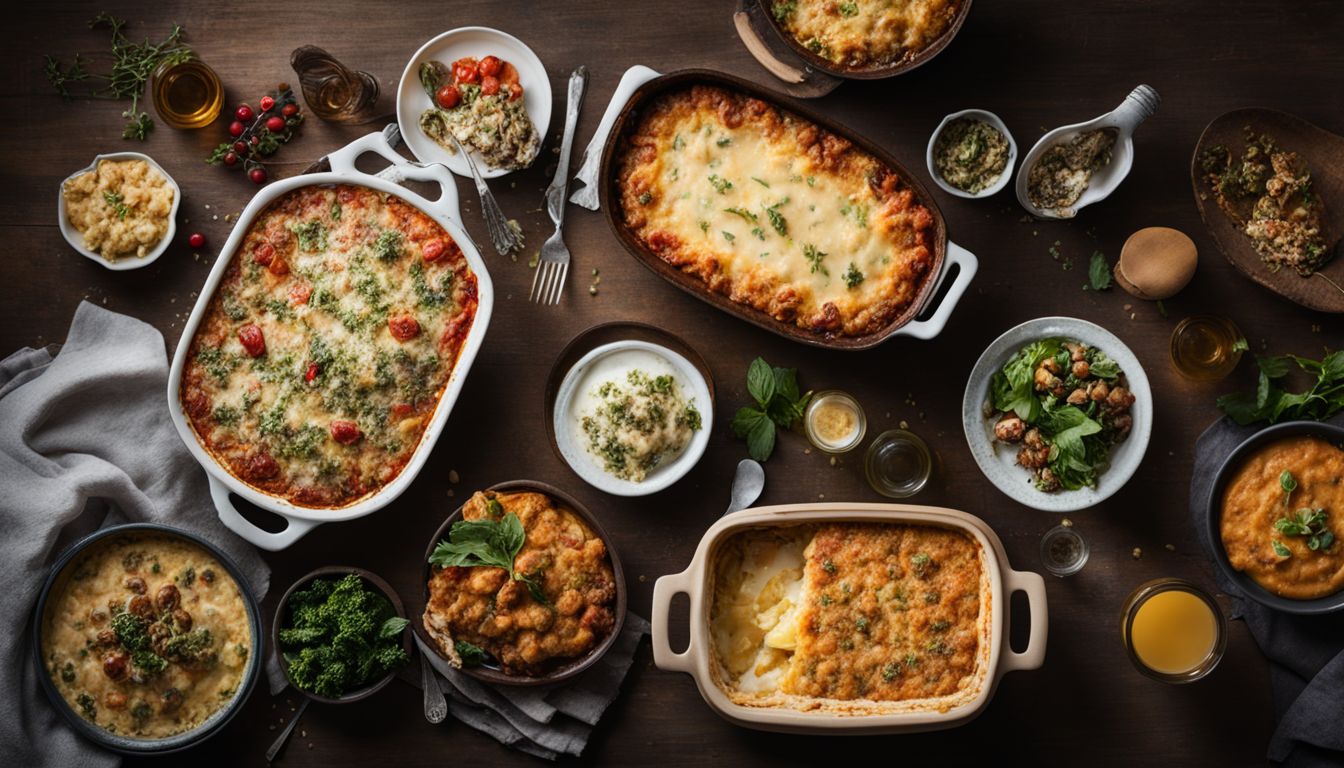
Are you craving the velvety, heartfelt warmth of dairy-free casseroles as you’re currently embracing a dairy-free lifestyle? Here’s a spot of splendid news: we have prepared this blog to dish up an array of irresistible dairy-free casserole recipes that don’t skimp on flavour! So go on then, take the plunge; these cosy, robust dishes promise to tantalise your taste buds without any morsel of dairy in sight.
Key Takeaways
Dairy-free casserole recipes are a great option for those following a lactose-free or gluten-free diet.
These recipes use flavourful ingredients like mushrooms, sweet potatoes, tofu, and more to create delicious and satisfying meals.
Casseroles such as Mushroom-Sweet Potato Moussaka and Bibimbap Casserole with Tofu offer tasty dairy-free alternatives to classic dishes.
You can enjoy these casseroles anytime without sacrificing taste or quality by substituting dairy products with plant-based alternatives and properly storing leftovers.
Flavourful Dairy-Free Casserole Recipes
Discover delicious dairy-free casserole recipes that are bursting with flavour. From the hearty Mushroom-Sweet Potato Moussaka to the Korean-inspired Bibimbap Casserole with Tofu, these dishes will make you addicted for more.
Pork, Portobello, Mashed Roots Shepherd’s Pie, Chilaquiles Breakfast Casserole, Coconut Sweet Potatoes and Wild Rice are just a few more mouthwatering options to try.
Mushroom-Sweet Potato Moussaka
Mushroom-Sweet Potato Moussaka is a tasty dish you will love. It’s packed with yummy roasted eggplant and sweet potato layers. You’ll also find lentils and mushrooms in it. This makes the dish full of different tastes that fit together perfectly.
If you are vegan, this is a meal for you! Even if you’re not, it’s still worth trying out. After baking the moussaka for about 45 to 50 minutes, it’s all set to eat once it turns brown on top and the sauce starts bubbling.
httpss://www.youtube.com/watch?v=xkoVJVlyvCQ
Try this dairy-free casserole recipe at your next meal and enjoy its amazing flavours!
Bibimbap Casserole with Tofu
Let us share a yummy recipe for Bibimbap Casserole with Tofu. It’s a hearty dish that blends tofu, rice, and eggs for protein. This casserole captures the taste of the Korean bibimbap dish without any dairy.
In this special meal, we play up the flavours using Gochujang – a hot pepper paste from Korea! The kick of spice brings life to each bite. What makes it even better is that you can enjoy this spicy casserole guilt-free because it suits those on a dairy-free diet.
Pork, Portobello, and Mashed Roots Shepherd’s Pie
The Pork, Portobello and Mashed Roots Shepherd’s Pie is tasty. It’s dairy-free and gluten-free too! We use lean ground pork in it. This meat goes well with fresh portobello mushrooms and chopped onions.
The pie has a soft mashed potato crust on top of the filling. It’s creamy, but you won’t miss any dairy products in it! Each serving gives you 405 calories and 27 grams of protein. Plus, there are no eggs in this recipe, so everyone can enjoy it!
Chilaquiles Breakfast Casserole
We love making the Chilaquiles Breakfast Casserole. It is full of taste and free from dairy. This dish comes from Mexico. Best part? You can make it the night before! It’s a top choice for a brunch meal. The steps are easy too. All you need to do is fry tortilla chips and layer them with red sauce, cheese, and beans. But wait, there’s more! It fits well in vegetarian cooking as it doesn’t have meat in it.
Also, people who can’t eat gluten can enjoy this tasty casserole. Lastly, it boasts good health with beans and veggies inside! So if you want something tasty, healthy and easy to make, try this out!
Coconut Sweet Potatoes and Wild Rice
Coconut Sweet Potatoes and Wild Rice is a tasty dish. It’s dairy-free, gluten-free, and low in sugar. We use sweet potatoes instead of marshmallows to make it sweet but healthy. Coconut adds an exotic touch to the dish. This recipe can save you time because you can cook it in a slow cooker. Its flavours are sure to please all food lovers!
Other Dairy-Free Casserole Recipes
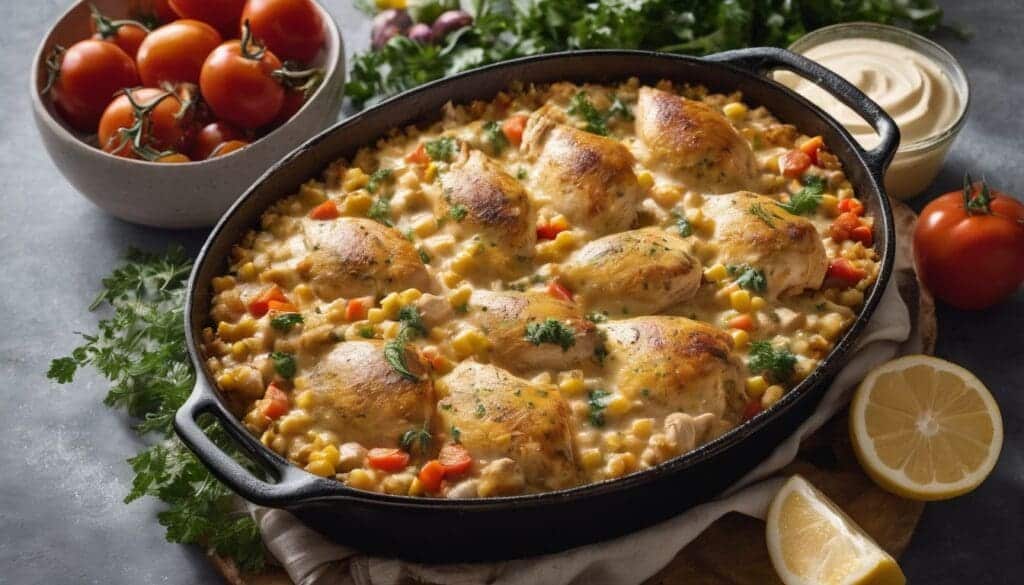
Cajun Shrimp and Corn Bread Casserole is a spicy and satisfying dish with a flavourful combination of shrimp, cornbread, and Cajun seasonings.
Make-Ahead Korean-inspired chicken with Broccoli is a convenient dish. It features tender chicken, and crisp broccoli tossed in a tangy Korean-inspired sauce.
Barley-Butternut Casserole is a hearty and wholesome recipe made with barley, butternut squash, and an assortment of vegetables for added texture and nutrition.
Vegan Mexican Lasagna with Avocado is a plant-based take on the classic lasagna featuring layers of tortillas, beans, salsa, avocado slices, and dairy-free cheese alternatives for a deliciously cheesy taste without the dairy.
Teriyaki Turkey, Rice, and Vegetable Casserole: A flavourful blend of teriyaki-seasoned turkey breast strips mixed with rice and colourful veggies for an easy yet satisfying dinner option.
httpss://www.youtube.com/watch?v=vgNSWd-yaBM
Cajun Shrimp and Corn Bread Casserole
The Cajun Shrimp and Corn Bread Casserole is a delight. This recipe is rich with flavours from shrimp, cornbread, and corn pudding. It’s not just dairy-free but also fish-free and vegan! You’ll love this tasty casserole if you enjoy other dairy-free dishes.
Finding the recipe isn’t hard at all. Try it out for your next meal or party – we promise it won’t disappoint!
Make-Ahead Korean-Inspired Chicken with Broccoli
The Make-Ahead Korean-Inspired Chicken with Broccoli is a delight. This recipe uses boneless chicken breast halves without skin. The mix of low-sodium soy sauce, brown sugar packed in tight, and freshly squeezed lime juice makes for a great flavour.
If you like to plan, this dish can be made early, giving easy meal prep. It’s a tasty dish from Korea using healthy chicken and broccoli in a casserole that saves time as it’s prepared in advance – perfect for busy days!
Barley-Butternut Casserole
The Barley-Butternut Casserole is a tasty and satisfying dairy-free recipe. It features ingredients like turkey, butternut squash, and barley. This delicious casserole comes from the vegan cookbook “A Vegan Taste of France” by Linda Majzlik.
This recipe is perfect for you if you’re following a vegan or dairy-free diet. Plus, it’s also suitable for those who are gluten-free. Give this flavourful dish a try, and enjoy the hearty combination of flavours!
Vegan Mexican Lasagna with Avocado
The Vegan Mexican Lasagna with Avocado is a delicious and satisfying dairy-free casserole recipe. It’s perfect for those who follow a plant-based diet or have dairy allergies. This Mexican-inspired dish swaps traditional lasagna ingredients with flavourful sauces, gooey cheese alternatives, and soft gluten-free tortillas.
The combination of creamy avocado and veggie-loaded layers creates a great taste. This Vegan Mexican Lasagna with Avocado is sure to be a hit at your next meal.
Teriyaki Turkey, Rice, and Vegetable Casserole
The Teriyaki Turkey, Rice, and Vegetable Casserole is a delicious dairy-free and gluten-free option for those looking for flavourful dinner ideas. This creamy casserole is packed with wholesome ingredients like brown rice, turkey, and an aromatic low-sugar teriyaki sauce.
It’s not only tasty but also a healthy choice as it includes lots of protein from the turkey and veggies, as well as whole grains from the brown rice. With its comforting flavours and nutrient-packed ingredients, this vegetable casserole is sure to satisfy your cravings while providing a nourishing meal.
Tips for Making Dairy-Free Casseroles
To make dairy-free casseroles, you can easily substitute dairy products with plant-based alternatives like coconut milk or almond milk. Store your casseroles properly by covering them tightly and refrigerating them for up to 3 days or freezing them for longer storage.
Serve your delicious creations with a side of fresh salad for a complete meal.
httpss://www.youtube.com/watch?v=Rtc9pFn-1cM
Substitutions for Dairy Products
If you’re looking to make a dairy-free casserole, you can use plenty of substitutions for dairy products. Instead of cow’s milk, you can try using unsweetened, plain soy milk as a vegan-friendly alternative. It works well for baking, cooking, and even drinking. Many options are also available if you need to replace other dairy ingredients like butter or cheese. Go Dairy Free offers a helpful guide on substitutes for cream, yoghurt, milk, cheese, and common baking ingredients.
With these alternatives in hand, you can create delicious casseroles without any dairy while still enjoying the flavours you love.
Proper Storage and Freezing
To keep your dairy-free casseroles fresh and delicious, it’s important to know how to store and freeze them properly. When it comes to freezing, make sure your casseroles are completely cooled down before packing them in airtight containers or freezer bags.
Label each container with the name of the casserole and the date it was made. It’s best to store your casseroles in the freezer at 0 degrees or colder. This helps maintain their quality for longer periods of time. Remember that frozen casseroles can last up to six months, but after that, their quality may start to decrease.
To ensure proper food safety, cook your casseroles thoroughly, reaching a temperature of at least 75 °C or hotter before freezing them. Keep in mind that not all ingredients freeze well. Dairy products like cheese and milk can change texture when frozen and thawed, so avoiding using them if you plan on freezing your casserole is better.
Instead, opt for dairy-free alternatives like plant-based kinds of milk or vegan cheeses.
Serving Suggestions
When it comes to serving dairy-free casseroles, you can do a few things to make them even more delicious and enjoyable. One suggestion is to top your casserole with some fresh herbs or chopped nuts for added flavour and texture.
Another idea is to serve the casserole alongside various alternatives for a complete and balanced meal. You could also pair it with a side of crusty bread or rice pilaf to soak up all the tasty flavours.
Remember, these serving suggestions are just ideas, so feel free to get creative and tailor them to suit your taste preferences. And don’t forget, casseroles can be enjoyed as leftovers, too, so they make for an easy and satisfying lunch the next day.
A Casserole Symphony Beyond Dairy: Embrace Endless Possibilities
As we conclude our exploration of dairy-free casserole recipes, remember this is just the opening act. Restrictions don’t limit this culinary adventure; it’s fueled by creativity and boundless potential.
No longer are creamy sauces and cheesy toppings off-limits. The versatility of plant-based alternatives opens doors to exciting flavour combinations and textures. Dive into the creamy richness of coconut milk, the nutty depth of nut milk, or the savoury tang of nutritional yeast. Embrace gluten-free options for added inclusivity.
This journey through dairy-free casseroles isn’t just about replacing ingredients; it’s about discovering new favourites. Experiment with seasonal vegetables, explore global spices and unleash your inner culinary artist. Remember, these recipes are mere starting points, waiting to be personalised with your unique touch.
So, don’t hesitate to grab your trusty casserole dish and embark on this delicious adventure. Share your creations, swap tips, and inspire others to discover the joy of dairy-free comfort food. After all, the true magic lies in the shared experience of bringing people together over a warm, hearty dish, regardless of dietary restrictions.
Troubleshooting Your Dairy-Free Casserole: Conquering Challenges for Creamy Success
Fear not, casserole enthusiasts! Even the most delectable dairy-free dish can encounter hurdles. Here’s how to navigate common issues and ensure your casserole sings with flavour and texture:
Texture Troubles:
Problem: Your casserole is too watery or lacks creaminess.
Solution:
Thickening is key: Use thickening agents like cornstarch, arrowroot powder, or gluten-free flour mixed with broth. Start slowly and add more as needed.
Check your base: Opt for thicker plant-based milk alternatives like full-fat coconut milk or cashew milk.
Seasoning is essential: Don’t shy away from herbs, spices, and flavourful sauces. Consider nutritional yeast for that “cheesy” umami note.
Roast your veggies: Roasting vegetables before adding them enhances their natural sweetness and depth.
Acid is your friend: A squeeze of lemon juice or a splash of vinegar can add a special flavour to your dish.
Texture Triumphs:
Problem: Your casserole isn’t browning evenly.
Solution:
Preheating matters: Make sure your oven is preheated to ensure even cooking and browning.
Stir wisely: Stir gently once or twice during baking to avoid breaking up ingredients.
Broil for a finish: Finish the casserole under the broiler for a final burst of golden brown goodness.
Remember:
Adjust for taste: Don’t be afraid to adjust seasonings and ingredients to your liking.
Embrace substitutes: Explore different dairy-free alternatives and find what works best for you.
Practice makes perfect: Don’t get discouraged by initial hiccups. Experiment and trust your culinary intuition.
So, grab your ingredients, embrace these troubleshooting tips, and turn your dairy-free casserole into a masterpiece! Enjoy the process, share your creations, and revel in the delicious possibilities.
In conclusion, dairy-free casserole recipes are a delicious and convenient option for those following a lactose-free or gluten-free diet. With flavourful ingredients like mushrooms, sweet potatoes, tofu, and more, these casseroles are sure to satisfy your taste buds.
Whether you’re a vegan or simply looking for healthier alternatives, these dairy-free casseroles will make for hearty and comforting meals that everyone can enjoy. Give them a try and discover the joy of flavourful dairy-free cooking!
Hey there, fellow food lovers! We’ve got something delicious and dairy-free for you today. Whether you’re looking for a new twist on classic dishes like chicken and rice, enchiladas, or lasagna or want to try something more adventurous, like a Mediterranean-inspired chicken dish with cauliflower and olives, we’ve got you covered.
And if you’re following a vegan or gluten-free diet, don’t worry – we’ve even included a recipe for a tasty taco casserole that fits the bill. We also have a mouthwatering green bean casserole recipe using French’s Fried Onions. Trust me, these casseroles will have everyone asking for seconds!
FAQs
1. Can I make a dairy-free casserole without using any milk or cheese?
Yes, you can make a delicious dairy-free casserole by substituting milk with non-dairy alternatives like almond milk or coconut milk and replacing cheese with vegan cheese or nutritional yeast.
2. Are there any dairy-free options for creamy casseroles?
Yes, you can create creaminess in your dairy-free casseroles using ingredients like cashew cream, coconut cream, or plant-based mayonnaise as substitutes for traditional dairy products.
3. What are some good substitutes for butter in dairy-free casseroles?
You can use oils such as olive or coconut oil and vegan spreads made from plant-based fats instead of butter to add flavour and moisture to your dairy-free casseroles.
4. What are some popular vegetables that work well in dairy-free casseroles?
Popular vegetables that work well in dairy-free casseroles include broccoli, cauliflower, sweet potatoes, spinach, zucchini, and bell peppers. These vegetables provide both taste and nutritional value to your dish.
5. Can I freeze leftover portions of a dairy-free casserole?
Yes, you can freeze the leftovers of a dairy-free casserole by allowing it to cool completely before transferring it. Consuming the frozen leftovers within 2-4 months is best for optimal quality.

 Shaimaa Olwan
 Asmaa Alhashimy