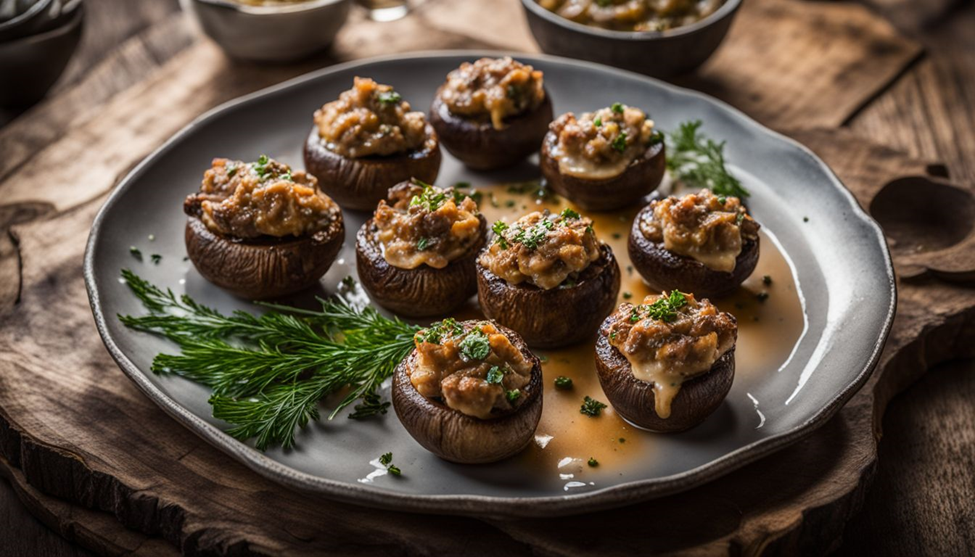
Stuffed Mushrooms

Stuffed Mushrooms: Global Recipes & Expert Techniques

Author Avatar

Updated on January 16, 2026

Reviewed by Salma Ihab

There is perhaps no appetiser as widely served, yet as frequently misunderstood, as stuffed mushrooms. At its best, a stuffed mushroom delivers concentrated umami in a tender, earthy vessel carrying a sophisticated medley of textures and flavours. At its worst, it becomes a watery, rubbery disappointment that leaves a grey pool on the serving platter.

Most stuffed mushroom recipes treat them as a simple vehicle for cream cheese and breadcrumbs. But to the culinary historian and professional chef, stuffed mushrooms represent a canvas for regional expression. From the garlic-heavy champignons farcis found in French bistros to the elegant, miso-glazed shiitakes in Tokyo’s hidden izakayas, the practice of stuffing mushrooms spans cultures and centuries.

This guide moves beyond the basic party snack. We’ll explore the cellular science of mushrooms to ensure a perfect bite every time, share authentic stuffed mushroom recipes from five culinary traditions, and provide the definitive methodology that will solve the most common complaint: soggy mushrooms. Whether you’re preparing a quick weeknight meal or impressing dinner guests, you’ll discover techniques that transform this humble appetiser into something memorable.

Beyond the Appetiser: The Cultural Evolution of the Stuffed Mushroom

Understanding the history of stuffed mushrooms reveals why certain techniques and flavour combinations have stood the test of time. This appetiser has travelled through centuries and across continents, evolving from rustic French fare to a globally celebrated dish.

From French Haute Cuisine to the Modern Party Platter

The history of stuffed mushrooms traces back to 19th-century France, where they transitioned from a rustic side dish to an elegant canapé served in Parisian salons. French cooks recognised that mushrooms, with their natural cup shape and earthy flavour, could carry rich fillings without overwhelming delicate palates.

In French bistros, champignons farcis became a staple, mushroom caps filled with butter, garlic, and fresh parsley, topped with breadcrumbs and baked until golden. The Italian tradition developed differently, with funghi ripieni incorporating pine nuts, pecorino cheese, and fresh marjoram from Liguria.

By the mid-20th century, stuffed mushrooms had become fixtures at American cocktail parties. Today, home cooks are rediscovering authentic preparations and adapting them for contemporary dietary preferences.

The Science of the Perfect Stuffed Mushroom (No More Sogginess)

The most common failure in stuffed mushroom preparation is excess moisture. Mushrooms are approximately 80% to 90% water. When heat is applied, their cellular walls collapse, releasing this liquid. If that liquid is trapped under a dense filling, the mushroom essentially boils in its own juices, resulting in a rubbery texture.

Why Mushrooms Release Water: The Cellular Structure

Understanding your ingredient is the first step to mastering it. Mushrooms lack the cellulose found in plants; instead, their cell walls are made of chitin, the same material found in crustacean shells. Chitin is remarkably heat-stable, which is why mushrooms don’t turn mushy like vegetables. However, the water held within those chitin walls must go somewhere.

Most recipes suggest stuffing raw mushrooms and baking them directly. This is a culinary error. By stuffing a raw mushroom, you’re effectively sealing in the steam, preventing moisture from escaping.

The Pre-Roasting Secret: A Chef’s Technique

To achieve the firm, concentrated flavour of restaurant-quality stuffed mushrooms, employ the pre-roast method:

  • The Extraction: After cleaning and de-stemming your mushrooms, place them on a wire rack over a baking tray, cup side down.
  • The First Bake: Roast at 200°C (400°F/Gas Mark 6) for 10 minutes. This allows the initial burst of moisture to drip away from the mushroom rather than pooling inside it.
  • The Seasoning: Only after this first roast should you season the interior. Salt added too early draws out moisture prematurely, preventing the mushroom from browning.

Choosing Your Vessel: Mushroom Varieties and Their Uses

Stuffed Mushrooms

Not all mushrooms are created equal when it comes to stuffing. The variety you choose for your stuffed mushrooms will significantly impact the final texture, flavour, and structural integrity of your dish.

While the standard white button mushroom is most common in UK supermarkets, it’s often the least flavourful for stuffed mushrooms. For superior results, consider these alternatives:

Chestnut (Cremini) vs White Button vs Portobello

These three varieties form the foundation of most stuffed mushroom recipes. Each offers distinct characteristics that suit different filling styles and occasions.

Chestnut Mushrooms (Cremini)

These offer a deeper, more savoury profile and a sturdier structure that holds up well to hearty fillings. UK chestnut mushrooms are particularly good for stuffing due to their lower water content compared to standard white buttons.

White Button Mushrooms

The mildest option, these work well when you want the filling to be the star. Choose larger specimens for easier stuffing.

Portobello Mushrooms

The “steak” of the mushroom world. When using large portobellos, scrape out the dark gills with a spoon to provide more room for stuffing and prevent the filling from turning grey.

Exotic Options: Shiitake and King Trumpet

For those seeking more adventurous flavours, exotic mushroom varieties offer unique taste profiles and textures that can elevate your dish beyond the ordinary.

Shiitake

Their slightly smoky flavour pairs perfectly with Asian-inspired fillings. Note that shiitake stems are too woody to eat and should be reserved for stock rather than chopped into the filling.

King Trumpet (Eryngii)

These substantial mushrooms have a meaty texture that stands up to robust fillings. Slice them horizontally to create multiple stuffing vessels from a single mushroom.

Mushroom TypeBest ForFlavour ProfilePrep Notes
Chestnut (Cremini)All-purpose stuffingEarthy, robustMinimal gill removal needed
White ButtonDelicate fillingsMild, neutralChoose large, firm caps
PortobelloHearty meat fillingsDeep, earthyRemove gills completely
ShiitakeAsian-inspired dishesSmoky, umami-richDiscard woody stems
King TrumpetVegetarian mainsMeaty, substantialSlice horizontally

The Global Collection: 5 Authentic Recipes

These five stuffed mushroom recipes represent authentic preparations from distinct culinary traditions. Each showcases regional ingredients, traditional techniques, and cultural flavour profiles that have been refined over generations.

1. The Italian Classic: Funghi Ripieni with Pine Nuts & Pecorino

Stuffed Mushrooms

This Ligurian recipe showcases the region’s love of fresh herbs and quality cheese. The combination of toasted pine nuts and sharp pecorino creates a filling that’s rich without being heavy.

Prep Time: 15 minutes | Cook Time: 25 minutes | Servings: 4 (16 mushrooms)

Ingredients:

  • 16 large chestnut mushrooms, stems removed
  • 3 tablespoons extra virgin olive oil, divided
  • 60g fresh breadcrumbs (ideally from day-old sourdough)
  • 50g pecorino Romano, finely grated
  • 40g pine nuts, lightly toasted
  • 2 cloves garlic, minced
  • 2 tablespoons fresh marjoram, finely chopped
  • 1 tablespoon fresh flat-leaf parsley, chopped
  • Salt and freshly ground black pepper

Instructions:

  1. Preheat your oven to 200°C (400°F/Gas Mark 6). Place mushroom caps cup side down on a wire rack over a baking tray. Roast for 10 minutes to release excess moisture.
  2. While mushrooms roast, finely chop the stems. Heat 2 tablespoons of olive oil in a pan over medium heat. Add the chopped stems and garlic, cooking until the moisture evaporates and the mixture becomes fragrant, about 5 minutes.
  3. Remove from heat and stir in breadcrumbs, pecorino, pine nuts, marjoram, and parsley. Season with salt and pepper. The mixture should hold together when pressed.
  4. Turn mushroom caps over and brush the insides lightly with remaining olive oil. Fill each cap generously with the mixture, mounding it slightly.
  5. Return to the oven and bake for 15 minutes until the tops are golden and crispy.

Chef’s Tip: Toast the pine nuts in a dry pan until they release their oils and turn light golden. This takes only 2-3 minutes but transforms their flavour from bland to buttery.

2. The French Bistro: Champignons Farcis with Garlic Butter & Parsley

Stuffed Mushrooms

This is the classic French stuffed mushroom preparation found in neighbourhood bistros throughout France, simple, elegant, and utterly satisfying.

Prep Time: 10 minutes | Cook Time: 20 minutes | Servings: 4 (12-16 mushrooms)

Ingredients:

  • 16 white button mushrooms (large), stems removed
  • 80g unsalted butter, softened
  • 4 cloves garlic, very finely minced
  • 4 tablespoons fresh flat-leaf parsley, finely chopped
  • 60g fresh breadcrumbs
  • 2 tablespoons dry white wine
  • Salt and white pepper
  • Squeeze of lemon juice

Instructions:

  1. Follow the pre-roasting method: place mushrooms cup side down on a wire rack and roast at 200°C for 10 minutes.
  2. Mix softened butter with minced garlic, parsley, breadcrumbs, and white wine. The mixture should be spreadable but hold its shape. Season with salt, white pepper, and lemon juice.
  3. Turn mushrooms over and fill each cap with the garlic butter mixture, spreading it to the edges.
  4. Bake for 10 minutes until the butter is bubbling and the breadcrumbs are golden brown.

Serving Suggestion: These are best served immediately while the butter is still sizzling. Provide crusty bread to soak up the garlicky juices.

3. The Umami Bomb: Miso-Stuffed Shiitakes

Stuffed Mushrooms

This Japanese-inspired recipe balances sweet, salty, and savoury notes. The miso glaze caramelises during cooking, creating a deeply flavourful crust.

Prep Time: 15 minutes | Cook Time: 18 minutes | Servings: 4 (12 mushrooms)

Ingredients:

  • 12 large shiitake mushrooms, stems removed (save for stock)
  • 100g firm tofu, drained and crumbled
  • 2 tablespoons white miso paste
  • 1 tablespoon mirin
  • 1 teaspoon sesame oil
  • 2 spring onions, finely sliced
  • 1 teaspoon fresh ginger, grated
  • 30g panko breadcrumbs
  • 1 tablespoon sesame seeds
  • 1 teaspoon soy sauce

Instructions:

  1. Preheat oven to 190°C (375°F/Gas Mark 5). Place shiitake caps, gill side down, on a baking tray and roast for 8 minutes.
  2. Combine crumbled tofu, miso paste, mirin, sesame oil, spring onions, ginger, and soy sauce in a bowl. Mix until well combined.
  3. Turn mushrooms over and fill each cap with the tofu mixture. Top with panko breadcrumbs mixed with sesame seeds.
  4. Bake for 10 minutes until the breadcrumbs are golden, and the filling is heated through.

Cultural Note: In Japanese cuisine, shiitake mushrooms are prized for their health properties and are often served during autumn festivals. This preparation respects the mushroom’s natural flavour while adding complementary umami from the miso.

4. The British Pub Style: Stilton & Walnut Stuffed Buttons

Stuffed Mushrooms

This hearty recipe celebrates British ingredients, sharp Stilton cheese, and local walnuts, creating a filling that’s rich and satisfying.

Prep Time: 12 minutes | Cook Time: 20 minutes | Servings: 4 (16 mushrooms)

Ingredients:

  • 16 large white button mushrooms, stems removed
  • 100g Stilton cheese, crumbled
  • 60g walnuts, toasted and chopped
  • 50g fresh breadcrumbs
  • 2 tablespoons double cream
  • 1 small shallot, finely diced
  • 1 tablespoon fresh thyme leaves
  • 30g butter
  • Salt and black pepper

Instructions:

  1. Pre-roast mushroom caps, cup-side down, at 200°C for 10 minutes.
  2. Melt butter in a pan and sauté the shallot until soft, about 3 minutes. Remove from heat.
  3. Mix shallots with Stilton, walnuts, breadcrumbs, cream, and thyme. The mixture should be slightly crumbly but hold together when pressed. Season lightly the Stilton provides most of the salt.
  4. Fill mushroom caps generously and bake for 10 minutes until the cheese is melted and bubbling.

Pairing Suggestion: Serve these with a glass of port or a robust red wine. The strong flavours stand up well to full-bodied drinks.

5. The Modern American: Sausage & Herb (with a Gourmet Twist)

Stuffed Mushrooms

This recipe takes the classic American preparation and refines it with quality ingredients and proper technique.

Prep Time: 15 minutes | Cook Time: 25 minutes | Servings: 4 (12 large portobellos)

Ingredients:

  • 12 portobello mushrooms (medium-sized), stems and gills removed
  • 300g quality pork sausage meat (or Italian sausage, casings removed)
  • 100g cream cheese, softened
  • 60g Parmesan cheese, grated
  • 50g fresh breadcrumbs
  • 2 cloves garlic, minced
  • 1 tablespoon fresh sage, chopped
  • 1 tablespoon fresh thyme leaves
  • 1 teaspoon fennel seeds, lightly crushed
  • 2 tablespoons olive oil
  • Salt and black pepper

Instructions:

  1. Pre-roast portobello caps cup side down for 10 minutes at 200°C.
  2. While mushrooms roast, brown the sausage meat in a pan with olive oil, breaking it into small pieces. Add garlic and cook until fragrant, about 2 minutes. Remove from heat.
  3. Mix in cream cheese, half the Parmesan, breadcrumbs, sage, thyme, and fennel seeds. Season to taste.
  4. Fill mushroom caps generously with the sausage mixture. Top with remaining Parmesan.
  5. Bake for 15 minutes until the filling is cooked through and the cheese is golden.

Make-Ahead Note: Prepare the filling up to 24 hours in advance and refrigerate. Bring to room temperature before stuffing the pre-roasted mushrooms.

Dietary Adaptations: Inclusive Indulgence

Stuffed Mushrooms

Modern home cooks need stuffed mushroom recipes that accommodate various dietary requirements without sacrificing flavour or satisfaction. These adaptations maintain the rich, umami-packed character of traditional stuffed mushrooms while meeting specific nutritional needs.

Keto-Friendly: Swapping Breadcrumbs for Almond Meal/Parmesan

Breadcrumbs are the primary carbohydrate culprit in traditional recipes. With a few strategic substitutions, you can create ketogenic stuffed mushrooms that are equally satisfying.

For those following a ketogenic diet, breadcrumbs are problematic due to their carbohydrate content. Replace breadcrumbs with a 1:1 ratio of finely ground almond meal or use extra-grated Parmesan cheese for binding and crunch.

Keto-Friendly Stuffed Mushroom Filling (works with any mushroom):

  • Use almond flour instead of breadcrumbs
  • Increase cheese content slightly for binding
  • Add crushed pork rinds for additional crunch
  • Focus on high-fat ingredients like cream cheese, butter, or mascarpone

The pre-roasting method becomes even more important for keto versions, as the fillings tend to be richer and can make sogginess more noticeable.

Plant-Based Perfection: Vegan Fillings that Don’t Compromise

Creating satisfying vegan stuffed mushrooms requires building depth of flavour through layering techniques rather than relying on cheese for richness. These plant-based fillings deliver umami and creaminess without animal products.

Vegan Mediterranean Filling:

  • 150g cashews, soaked for 2 hours and blended until creamy
  • 100g sun-dried tomatoes, chopped
  • 60g fresh breadcrumbs (ensure vegan bread)
  • 3 tablespoons nutritional yeast
  • 2 cloves garlic, minced
  • 2 tablespoons fresh basil, chopped
  • 1 tablespoon olive oil
  • Salt, black pepper, and lemon juice to taste

Instructions: Sauté garlic until fragrant, then mix with all other ingredients. The cashew cream provides richness, while nutritional yeast adds a cheese-like umami flavour. Fill pre-roasted mushroom caps and bake as directed.

Protein-Packed Vegan Option:

  • 200g firm tofu, crumbled and pressed
  • 60g walnuts, toasted and chopped
  • 50g fresh breadcrumbs
  • 2 tablespoons tamari or soy sauce
  • 1 tablespoon tahini
  • 2 teaspoons smoked paprika
  • 1 teaspoon maple syrup
  • Fresh herbs (parsley, thyme, or coriander)

These vegan versions maintain the satisfying texture and umami depth that make stuffed mushrooms appealing, proving that plant-based doesn’t mean flavour-compromised.

The Practical Kitchen Guide

Success with stuffed mushrooms comes down to proper technique at every stage. From selecting quality specimens to storing leftovers, these practical tips ensure consistent results every time you prepare stuffed mushrooms.

Choosing the Right Mushrooms

Quality ingredients are the foundation of any good dish. When shopping for mushrooms to stuff, look for specific characteristics that indicate freshness and structural integrity that will hold your stuffed mushroom filling properly.

When shopping for mushrooms, pick specimens that are:

  • Firm to the touch with no soft spots
  • Closed caps or only slightly open (unless using portobello)
  • Dry surface without slimy texture
  • Stems intact and not shrivelled
  • Similar in size for even cooking

Avoid mushrooms that show signs of moisture damage, dark spots, or have an off smell.

Cleaning the Mushrooms

Proper cleaning prevents waterlogging while removing dirt and debris. Mushrooms are porous and will absorb water if cleaned incorrectly, contributing to the soggy mushroom problem.

Never soak mushrooms in water; they’re like sponges and will absorb excess moisture. Instead:

  1. Use a damp cloth or mushroom brush to gently wipe away any dirt
  2. For stubborn soil, use a damp paper towel
  3. If you must rinse them, do so quickly under running water and pat dry immediately
  4. Remove stems by twisting and pulling gently; they should come away cleanly

Preparing the Stuffing Mixture

A well-balanced filling has the right ratio of base ingredients, binding agents, and flavourings. Getting this mixture correct ensures the filling holds together during cooking without becoming dry or crumbly.

The ideal stuffing has three components:

  • Base: Breadcrumbs, grains, or crushed nuts
  • Binding: Cheese, cream cheese, eggs, or cashew cream (for vegan)
  • Flavour: Fresh herbs, aromatics, proteins, or vegetables

The mixture should hold together when pressed but not be wet or pasty. If it’s too dry, add a tablespoon of olive oil or cream. If too wet, add more breadcrumbs.

Stuffing the Mushrooms

The technique you use to fill the mushrooms affects both presentation and cooking results. Properly stuffed mushrooms hold their filling securely and present attractively on the plate.

Follow these steps for the best results:

  1. Use a small spoon or piping bag for a neat presentation
  2. Pack the filling firmly; it will shrink slightly during cooking
  3. Mount the filling slightly above the rim of the mushroom
  4. If using cheese on top, add it during the last 5 minutes of cooking to prevent burning

Make-Ahead and Freezing Instructions

Planning ahead makes entertaining easier and allows you to prepare components when you have time. Stuffed mushrooms are excellent candidates for advanced preparation, whether you’re making them for a party or meal prep.

Preparing in Advance:

  • Pre-roast mushroom caps and store in the fridge for up to 24 hours
  • Prepare stuffed mushroom fillings 1-2 days ahead and refrigerate
  • Stuff mushrooms up to 4 hours before baking; cover and refrigerate
  • Bring to room temperature for 15 minutes before baking

Freezing:

  • Stuff mushrooms completely, but don’t bake
  • Place on a baking tray and freeze until solid (about 2 hours)
  • Transfer to freezer bags or containers
  • Freeze stuffed mushrooms for up to 2 months
  • Bake from frozen, adding 5-7 minutes to cooking time

Troubleshooting: What to Do If Your Filling Is Too Dry

Dry filling is a common problem, but it’s easily corrected before baking. The key is adjusting the moisture content without making the mixture too wet.

If your filling seems dry after mixing:

  • Add 1-2 tablespoons of olive oil, melted butter, or cream
  • Incorporate a beaten egg for binding (works well with meat fillings)
  • Mix in a tablespoon of white wine or vegetable stock

The filling will release some moisture from the mushrooms during cooking, so slightly dry is better than too wet.

Serving Suggestions

How you present and serve stuffed mushrooms can elevate them from a simple appetiser to an elegant entertaining fare. Temperature, portion size, and accompaniments all matter.

As an Appetiser:

  • Arrange on a platter with fresh herbs as garnish
  • Serve warm for the best flavour
  • Provide small plates and napkins
  • Plan 3-4 mushrooms per person

As a Main Course:

  • Serve 4-6 large portobello mushrooms per person
  • Pair with a fresh green salad or roasted vegetables
  • Add crusty bread to soak up the juices

Pairing the Stuffed Mushrooms with Side Dishes

Stuffed mushrooms pair beautifully with complementary sides that don’t compete with their rich flavours:

  • For Italian-style stuffed mushrooms: Serve with a rocket and Parmesan salad dressed with balsamic vinegar, or alongside creamy polenta
  • For French-style stuffed mushrooms: Pair with a simple green salad and crusty baguette, or serve with roasted chicken
  • For Asian-inspired stuffed mushrooms: Serve with steamed jasmine rice and stir-fried greens, or alongside miso soup
  • For British pub-style stuffed mushrooms: Accompany with roasted root vegetables and a peppery watercress salad
  • For American sausage-stuffed mushrooms: Serve with garlic bread and a Caesar salad, or alongside grilled steak

Suggestions for Garnishes and Toppings

Fresh garnishes add visual appeal and complementary flavours:

  • Fresh Herbs: Chopped parsley, chives, basil, or thyme
  • Cheese: Light dusting of Parmesan or pecorino for extra umami
  • Nuts or Seeds: Toasted pine nuts, sliced almonds, or sesame seeds
  • Drizzles: Balsamic glaze or herb-infused olive oil
  • Citrus: Light squeeze of lemon juice to brighten rich fillings

For dinner parties, arrange mushrooms on a bed of fresh rocket. The greens will wilt slightly from the warm mushrooms, creating an elegant presentation.

Seasonal & Cultural Context

Understanding when and why different cultures prepare stuffed mushrooms enriches your appreciation of this dish. Seasonal availability and traditional celebrations have shaped regional stuffed mushroom recipes across centuries.

Mushroom foraging has been a seasonal tradition across Europe and Asia for centuries. In the UK, autumn (September through November) marks the peak season for wild mushroom varieties, though cultivated mushrooms for stuffed mushroom recipes are available year-round.

Traditional Preparation Times:

  • French champignons farcis are traditionally served during the vendanges (grape harvest) season in autumn
  • Italian funghi ripieni often appear on Christmas Eve menus as part of the “Feast of Seven Fishes” celebration
  • British pub-style mushrooms gained popularity as autumn and winter warmers, often appearing on menus from October through March

Ingredient Sourcing Tips:

  • Seek out local farms or farmers’ markets for seasonal mushroom varieties
  • Store-bought chestnut mushrooms are available year-round and offer consistent quality
  • For authentic Italian recipes, look for pecorino Romano rather than generic pecorino. The Romano designation indicates traditional production methods
  • French recipes traditionally use Champignon de Paris (Paris mushrooms), which are equivalent to white button or cremini mushrooms

Festival and Celebration Connections:

  • Many European villages host autumn mushroom festivals celebrating the foraging season
  • In Japan, matsutake (pine mushrooms) are celebrated during autumn festivals and considered auspicious
  • Spanish regions like Catalonia hold mushroom festivals (Festes de Bolets) in October and November

Modern Interpretations:

  • Contemporary chefs are experimenting with exotic mushroom varieties like lion’s mane and oyster mushrooms for stuffing
  • Plant-based versions using cashew cream and nutritional yeast have become popular at vegan gatherings
  • Low-carb and keto adaptations reflect current dietary trends whilst maintaining traditional flavour profiles

The difference between mediocre and memorable stuffed mushrooms lies in understanding the science behind the ingredient. By employing the pre-roasting method, you’ve solved the most common issue: excess moisture. By exploring authentic regional preparations, you’ve expanded your stuffed mushroom repertoire beyond basic recipes.

Whether preparing the garlic-butter richness of French champignons farcis, the umami depth of miso-glazed shiitakes, or the hearty satisfaction of Stilton-walnut buttons, you now have the techniques to execute stuffed mushrooms perfectly. They work equally well as an elegant appetiser or a satisfying vegetarian main course.

FAQs

1. How do I prevent stuffed mushrooms from becoming watery?

The key is the pre-roasting method: place cleaned, de-stemmed mushrooms cup side down on a wire rack and roast at 200°C for 10 minutes before stuffing. This allows excess moisture to drip away rather than pooling inside the cap. Only season with salt after this initial roast, as salt draws out water prematurely. This technique ensures your stuffed mushrooms have the perfect texture.

2. Can I prepare stuffed mushrooms ahead of time?

Yes. Pre-roast the mushroom caps and prepare your stuffed mushroom filling up to 24 hours in advance, storing them separately in the fridge. Stuff the mushrooms up to 4 hours before baking, cover with cling film, and refrigerate. Bring to room temperature for 15 minutes before baking for even cooking.

3. What type of mushrooms work best for stuffing?

Chestnut (cremini) mushrooms offer the best balance of flavour and structure for stuffed mushrooms. They have a deeper taste than white buttons and hold up well to hearty fillings. For large, meal-sized portions, use portobello mushrooms (remove the dark gills first). For Asian-inspired stuffed mushroom recipes, shiitake mushrooms provide excellent flavour, though their stems are too woody to eat.

4. How do I make vegan stuffed mushrooms that are satisfying?

Build depth through layering techniques: use cashew cream for richness, nutritional yeast for umami, and toasted nuts for texture. The vegan stuffed mushroom recipe in the dietary adaptations section uses sun-dried tomatoes and cashew cream to create a filling that’s just as satisfying as a cheese-based version. The pre-roasting method is crucial for maintaining the texture of vegan stuffed mushrooms.

5. Can stuffed mushrooms be frozen?

Yes. Prepare and stuff the mushrooms completely, but don’t bake them. Freeze on a baking tray until solid (about 2 hours), then transfer to freezer bags. Stuffed mushrooms will keep for up to 2 months. Bake directly from frozen, adding 5-7 minutes to the cooking time. The texture holds up well when using the pre-roasting method before freezing.

Share with our social media

Leave a Reply

Your email address will not be published. Required fields are marked *