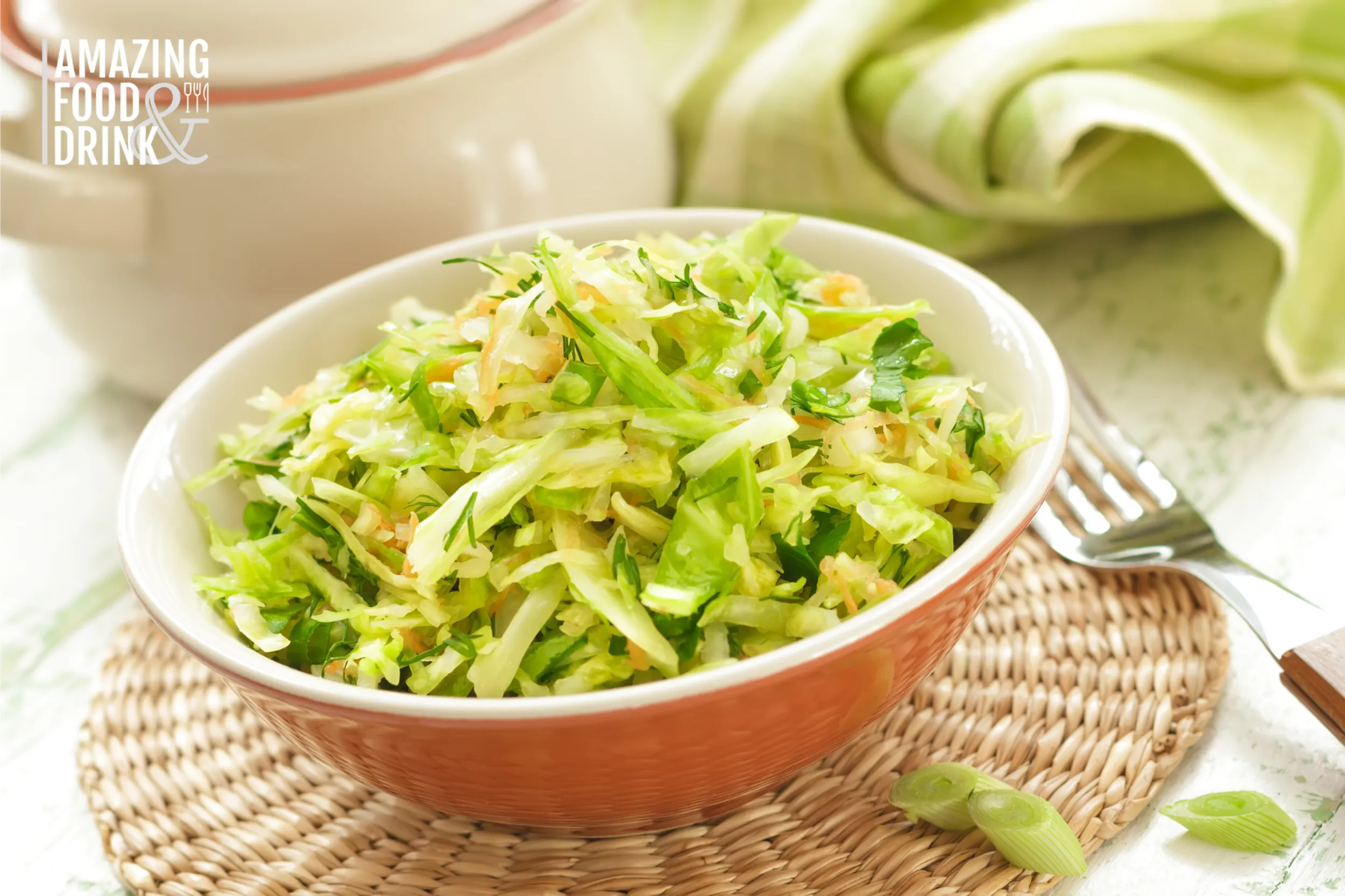
Cabbage salad is one of the dishes that should be eaten daily because of its health benefits. It is rich in vitamins and fibre. Cabbage can be eaten raw and chopped and used to prepare cabbage salad, and it can also be used cooked in soups and stews.
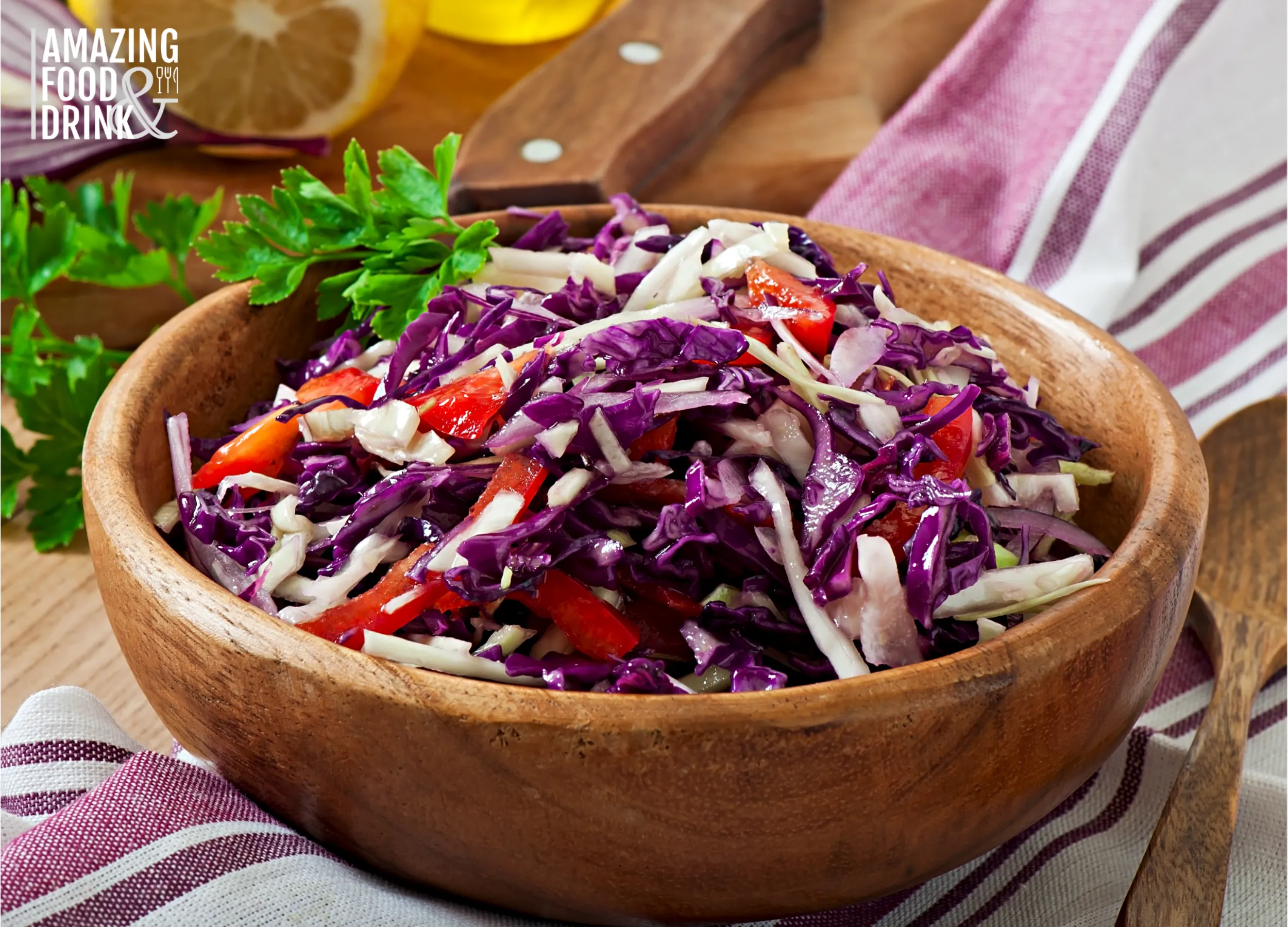
Cabbage of all types and colours is low in calories and rich in vitamin C, but purple or red cabbage is distinguished by its content of compounds called anthocyanins, which give it its distinctive colour. These compounds have several benefits for health.
Red or purple cabbage is low in calories – as mentioned previously – in addition to being rich in fibre, which enhances the feeling of satiety, so eating it as part of a healthy and balanced diet may help lose weight.
Cabbage Salad
This traditional salad is trendy and easy to prepare. Here are the ingredients and preparation steps.
Ingredients
One small cabbage.
Three medium-sized carrots.
A cup of mayonnaise.
A tablespoon of honey.
A tablespoon of vinegar.
Half a cup of water.
How to prepare
Bring cabbage leaves, wash them well with cold water, and then place them on top of each other to facilitate the cutting process.
Roll all the leaves into a roll, then cut them into thin, small wings.
Wash the carrots, grate them from the small side, and put them in a bowl with the cabbage.
Mix mayonnaise, vinegar, honey and water together in another bowl until the mixture becomes thick and homogeneous.
Add the mixture to the cabbage and carrots and stir until everything is completely mixed.
Cover the bowl with nylon paper and place it in the refrigerator for ten minutes. Serve cabbage salad cold with chicken and favourite dishes.
Cabbage Salad with Yoghurt
Here is another delicious recipe using cabbage and yoghurt. It takes about fifteen minutes to prepare and serves two people.
Ingredients
One red cabbage.
Two medium-sized carrots.
One cup of yoghurt.
Half a cup of mayonnaise.
One teaspoon of vinegar.
One tablespoon of honey.
A pinch of salt.
How to prepare
Wash the cabbage leaves and roll them to make cutting them easier, then cut them into thin wings.
Grate the carrots, then add them to the cabbage.
Put mayonnaise, honey, vinegar, yoghurt, and salt together in another bowl, then mix them well until all the ingredients are combined with each other.
Add the mixture to the cabbage and carrots, and stir the salad until it is combined with all the ingredients.
Cabbage Salad with Vegetables
Here is another vegetarian recipe that can boost your energy and nourish your day. It takes about fifteen minutes to prepare and serves four people.
Ingredients
One red cabbage.
One white cabbage.
Some lettuce leaves.
A few mint leaves.
Medium-sized onion.
Four carrots cut into slices.
One cup of curd.
One cup of mayonnaise.
One teaspoon of salt.
One teaspoon of vinegar.
One teaspoon of sugar.
Two tablespoons of olive oil.
How to prepare
Wash all the vegetables, then combine the cabbage leaves, roll them, and cut them into thin wings.
In the same way, the lettuce is cut to take a similar shape and size to that of the cabbage.
Mix all the ingredients in a bowl until completely combined.
Add them to the vegetables and stir well.
Red Cabbage Salad
Red Cabbage Salad
Here is a simple and easy salad to prepare. It is enough for three people and needs about fifteen minutes to get prepared.
Ingredients
Half a head of white cabbage: cut into thin slices.
One small head of red cabbage: cut into thin slices.
Two carrots, cut into thin slices or coarsely grated.
Six tablespoons of mayonnaise.
Three tablespoons of white vinegar.
One teaspoon of powdered sugar.
A sprinkle of black pepper.
A pinch of salt.
How to prepare
Toss the carrots into a deep basin along with the slices of red and white cabbage.
In a small bowl, thoroughly mix mayonnaise, white vinegar, sugar, and salt and black pepper.
Add the sauce and mix all the ingredients.
After that, refrigerate the salad for some time to allow the ingredients to combine.
Cabbage and Parsley Salad
This recipe is one of the most delicious diet salad recipes and among the fastest that you can prepare in minutes at home. It is suitable for vegetarians as well.
Ingredients
Half a finely chopped head of red cabbage.
Half a finely chopped head of white cabbage.
Three carrots, grated.
A bunch of parsley leaves.
Two tablespoons of sunflower seeds.
Two tablespoons of peanuts, unsalted.
Two tablespoons of olive oil.
Lemon juice.
How to prepare
In a bowl, combine the red and white cabbage pieces.
Next, coarsely chop the parsley and carrots and add them to the mixture.
In a bowl, thoroughly combine lemon juice, salt, and black pepper and mix them well.
After that, add the olive oil, sprinkle the sauce over the salad and toss to combine all the ingredients thoroughly.
Add sunflower seeds and peanuts on top.
Nachos Salad with Cabbage
httpss://www.youtube.com/watch?v=P0YpcucWC60
Nachos, or toasted tortilla chips, have origins in Mexican cuisine and have now become one of the most famous snacks in the world. They can be prepared in several ways. In addition, they are considered one of the snacks that can be served between the three meals. But at the same time, it is rich in calories and fat, so it is not recommended for dieters.
Ingredients
Half a cabbage.
One round of lettuce.
One can of corn.
Sauce Ingredients
Thousand Island Sauce.
Three tablespoons of mayonnaise.
One tablespoon of vinegar.
A pinch of salt.
Juice of half a lemon.
Nachos potato packet.
How to prepare
Cut the lettuce and cabbage into slices and mix them with the corn.
Mix the sauce ingredients, and break the nachos by hand.
Then, mix them with the salad and pour the sauce over it.
Lebanese Cabbage Tabbouleh
httpss://www.youtube.com/watch?v=h3M1cQs4eQs
This is a very famous recipe from Lebanese cuisine. It is easy, quick, and very suitable for preparing for lunch or dinner. Its cooking time is about fifteen minutes, and it is enough for two people.
Ingredients
Two chopped tomatoes.
One white cabbage, finely chopped.
Three squeezed lemons with a small amount of grated peel.
Wash the bulgur, halve it, and leave it for about an hour.
Add bulgur and vegetables with oil, salt, mint, lemon juice, and lemon zest, and stir.
Arrange the red cabbage leaves in a serving dish and pour the mixture into it.
Cabbage and Tomato Salad
It is one of the most delicious diet salad recipes and among the fastest that you can prepare in minutes at home. It is suitable for vegetarians as well.
Ingredients
One avocado, cut into small cubes.
Half a medium head of finely chopped cabbage.
One green sweet pepper, finely chopped.
Four tomatoes, cut into small pieces.
Four tablespoons of lemon juice.
Two cloves of crushed garlic.
One teaspoon of fine cumin.
Three tablespoons of olive oil.
One teaspoon of salt.
One teaspoon of dried mint.
How to prepare
Mix the cabbage and tomatoes in a bowl.
Add garlic, avocado, oil, mint, lemon juice, and salt to the vegetables and mix well.
Place the cabbage and tomato salad in a serving bowl.
Cabbage and Apple Salad
This unique cabbage salad with apples and crab is made with very simple steps. Try it and enjoy your dinner with your loved ones.
Ingredients
Two large apples.
One head of small green cabbage, finely chopped.
Half a cup of golden raisins.
One cup of walnuts.
One cup of chopped crab.
Sauce ingredients
One-quarter cup of apple cider vinegar.
Two tablespoons of apple molasses.
Half a teaspoon of black pepper.
Half a cup of olive oil.
One teaspoon of curry.
How to prepare
Chop the cabbage, and let the raisins soften in a dish of boiling water.
After draining and washing, combine the crab flesh with the cabbage.
Add the apple to the cabbage after chopping it up into small bits.
In a bowl, combine two teaspoons of apple molasses, apple cider vinegar and olive oil. Stir constantly.
Add a teaspoon of salt and a few pinches of black pepper.
Transfer the cabbage salad to a serving dish, toss, and pour the sauce over it.
Cabbage and Eggplant Salad for Diet
The cabbage and eggplant salad is a healthy salad for the diet. It contains many valuable nutrients and iron, which helps the body withstand the gradual withdrawal of excess fat.
Ingredients
One eggplant, cut into medium-thickness rings.
One cup of thinly sliced cabbage.
One cup of chopped parsley.
Half a cup of watercress leaves.
Half a cup of cherry tomatoes, cut in half.
Half a cup of raw nuts (as desired).
Two tablespoons of pomegranate molasses.
For seasoning
One cup of yoghurt.
One tablespoon of olive oil.
Half a teaspoon of minced garlic.
Two teaspoons lemon juice.
Salt and Pepper.
How to prepare
Place the eggplant rings in the oven to grill.
Prepare the salad dressing in an external bowl and mix all the ingredients well.
Place the arugula leaves and cabbage in a serving dish.
Then, put the eggplant slices and garnish with tomatoes and nuts.
Finally, spread the pomegranate molasses over the salad to enhance its flavour.
Winter Cabbage Salad
Cabbage is considered one of many people’s favourite foods, as many people like to eat it in the winter in order to feel warm, as it is rich in many vital nutrients for the body. In this recipe, cabbage is one of the best types of vegetables that can be prepared as a salad dish. Cabbage is a cabbage because it contains healthy and beneficial nutritional elements for the body. Prepare this winter cabbage salad and enjoy the cosy taste with your loved ones.
Ingredients
Pistachios: 100 grams, with an additional amount for decoration.
Gently toast the pistachios in a frying pan over the fire, then set them aside.
Chop the white cabbage, red cabbage, and Brussels cabbage into thin slices, add them to a bowl with the cleaned watercress, cover them, and refrigerate them overnight.
Add the bowl’s ingredients, along with the resulting liquid, to the dish designated for the salad.
Add the orange juice to the dressing ingredients, mix them together, then add the dressing over the cabbage and keep mixing.
The dish is served garnished with roasted pistachios and pomegranates.
Cabbage and Carrot Salad Without Mayonnaise
Prepare cabbage and carrot salad without mayonnaise with the best recipe to share with a light and distinctive taste on your trip, with the most delicious main dishes suitable for unparalleled recipes that will impress your family and guests. The recipe is enough for three people and is easy to prepare, with a preparation time of 15 minutes.
Ingredients
One-quarter cup of red vinegar.
Two tablespoons of sugar.
Two tablespoons of lemon juice.
Two tablespoons of olive oil.
One cabbage.
Three grated carrots.
One teaspoon of salt.
A sprinkle of black pepper.
How to prepare
Chop the cabbage well into thin slices, then distribute it in a medium-sized bowl.
Add the carrots to the cabbage, then mix the ingredients until combined.
In a small bowl, put red vinegar, lemon juice, sugar and olive oil, then season with salt and black pepper.
Mix the ingredients well with a spoon until you get a homogeneous mixture.
Distribute the mixture over the cabbage, then mix the salad well until combined before serving on your dinner.
Cabbage and Corn Salad
The cabbage and corn salad is a type of salad that can be eaten for lunch or as a snack. The cabbage and corn salad makes a person feel full, and cabbage contains a special compound called indole, and many studies have revealed that it may protect against breast cancer. This recipe is enough for five people, and the nutritional value of one meal is diet-friendly. It is an alternative to half a portion of vegetables and half a portion of starches.
Ingredients
Four and a half cups or three hundred and fifteen grams of cabbage.
One can or one hundred and ninety grams of light corn.
Two tablespoons of coriander or fifteen grams of coriander.
Two cloves of garlic or eleven grams.
Four tablespoons or forty grams of lemon juice.
0.25 grams of white pepper.
One gram of salt – one teaspoon.
How to prepare
Cut the cabbage into longitudinal slices after washing it well.
Wash the coriander and chop it finely.
Squeeze the lemon.
Mash the garlic well.
Wash the corn can after filtering it.
In a deep bowl, place the chopped cabbage, corn, and coriander.
To prepare the sauce, mix lemon juice, white pepper, salt and garlic in a separate dish and stir well.
Add the sauce to the salad and serve.
Cabbage and Lentil Salad
The cabbage and lentil salad is a healthy salad for your diet. It contains many valuable nutrients and iron, which helps the body withstand the gradual get rid of excess fat.
Ingredients
One hundred and fifty grams of lentils.
One white cabbage.
One litre of cold water.
Five cloves of garlic.One bay leaf.
One onion, cut into slices.
Two tablespoons of oil.
One small green onion, cut into small slices.
One teaspoon of thyme powder.
One hundred and fifty grams of white cabbage.
One lemon juice and grate.
Salt and black pepper, as needed.
How to prepare
First, boil the lentils with the bay leaves in a pot, and in the meantime, peel and chop the onions and garlic.
Then, put the pan on the fire and fry the onions in it with a little oil, then add the garlic to it and fry it as well.
Cut the cabbage, put it in the pan and cook the lentils.
Meanwhile, drain the cooked lentils and add them to the pan with the grated lemon peel and thyme.
Then, add some water and let the ingredients simmer together.
Finally, add salt and pepper and turn off the heat.
General Tips for A Great Cabbage Salad
Garlic is important, as it gives a delicious and beneficial flavour and is suitable for diabetics and high blood pressure patients.
Reduce the use of salt, as it harms patients with high blood pressure, and its large amount leads to the retention of fluids.
Use a medium-sized cabbage.
Use olive oil, as it is the best and the healthiest choice among all kinds of vegetable oils.
Filter any canned ingredient, such as corn, from the water in the can, and wash it well to eliminate any preservatives.
Garlic can be increased or decreased according to desire.
We hope you have enjoyed today’s recipes, as they are healthy, diet-friendly, and keep you light and active. Try these recipes with your family and friends.



 Nouran Ashraf
 Asmaa Alhashimy