Vegetables make up a large portion of Egyptian cuisine. Sometimes they are eaten raw, usually for breakfast with cheese, eggs and bread, as a salad with lunch, or a snack in between meals. Other times, vegetables are cooked in many different ways, mixed with many different ingredients, and served along with other dishes.
Okra, known in Arabic as bamya, is one very special vegetable. It makes up one of the most delicious and highly popular Egyptian dishes. And because Egyptians like it so much, most of them buy okra in large quantities and store it for the winter months so they do not have to wait until summer to enjoy a tasty okra dish.
The okra dish is usually served for lunch, typically on weekends when all the family members gather to eat together. But it can be served on weekdays as well. Okra is also a common dish on Iftar tables during Ramadan as well as dinner invitations.
Today, we are introducing you to two different okra recipes. The first recipe is the most common, cooked almost in every house all over Egypt. The second recipe, however, is more popular in the countryside and upper Egypt. It has different ingredients; yet, is still so flavoursome
So without any further due, let’s hop into the recipes.
1. Okra Stew (Tegin Bamya)
One very common way to cook vegetables in Egypt is stewing them in delicious, bloody red, flavoured tomato sauce. And this is how the first okra dish is made, with some tweaks to give it a much richer taste. Whether you are a vegetarian, cooking on a budget, or like to add some protein to your okra stew, we have got you covered.
The original recipe has no main ingredients other than the okra and tomato sauce to make the stew. Only a little bit of lime juice is added before serving and the dish is good to go. It can be served with raw bell pepper or green chilli and consumed with Egyptian or pita bread.
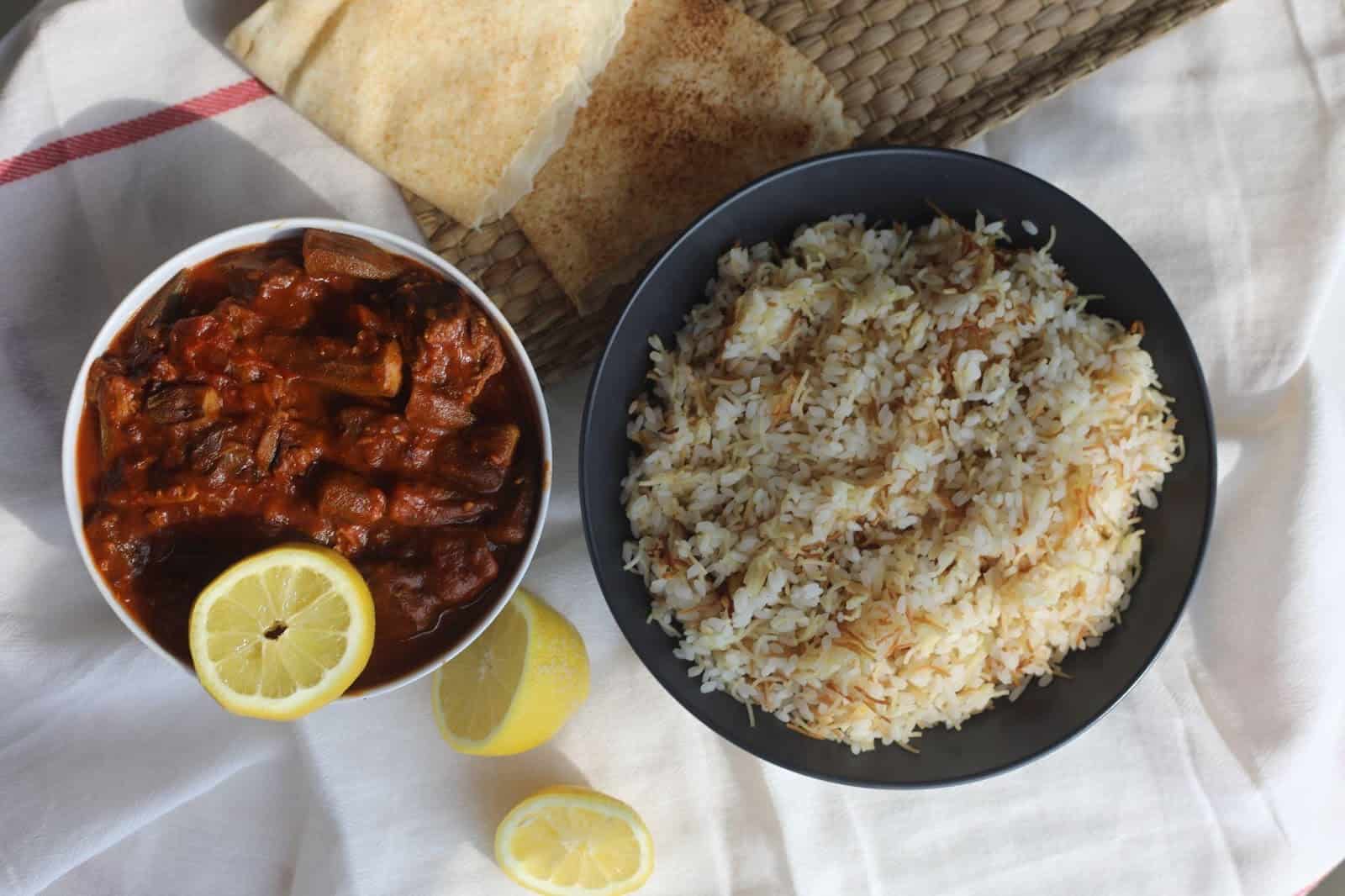
On the other hand, most people commonly eat okra stews with vermicelli rice alongside stir-fried beef cubes. Sometimes, the beef cubes are added to the stew and cooked with the okra.
To give the okra an even richer taste, some people add small cubes of beef fat with the beef cubes or fatty beef cubes to the stew and then bake it in a clay casserole in the oven.
Either way, the dish turns out fantastic.
Ingredients
1 kilo of small okra
500 grams of beef, cut in small cubes
1/2 teaspoon of ghee
1 large, minced onion
5 minced cloves of garlic
1/2 bundle of coriander
4 cups of tomato juice
2 tablespoons of tomato paste
2 cups of beef stock
1 teaspoon of salt
1/2 teaspoon of ground black pepper
1 tablespoon of sugar
1 medium-sized tomato
2 cloves of cardamom
3 tablespoons of lime juice
Recipe
Note: It is recommended you use fresh okra. But if this is not available, frozen okra will do. If you are storing okra at home, make sure you boil it for a couple of minutes before you store it in the freezer. This will help it stay green and look fresh.
First off, prepare the beef. You can skip this step altogether if you do not intend to add beef to your okra stew. But if you do, go ahead and follow along.
The beef used in this recipe should be cut into small cubes and boiled before added to the stew. It is also recommended you use fatty beef or add in a few small cubes of fat cubes to guarantee your stew comes out even richer in flavour.
So in a large cooking pot, add half a kilo of fatty beef cubes with a tomato cut in four cubes, a medium-sized onion and a carrot split in halves, two cloves of garlic, two cloves of cardamom, and some celery. These vegetables and herbs will give the beef stock a tasty flavour.
Place the pot on high heat. Add water to cover all the ingredients and bring them to a boil. Then lower the heat to medium and let it cook, covered, until it becomes al dente. Remember that the beef will get another chance to fully cook when added to the stew.
Once the beef is cooked, take it out of the pot and set it aside for now.
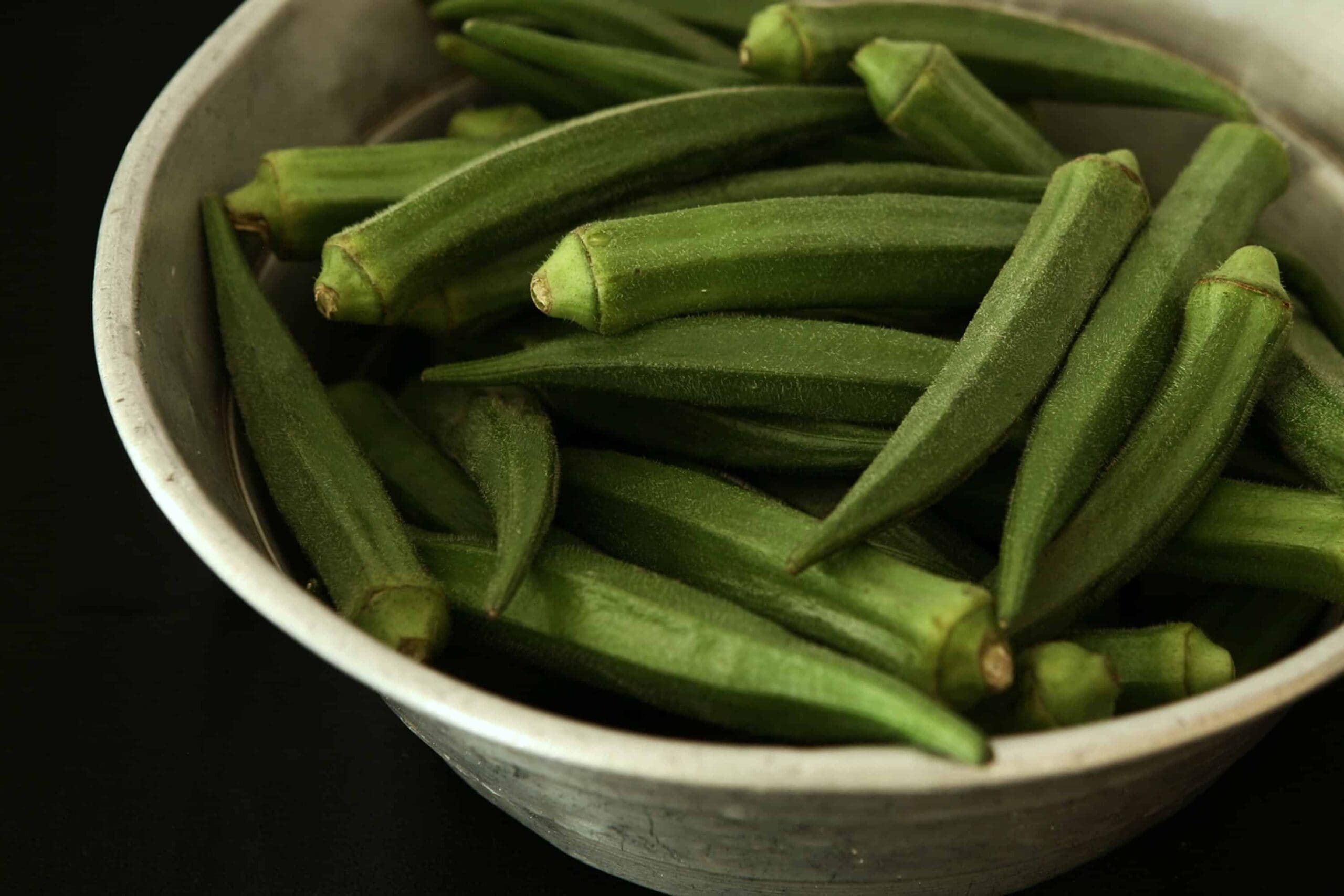
Now it is time to prepare the okra. If you are using frozen, peeled okra, then skip this cleaning/peeling stage and add the okra directly to the tomato stew. If your okra is fresh, then read on.
Add the okra to a large bowl and clean it well with water. Pour off the water and spread the okra on a cotton or paper towel and dry it.
Once the okra is completely dry, start peeling off the stem. This part is not completely cut, just peeled. Also, cut off the small bottom tip. If you attempt to peel the okra before washing it, it will get slimy. Also, do not cut the okra into slices. In this recipe, okra is cooked whole.
Once you are done with all the quantities, set the okra aside.
Place a large cooking pot on medium-high heat. Combine half a teaspoon of ghee with one large minced onion. Stir the onion for a minute, until it gets a little transparent then add five minced cloves of garlic and half a bundle of finely chopped coriander. Stir.
Once the ingredients are well combined, add in about four cups of tomato juice. Stir the mixture then add the okra and four tablespoons of tomato paste. This will make the stew more savoury. Stir until well mixed.
Now add two cups of beef stock, one teaspoon of salt—you can add more or less as desired—half a teaspoon of ground black pepper, and one tablespoon of sugar. Stir the mixture and bring it to a boil. Lower the heat, combine the previously prepared beef cubes and let the okra stew cook for 30 to 40 minutes.
Or you can lower the heat and let the stew boil only for a couple of minutes, add the beef, and then place the whole mixture in an oven-safe or clay casserole. Place the casserole on the middle rack of a preheated oven and let it bake for 30 to 40 minutes.
Once the okra is fully cooked, take the casserole out of the oven and let it sit for around 10 minutes. Having been cooked in a clay casserole will keep it hot so the okra stew will not cool down.
Before serving, squeeze as much as two tablespoons of lime juice. This is as necessary for the okra stew as the tomato sauce itself. Okra stew is usually served with vermicelli rice, a recipe we have previously shared on our website. You can check it out here.
2. Weka Okra (Bamya Weka)
The second okra recipe we have is called Weka. This is just a proper name that refers to this very kind of okra which I believe has no other significance. This okra dish is very common in the south of Egypt but not that much in the northern cities. It is also cooked in the countryside.
There are a couple of differences between weka okra and the okra stew we demonstrated earlier. First, weka okra does not use any tomato sauce. Secondly, it uses large-sized okra, not small okra. Thirdly, it is blended.
Weka okra is best served with Egyptian or pita bread and pickled vegetables such as spiced tomatoes and pickled eggplant.
Ingredients
1/2 kilo of large okra
4 minced cloves of garlic
1 1/2 teaspoons dry coriander powder
1 teaspoon of salt
1 teaspoon of ground black pepper
2 cubes of chicken broth
1 finely chopped green chilli
1 large lemon, sliced
Recipe
Just like we did in the first recipe, you should wash the okra, dry it well, peel the upper stem and cut off the bottom tip. The next step here is slicing the okra into rings.
Once you are done slicing the okra, place it in a large cooking pot. Add in hot water so as to cover the okra slices and turn the heat up to medium-high. Add one teaspoon of salt, or as desired, one cube of chicken broth, and one clove of garlic and bring the mixture to a boil. Let it boil for a couple of minutes then turn off the heat. Set the okra aside to cool down.
Once the okra has cooled, add in one minced green chilli and stir until well combined. Then use a hand blender or a food mixer to blend the okra. Just make sure you do not beat it hard so as not to turn it into a smooth juice. The resultant mixture should still be a little thick with tiny pieces of okra. Move the mixture to a large bowl and set it aside.
Now, here is a step Weka shares with Molokhia for flavouring: tash-shah. I wish there were a way to translate that but nope. Tash-shah is a mixture of fried minced garlic and dry coriander. When added to the weka okra, it gives it a fantastic flavour.
So to prepare it, Add a tablespoon of vegetable oil to a frying pan then place four minced cloves of garlic. Stir until golden brown then add one and a half tablespoons of the dry coriander powder. You should not add the coriander before the garlic is fried. Otherwise, it will burn.
Stir until well combined. Then take the pan off the heat and pour the tash-shah on top of the weka.
Decorate the weka okra with lemon slices and your second okra dish is ready to serve.


 Esraa Ali
 Salma Ihab