There are different types of canned tomato salsas available in the market, including pasta sauce or pizza sauce, which is a concentrated mixture of tomatoes with different ingredients added to enhance their flavour. Canned tomato salsa is used in preparing various dishes, such as pasta, pizza, or grilled chicken, and it is used in the same way as homemade salsa.
However, its taste is a little stronger, and in this article, we will present to you how to use canned salsa and homemade sauce in preparing various recipes.
Pasta with Canned Tomato Sauce
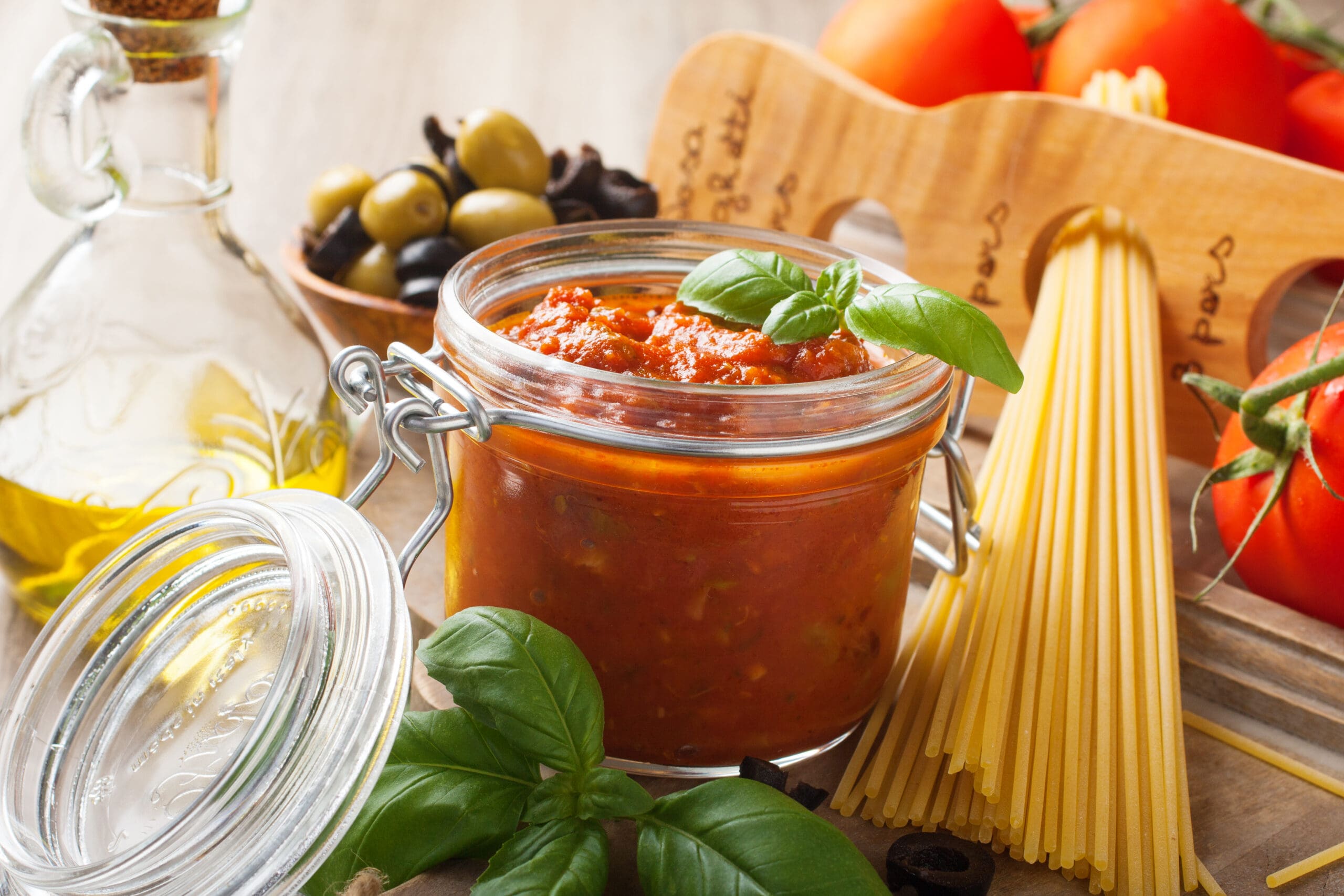
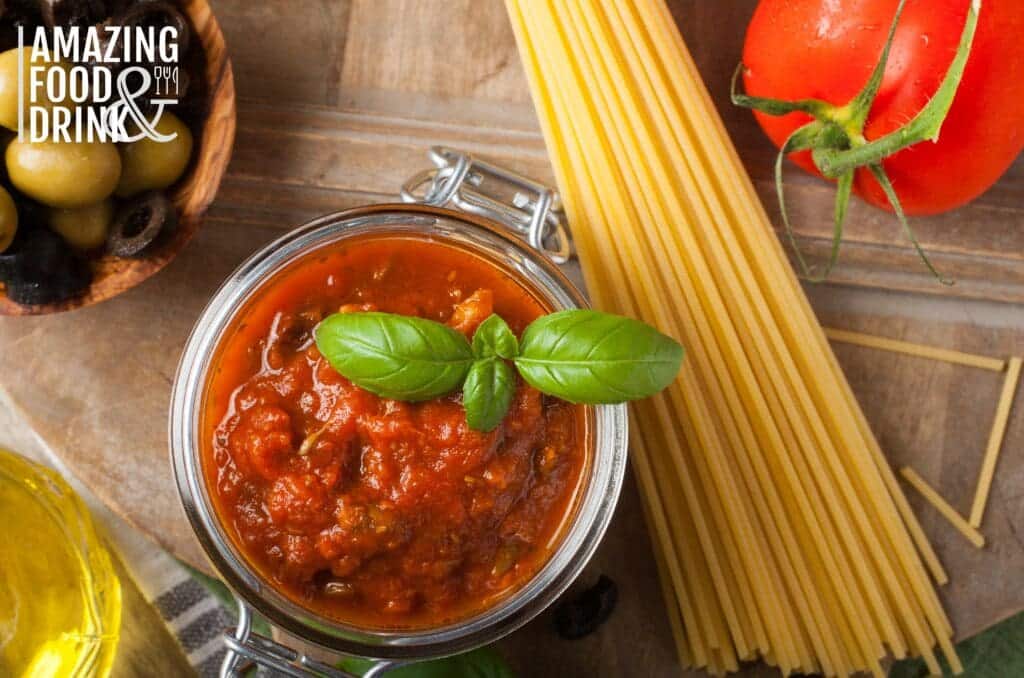
Canned Tomato Salsa with spaghetti and ingredients.
This traditional dish is very popular and easy to prepare. Here are the ingredients and preparation steps.
Boil pasta in boiling water and salted water until cooked.
Stir the oil with the onions in a pan over low heat for three minutes.
Then, add the tomatoes and stir until softened.
Add the sauce, salt, sweet pepper, and paprika, and leave the sauce until it thickens for ten minutes, then serve it with pasta.
Homemade Tomato Salsa
Preparing tomato sauce at home is easy and delicious, and we will show you the easiest way to make it.
Ingredients
One and a half kilograms of ripe red tomatoes.
One tablespoon of tomato paste.
Two tablespoons of olive oil.
Half a teaspoon of salt.
One mashed garlic clove.
Bay leaves, fresh basil leaves.
How to prepare
Cut the tomatoes into halves, then grate them and remove the peel.
Place the tomatoes, oil, garlic, basil, laurel, and tomato paste in a pan using medium heat.
Add salt, and stir the ingredients until they boil for two minutes.
Reduce the heat, and leave the sauce on the fire until it becomes slightly thick, stirring from time to time for ten to fifteen minutes.
Chicken with Tomato Salsa
In this recipe, we combine more than one type of protein to create a complete, nutritious meal.
Ingredients
Four boneless chicken breasts.
One tablespoon of vinegar.
One teaspoon of Italian spices.
Half a teaspoon of mixed spices.
Half a cup of breadcrumbs.
Half a cup of wheat flour.
A sprinkle of paprika.
Two eggs.
One-quarter cup of grated Parmesan cheese.
Half a cup of mozzarella.
For the tomato salsa
One small piece of finely chopped onion.
One-quarter cup of olive oil.
Two medium-sized tomatoes, peeled and chopped.
One sprinkle of sugar.
One teaspoon of crushed garlic or half a spoon of garlic powder.
Half a spoon of salt, or as desired.
One-quarter teaspoon of dried basil.
One-quarter teaspoon of ground fennel.
One-quarter teaspoon of dried wild thyme.
Half a cube of chicken stock.
How to prepare
Cut the chicken into medium-sized cubes, then season with salt, vinegar, Italian seasoning, mixed spices, and garlic, and leave it aside for an hour.
Preheat the oven to high heat, grease a baking tray with a little butter, and cover it with parchment paper.
Stir the onions in a pot over medium heat with a little oil, then add all the ingredients mentioned for the sauce and cook until it thickens.
Mix the breadcrumbs with Parmesan in a wide dish, mix the flour with paprika and salt in another dish, and beat the eggs.
Season the chicken with the flour mixture, then in the beaten eggs, then cover it with the breadcrumbs.
Place the chicken in the tray and grill it for twenty minutes until cooked and browned.
Add the sauce to the chicken, then spread the mozzarella cheese over it and grill it in the oven for an additional five minutes.
Serve the chicken with boiled pasta or boiled vegetables.
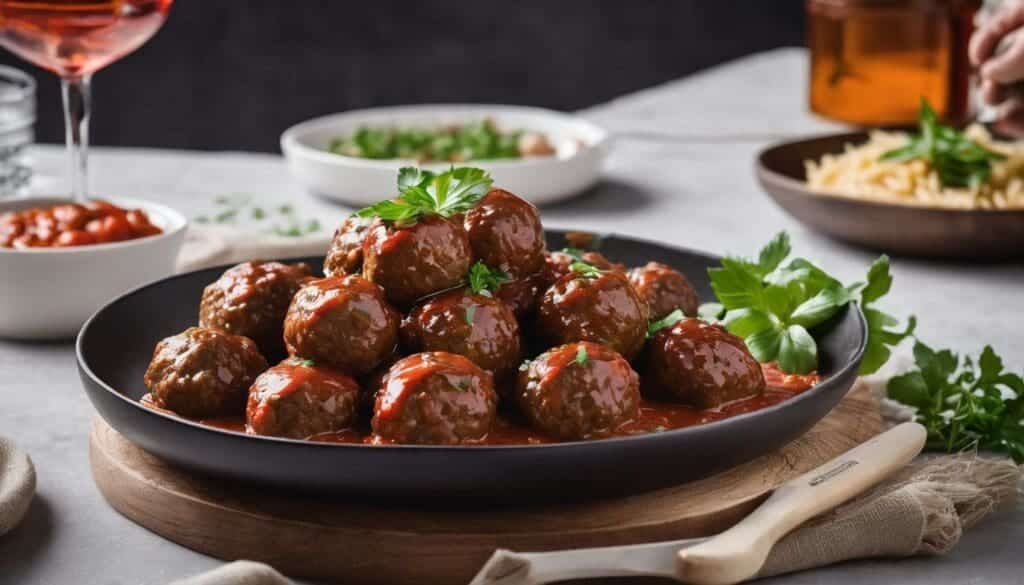
Grilled Lamb Meatballs in Spicy Tomato Sauce with Corn Porridge
Here is another delicious recipe using canned tomato salsa. It takes about thirty minutes to prepare and serves four people.
Ingredients
One hundred and thirty grams of packaged corn grits.
Fifty grams of minced lamb.
One teaspoon of ground sweet pepper.
Half a teaspoon of cumin.
Two tablespoons of flour.
One teaspoon of salt.
Half a teaspoon of black pepper.
For the sauce
One onion.
Four cloves of garlic.
Four tablespoons of butter.
Two tablespoons of vegetable oil.
Half a teaspoon of ground sweet pepper.
Half a teaspoon of cumin.
Half a teaspoon of red pepper in the form of pepper flakes.
Half a teaspoon of chopped ginger.
A pinch of saffron.
One bay leaf.
Four hundred grams of tomatoes with their juice.
One teaspoon of sugar.
Four eggs.
Twelve olives without seeds.
Half a bunch of coriander.
Salt and pepper.
How to prepare
Pour water into the cooking pot, add salt and leave until it boils.
Place the corn grits in the boiling water and bring the water to a boil again.
Then, reduce the heat and cook the kernels with the lid partially open for 35-40 minutes until the kernels are ready.
Add salt, pepper, and cumin to the ground lamb and mix.
Make meatballs from minced meat, place them on a floured board and then place them in the refrigerator.
To prepare the sauce, peel the onions and garlic, cut the onions into rings, and chop the garlic.
Melt the butter and vegetable oil in the pan and heat the vegetables for five minutes until soft.
Then, add all the spices and bay leaves.
Stir to incorporate and cook for three minutes.
Place the tomatoes in the pan, add sugar, salt and pepper and mix.
Then, cover the pot with a lid and leave it on low heat for 10 minutes. Then, the bay leaf is discarded.
Place the meatballs in the sauce and cook for 10 minutes.
Then, carefully add the eggs and olives to the meatballs, cover the mixture, and leave it on low heat for another 8 minutes.
Serve the meatballs in the sauce with the corn porridge as a side dish and sprinkled with coriander leaves.
Vegetables with Canned Tomato Salsa
Vegetables cooked in tomato sauce are a very nutritious, economical and delicious dish, especially for those who do not like meat. It consists of potatoes, eggplant and green peppers with delicious tomato sauce, and it is quick and easy.
Wash the eggplant, then peel it completely or peel it with pens according to taste, then cut it into cubes or slices.
Then, soak it in water with a spoonful of salt for 15 minutes.
Put the vegetable oil, olive oil, and onions in the pot, stir a little, then add the green pepper and stir until it wilts.
Add the chopped tomatoes and sauce and stir for a few minutes until the sauce thickens.
Add the potatoes and stir, then drain the eggplant, add it with a spoon of salt, and stir well.
Add hot water, stir, cover the pot and let it boil over high heat, then stir, cover and leave the ingredients on low heat.
Keep stirring from time to time until cooked for about 25 minutes.
Pour the vegetables into the serving dish, and they are ready.
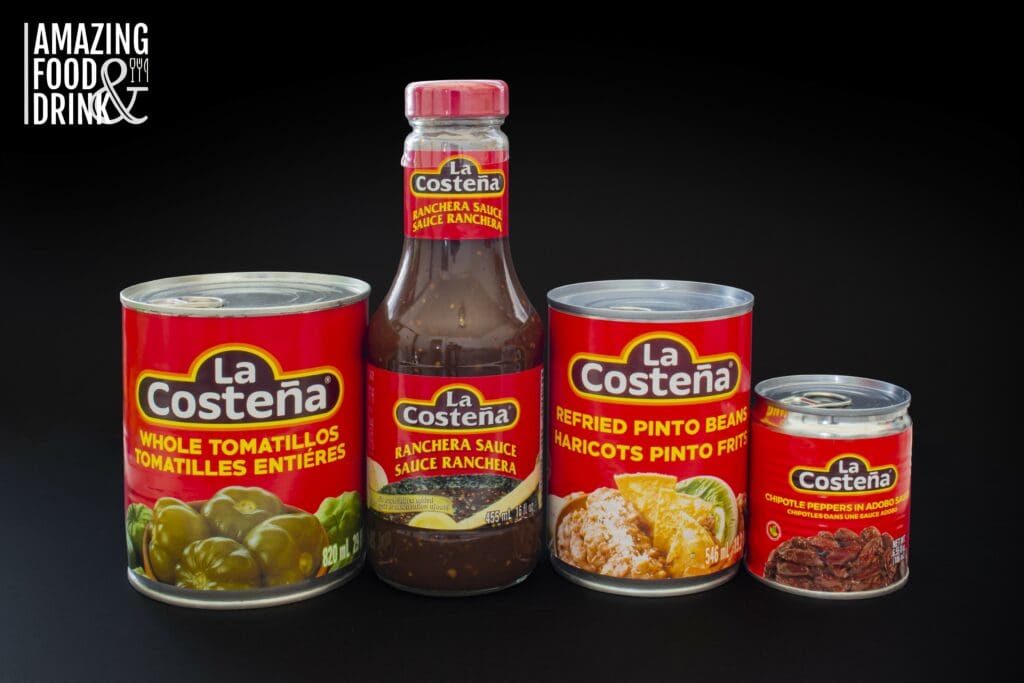
Enchilada Salsa
It consists of tomatoes, chilli pepper, onion, garlic, and jalapeno pepper. It is used with almost any meal but is perfect with potatoes, cornflakes, and pasta salad. This tomato salsa needs 15 minutes of preparation and serves two people.
Ingredients
Five hundred grams of juicy red tomatoes.
Two cloves of crushed garlic.
One small onion, chopped.
Half a teaspoon of hot pepper.
One tablespoon hot pepper powder.
One teaspoon cumin.
One tablespoon of fresh basil leaves, chopped.
Half a teaspoon of rosemary.
One tablespoon of lemon juice.
One tablespoon olive oil.
Half a teaspoon of salt.
Half a teaspoon of black pepper.
One-quarter cup of chicken broth if the tomatoes are solid.
How to prepare
In a deep-frying pan, heat the oil, add the onions and stir for 10 minutes until they turn golden and wilted.
Then add the garlic and keep on heat for one more minute.
In a food processor, combine onions, garlic, chopped tomatoes, chilli powder, cumin, basil, rosemary, lemon juice, salt and black pepper and mix together until the mixture is smooth.
Return the sauce to the pan after cleaning it and leave it on medium heat until it boils.
Reduce the heat and leave to set for 15 minutes.
Salt can be added as desired.
Remove from heat and leave to cool.
Store in the refrigerator in tightly sealed glass containers.
Chicken Enchiladas
Chicken enchiladas from Mexican cuisine. This is a very famous recipe from Mexican cuisine. It is easy, quick, and very suitable for lunch or dinner preparation. Its cooking time is about 60 minutes, and it is enough for four people.
Ingredients
Filling ingredients
Vegetable oil: a tablespoon
Chicken breast: 800 g (chicken breast slices / cut into strips)
Onion: 1 piece (medium size / finely chopped)
Garlic: 4 cloves (mashed)
Black pepper: a teaspoon
Mixed spices: a teaspoon
Cardamom: a teaspoon (ground)
Hot pepper: a teaspoon
Oregano: teaspoon (dried)
Cloves: half a teaspoon (ground)
Nutmeg: half a teaspoon (ground)
Hot water: a quarter cup
Chicken broth: cube
Sauce ingredients
Vegetable oil: 2 tablespoons
Flour: a quarter cup
Cumin: 2 teaspoons (ground)
Hot pepper: a teaspoon
Hot water: a cup
Chicken broth: 1 cube
Tomato juice: a cup
Bread: 6 pieces
Chickpeas: four hundred grams (fine)
Tomatoes: two pieces (sliced)
Cheddar cheese: one cup (grated)
Green onions: two sticks (chopped)
How to prepare
To prepare the filling
Heat the vegetable oil, then add the pieces of the chicken over medium-high heat.
Then, add the onions, garlic, spices, water and chicken stock cube.
Cover and boil until the onions are soft, the chicken is completely cooked, and all the liquid has evaporated.
To prepare the sauce
Heat the vegetable oil, add the flour, and stir until it turns lightly golden.
Add the spices and toast for a minute or two, being careful not to burn the flour.
Add water and the chicken broth cube, stir until it dissolves, and add the squeezed tomatoes.
If the sauce is thick, add some water, as its consistency should be like heavy cream.
To prepare the enchiladas
In an ovenproof dish, pour ⅓ of the sauce and spread it evenly on the bottom.
Divide the filling into six parts.
Place the bread pieces on a clean surface.
Spread ⅙ of the rosary in the middle of each piece of bread and pour part of the filling over it.
Carefully roll the bread and place it in the oven dish over the sauce, with the sealed side facing down.
Pour the remaining sauce evenly over the wrapped enchiladas.
Pour the chopped tomatoes over the sauce, cover them with cheddar cheese and bake them in an oven at 175°C for 20 – 30 minutes or until the cheese melts and bubbles emerge.
Take the dish out of the oven, let it rest for 5 minutes, garnish with chopped green onions and serve.
Meat Enchilada
Meat enchilada dish from the distinctive Mexican cuisine presented to you for a chilli and good taste. The ingredients of this recipe are for gatherings and small friends’ barbeque parties. Its cooking time is about forty minutes, and it is enough for eight people.
Ingredients
Tortilla bread: sixteen loaves.
Beef: seven hundred grams (minced, for meat filling)
Onions: 2 pieces (medium size, chopped)
Mixed spice: a teaspoon (for meat filling)
Tomatoes: five (medium-sized, mashed using an electric blender to make sauce)
Garlic: three cloves (mashed, for meat filling)
Black pepper: half a teaspoon (to make the sauce)
Cumin: a teaspoon (ground to make the sauce)
Coriander: a teaspoon (ground, to make sauce)
Sugar: a teaspoon (for making the sauce)
Salt: a teaspoon (for making the sauce)
Red pepper powder: a teaspoon (to make the sauce)
Onion powder: half a teaspoon (to make the sauce)
Tomato paste: two tablespoons (to make the sauce)
Water: half a cup (for making the sauce)
Green onions: five sticks (chopped for serving and garnish)
Cheddar cheese: two cups (grated for serving and garnish)
Mozzarella cheese: a cup (grated for serving and garnish)
How to prepare
To prepare the filling of the meat
Place the meat with a quarter cup of oil in a pot on the fire and stir until it turns brown.
Then, add the chopped onions and spices to it, stir the ingredients well and leave it for 10 minutes until the meat is cooked.
In a pot, put all the sauce ingredients and stir well, then put the pot on the fire and when it starts to boil.
Leave the sauce to boil for 12 minutes on lower heat.
In a bowl, put the two types of cheese and mix them, then pour half a cup of tomato sauce into the oven tray.
Place a tortilla loaf on the board, put the meat filling in its middle, a few green onions, and a little of the cheese mixture.
Roll the tortilla, folding it at the ends, then place it in the tray over the sauce.
Repeat the process until all the quantities are finished, and arrange them in the tray.
Then, sprinkle a generous amount of the cheese mixture over them.
Place the tray in a hot oven at 190 degrees for 20 minutes. Serve it hot.
Criteria for Choosing the Appropriate Canned Salsa
Until you choose the perfect canned tomato salsa for your restaurant dishes, you should rely on the following criteria to measure the quality of the canned tomato sauce you are looking to choose:
Colour: Make sure to choose a canned salsa that has a natural colour. Similar in colour to fresh tomato sauce to ensure a fresh taste.
Consistency: The texture of canned tomato sauce expresses its quality. The thicker the consistency of the sauce, the more perfect the sauce will be when cooking.
Taste: Make sure to buy canned salsa that has a natural taste, such as the taste of natural tomato sauce, as this makes it easier for you to succeed in the recipes you prepare in your restaurant.
Smell: Canned tomato sauce has a pleasant smell that is very similar to natural tomato sauce and may be stronger; this helps produce delicious-smelling recipes.
Packaging: It is best to choose airtight glass containers for tomato sauce, as packaging is a major factor in preserving the shelf life of the sauce in your restaurant.
Storage: Choosing the ideal store will help you ensure that canned tomatoes are stored according to standards, so you should choose the store before choosing the type of sauce.
Several stores provide all of the above standards with the cans they provide to you.
Benefits of using Canned Salsa in cooking
Delicious taste: Ready-made tomato sauce adds a delicious taste to the various dishes in which it is used.
Practical and saves time: Relying on canned tomato sauce instead of fresh sauce helps the chef quickly complete the dishes required of him in the restaurant.
Less effort: Using ready-made sauces reduces the effort spent preparing fresh tomato sauce.
Is canned salsa good enough to replace tomatoes?
Of course, canned salsa can be replaced with fresh tomato sauce. Before the advent of canned salsas, chefs relied on fresh sauce. Over time, restaurants have become dependent on canned salsas to save the chef’s time and effort so that they can serve dishes quickly and with high quality at the same time.


 Shaimaa Olwan