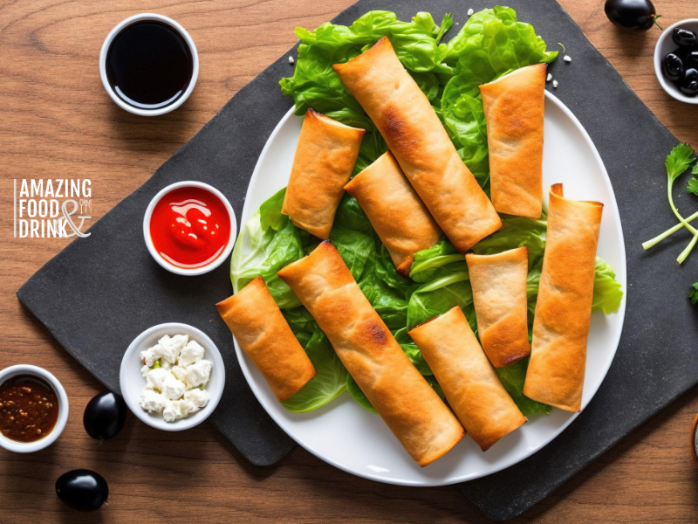
Egg roll wrappers are more than just a simple kitchen staple—they’re a way to explore crispy fried appetisers, creative desserts, and authentic Asian cooking at home. These thin, wheat-based sheets transform ordinary fillings into golden, crackling parcels that span from traditional Chinese-American egg rolls to Filipino lumpia, Thai spring rolls, and even unexpected fusion creations.
This complete guide provides everything you need to know about egg roll wrappers. We’ll walk through the fundamentals of what makes these wrappers unique, share a tested recipe for homemade versions with detailed troubleshooting, demonstrate proper folding techniques for different styles, and showcase diverse recipes that celebrate both tradition and innovation.
At Amazing Food & Drink, we’ve tested these recipes extensively, consulted with chefs specialising in Asian cuisines, and researched the cultural contexts that make these wrappers such a versatile foundation for cooking. Let’s explore the world of egg roll wrappers together.
Table of Contents
What Exactly Are Egg Roll Wrappers? Understanding the Basics
Egg roll wrappers are thin, pliable sheets made primarily from wheat flour, water, and eggs, though some variations use only flour and water. These square or round sheets typically measure 15-20 centimetres per side, with a thickness of about 1-2 millimetres. The texture when raw is soft and slightly stretchy, transforming into a crispy, golden shell when fried or becoming pleasantly chewy when steamed.
Core Ingredients & Characteristics
The standard egg roll wrapper contains:
Wheat flour (all-purpose or bread flour) – provides structure and elasticity
Water – hydrates the flour and forms the dough
Eggs – add richness, colour, and help bind the dough (though not always present)
Salt – enhances flavour
Oil (occasionally) – improves pliability
When fried, these wrappers develop a distinctive bubbly, crispy texture with a pale golden to deep amber colour depending on frying temperature and time. The mild wheat flavour complements both savoury and sweet fillings without overpowering them.
Distinguishing Egg Roll Wrappers from Other Asian Wrappers
Understanding the differences between wrapper types helps you choose the right one for your dish:
Wrapper Type
Primary Ingredient
Thickness
Best Cooking Method
Typical Use
Egg Roll Wrapper
Wheat flour + egg
Medium-thick (1-2mm)
Deep frying
American-Chinese egg rolls
Spring Roll Wrapper
Wheat flour
Thin (0.5-1mm)
Frying or fresh
Vietnamese/Chinese spring rolls
Rice Paper
Rice flour
Very thin
Soaked, used fresh
Vietnamese fresh rolls
Wonton Wrapper
Wheat flour + egg
Thin to medium
Boiling, frying, steaming
Chinese dumplings
Lumpia Wrapper
Wheat flour/cornstarch
Paper-thin
Frying
Filipino lumpia
Egg roll wrappers are notably thicker and sturdier than spring roll wrappers, making them ideal for holding substantial fillings and achieving that satisfying crunch when fried.
The History: From Ancient China to Global Tables
The origins of egg roll wrappers connect to traditional Chinese cooking techniques dating back centuries. Fried spring rolls (炸春卷, zhá chūnjuǎn) have been part of Chinese cuisine since at least the Eastern Jin Dynasty (317-420 CE), originally created as a celebration food for the Spring Festival.
The term “egg roll” emerged in the United States during the early 20th century as Chinese immigrants adapted their traditional recipes for American tastes. The American-Chinese egg roll became distinct from its Chinese predecessor—larger, with a thicker wrapper, often containing cabbage, and sometimes served with sweet and sour sauce. The name “egg roll” likely derives from the yellowish colour of the wrapper (from egg content) and its rolled shape, though the exact etymology remains debated among food historians.
Meanwhile, similar traditions developed across Asia. Filipino lumpia wrappers, introduced through Chinese trade routes and evolved during Spanish colonial influence, became even thinner and crisper. Vietnamese spring rolls maintained closer ties to Chinese traditions whilst developing their own fresh rice paper variations. Thai cooking incorporates both fried spring rolls (ปอเปี๊ยะทอด) and fresh versions, each with distinct wrapper characteristics.
Today, egg roll wrappers serve as a versatile foundation in home kitchens worldwide, bridging cultures and inspiring creative adaptations that honour traditional techniques while embracing modern fusion approaches.
The Master Recipe: Authentic Homemade Egg Roll Wrappers
Making egg roll wrappers from scratch allows you to control thickness, size, and texture whilst avoiding preservatives found in some commercial versions. While slightly more time-consuming than purchasing ready-made wrappers, the process requires only basic ingredients and standard kitchen equipment. When testing this recipe, we found that fresh homemade wrappers offer superior pliability and a cleaner wheat flavour.
Makes: Approximately 16-18 wrappers (15cm squares)
Difficulty: Intermediate
Ingredients
280g (2 cups) all-purpose flour, plus extra for dusting
½ teaspoon fine salt
1 large egg, lightly beaten
120ml (½ cup) water, at room temperature
Additional water for adjusting consistency
Instructions
Prepare the dry mixture: Combine flour and salt in a large mixing bowl. Create a well in the centre of the flour mixture, ensuring the walls are high enough to contain the wet ingredients.
Add wet ingredients: Pour the beaten egg into the well, followed by the water. Using a fork, gradually incorporate the flour from the edges into the wet ingredients, swirling in a circular motion.
Form the dough: When the mixture becomes too thick to stir with a fork, use your hands to bring the dough together. If the dough seems too dry and crumbly, add water one tablespoon at a time. The dough should be slightly tacky but not sticky.
Knead thoroughly: Transfer the dough to a lightly floured work surface. Knead for 8-10 minutes until smooth and elastic. The dough should bounce back slightly when pressed with a finger. Proper kneading develops gluten, which gives wrappers their characteristic stretch and prevents tearing.
Rest the dough: Shape the dough into a ball, place it in a bowl, and cover with a damp tea towel or cling film. Let rest at room temperature for 30 minutes minimum (or up to 2 hours). This resting period allows gluten to relax, making the dough easier to roll.
Portion the dough: After resting, divide the dough into 16-18 equal pieces (approximately 25g each). Roll each piece into a smooth ball between your palms.
Roll out wrappers: On a well-floured surface, take one dough ball and flatten it slightly with your palm. Using a rolling pin, roll from the centre outward, rotating the dough 90 degrees after each roll to maintain an even shape. Aim for approximately 15cm squares with a thickness of 1-1.5mm. The wrapper should be thin enough to see your hand through it when held up to light, but not so thin that it tears easily.
Prevent sticking: As you roll each wrapper, place it on a floured plate or baking sheet. Stack wrappers with a light dusting of flour or parchment paper between each layer to prevent sticking.
Use immediately or cook: Homemade wrappers are best used fresh. If not using straight away, see storage instructions below.
Troubleshooting Homemade Wrappers: Solutions to Common Issues
After making dozens of batches whilst testing this recipe, we’ve encountered and solved these frequent problems:
Problem: Dough is too stiff or flaky
Cause: Insufficient water or over-flouring during kneading
Solution: Add water one teaspoon at a time, kneading thoroughly between additions. If the dough has already rested, knead in a few drops of water and let rest another 15 minutes.
Problem: Dough is too sticky to work with
Cause: Too much water or insufficient flour
Solution: Dust your work surface and rolling pin generously with flour. If the dough remains unworkably sticky, knead in small amounts of flour gradually.
Problem: Wrappers keep tearing when rolling
Cause: Insufficient kneading, inadequate resting time, or rolling too thin, too quickly
Solution: Ensure you knead for the full 8-10 minutes. If you didn’t rest the dough long enough, cover and wait another 15-30 minutes. When rolling, work gradually from the centre to the edges rather than applying heavy pressure.
Problem: Wrappers shrink back after rolling
Cause: Gluten is still too tight from insufficient resting
Solution: Cover the rolled wrapper with a damp cloth for 5 minutes before using, or let the portioned dough balls rest longer before rolling.
Problem: Wrappers brown too quickly when frying
Cause: Oil temperature too high or wrapper too thin
Solution: Maintain oil temperature at 175-180°C (350-360°F). Test with a small piece of dough – it should sizzle gently and rise to the surface within 2-3 seconds without immediately browning.
Problem: Wrappers turn out chewy instead of crispy when fried
Cause: Wrapper too thick or oil temperature too low
Solution: Roll wrappers thinner (should be somewhat translucent). Increase oil temperature slightly and ensure wrappers fry until golden, not just pale yellow.
Best Practices for Deep Frying
When testing these recipes, we developed these frying guidelines:
Use the right oil: Neutral oils with high smoke points work best—vegetable oil, rapeseed oil, groundnut oil, or sunflower oil. Avoid olive oil (smoke point too low) or strongly flavoured oils.
Maintain temperature: Oil temperature drops when you add food. Monitor constantly and adjust heat as needed. Work in small batches to minimise temperature fluctuation.
Don’t overcrowd: Fry only 3-4 egg rolls at a time in a standard home pot. Overcrowding lowers the temperature too much, and wrappers may stick together.
Turn regularly: Use tongs or a spider strainer to turn rolls every 60-90 seconds, ensuring even browning on all sides.
Drain properly: Remove from oil and immediately transfer to a wire rack set over a baking sheet. This setup allows oil to drip away whilst air circulates, maintaining crispness.
Serve promptly: Egg rolls are best within 30 minutes of frying. They lose crispness as they sit. If you must hold them, place them in a low oven (95°C/200°F) for up to 30 minutes – though they won’t be quite as crispy.
Reheat carefully: Reheat leftover egg rolls in an oven or air fryer at 180°C (360°F) for 10-12 minutes. Never microwave – wrappers become chewy and unpleasant.
Dietary Adaptations for Homemade Egg Roll Wrappers
Many need to adapt traditional recipes for dietary requirements. Here are some tested modifications:
Gluten-Free Egg Roll Wrappers
For those with coeliac disease or gluten sensitivity, traditional wheat-based wrappers aren’t an option. This tested gluten-free version uses a blend of alternative flours to achieve a workable dough that crisps beautifully when fried.
½ teaspoon xanthan gum (if your flour blend doesn’t contain it)
1 large egg
120ml (½ cup) water
1 tablespoon neutral oil
Method
Follow the same process as the standard recipe, but note that gluten-free dough requires a 10-minute rest rather than 30 minutes, and the wrappers will be slightly more delicate. Handle gently when folding. After testing multiple flour combinations, we found this ratio provides the best texture and workability for gluten-free wrappers.
Vegan Egg Roll Wrappers
For wrappers without eggs, simply omit the egg and increase the water to 150ml (⅔ cup). The texture will be slightly less rich, and the colour paler, but they work perfectly for frying. Some traditional Chinese spring roll wrappers are naturally vegan, as eggs aren’t always included in authentic recipes.
Optional enrichment: Add 1 tablespoon of neutral oil to the dough for improved pliability and a slightly richer flavour without eggs.
Low-Carb Alternatives
While true wheat-based egg roll wrappers are inherently high in carbohydrates, you can create low-carb “wrappers” using:
Thin omelettes – Beat eggs with a splash of water, cook in a non-stick pan to create thin sheets
Cabbage leaves – Blanch briefly to make pliable, use as wrappers for baked or steamed parcels
Cheese crisps – Bake thin layers of grated Parmesan until crispy, shape whilst warm
These alternatives won’t replicate traditional egg roll texture but offer creative solutions for low-carb diets.
The Art of the Fold: Mastering Egg Roll & Spring Roll Techniques
Proper folding technique transforms a simple filled wrapper into a secure, attractive parcel that won’t burst during cooking. The folding method also affects the final texture ratio of wrapper to filling. After working with several chefs specialising in Asian cuisine, we’ve documented these proven techniques.
The Classic American Egg Roll Fold
This method creates the rectangular shape most familiar in American-Chinese restaurants, with multiple layers of wrapper for maximum crunch.
Step-by-step:
Position the wrapper: Place your egg roll wrapper on a clean, dry surface in a diamond orientation (point facing toward you).
Add filling: Spoon 3-4 tablespoons of filling into a compact log shape across the wrapper’s centre, leaving 4-5cm clear on all sides. Avoid overfilling—you should be able to see plenty of wrapper around the filling.
Fold the bottom point: Bring the point closest to you up and over the filling, tucking it snugly underneath the filling log. Press gently to remove air pockets.
Fold the sides: Bring the left and right points toward the centre, overlapping slightly. They should now form an envelope shape with an open top.
Apply seal: Dip your finger in water (or egg wash) and moisten the top point and the edges where the sides meet.
Complete the roll: Roll the parcel away from you, keeping it tight and even. The moistened top point will seal the roll closed. The final roll should feel firm and compact with no loose wrapper.
Rest seam-side down: Place the completed egg roll seam-side down on a plate for at least 5 minutes before frying, allowing the seal to set.
Filipino Lumpia Fold: Long & Lean for Maximum Crispness
Lumpia wrappers are traditionally thinner and often rolled into longer, narrower cylinders than American egg rolls, maximising the wrapper-to-filling ratio for extra crispness.
Step-by-step:
Wrapper placement: Position the square or round lumpia wrapper with one corner pointing toward you.
Place filling: Add 2-3 tablespoons of filling in a thin line across the lower third of the wrapper, extending almost to the side edges but stopping 2cm from the ends.
Initial roll: Fold the bottom point over the filling and roll once, tucking tightly.
Fold sides (optional): For a fully enclosed lumpia, fold in the left and right sides now. For an open-ended version (common for Lumpiang Shanghai), skip this step.
Seal and complete: Brush the top half of the wrapper with water or cornstarch slurry. Roll tightly all the way to the top point. The result should be a slim, even cylinder.
Set the seal: Let rest seam-side down for at least 5 minutes before frying.
The lumpia fold creates more wrapper surface area, resulting in a higher crispy-to-filling ratio—perfect for those who love that crackling texture. Filipino lumpia are often served with a sweet chilli dipping sauce (sawsawan) or spiced vinegar.
Wonton & Triangle Folds with Egg Roll Wrappers
While egg roll wrappers are thicker than traditional wonton wrappers, you can adapt them for different shapes:
Triangle fold for samosa-style parcels:
Cut your square wrapper in half diagonally to create two triangles
Place a small amount of filling in one corner
Fold the corner over the filling, then fold again
Continue folding in a flag-fold pattern until you reach the end
Seal the final point with water
Purse or money bag fold:
Place filling in the centre of the wrapper
Gather all four corners upward, meeting in the centre
Twist slightly and secure with a thin strip of blanched spring onion or chive
Nurse cap or pyramid fold:
Place filling slightly off-centre on the wrapper
Fold in half to create a rectangle
Bring the two bottom corners together and press to seal
The result resembles a small pyramid or nurse’s cap
These alternative shapes work particularly well for appetiser platters, offering visual variety alongside traditional rolls.
Sealing Techniques That Actually Work
The seal is critical—a poorly sealed wrapper will burst during frying, leaking filling and absorbing excess oil.
Sealing options:
Water – simplest method, works well for immediate frying
Egg wash – beaten egg with a splash of water, provides the strongest seal and helps achieve golden colour
Cornstarch slurry – 1 tablespoon cornstarch mixed with 2 tablespoons water, works for vegan wrappers and provides a strong seal.
Flour paste – 2 tablespoons flour mixed with 3 tablespoons water, traditional in some Asian cuisines
Apply the sealing agent sparingly with your finger or a small brush. Too much liquid can make the wrapper soggy. After sealing, let egg rolls rest seam-side down for 5-10 minutes before cooking—this allows the seal to dry slightly, reducing the chance of bursting.
Storage Tips for Maximising Freshness
Proper storage extends the usability of both homemade and store-bought wrappers, whilst understanding common cooking problems helps achieve consistent results.
Storing Homemade Wrappers
Fresh homemade wrappers require proper storage to maintain their pliability and prevent drying out. Here’s how to keep them fresh for immediate use or preserve them for future cooking.
Short-term storage (1-2 days):
Stack rolled wrappers with parchment paper between layers
Wrap the entire stack in cling film
Store in the refrigerator
Bring to room temperature before using (approximately 20 minutes)
Freezing for longer storage:
Dust each wrapper lightly with cornstarch
Stack with parchment paper between layers
Wrap tightly in cling film, then place in a freezer bag
Freeze for up to 3 months
Thaw in the refrigerator overnight before using
Separate carefully when thawed—they may stick slightly
Storing Assembled Egg Rolls Before Cooking
Preparing egg rolls in advance saves time when entertaining or meal planning. The key is preventing the filling’s moisture from softening the wrapper before cooking.
Refrigerating assembled rolls:
Cover loosely with cling film or a damp tea towel
Refrigerate for up to 24 hours before frying
Never stack tightly—they’ll stick together
Bring to room temperature before frying for even cooking
Freezing assembled rolls:
Arrange uncooked rolls on a baking sheet lined with parchment
Freeze until solid (approximately 2 hours)
Transfer to freezer bags, removing excess air
Label with date and filling type
Freeze for up to 3 months
Fry directly from frozen – do not thaw
Add 2-3 minutes to cooking time when frying from frozen
Alternative Cooking Methods: Beyond Deep Frying
Whilst deep frying produces the classic crispy texture, alternative methods offer lighter options.
Baking Egg Rolls
If you prefer to avoid deep frying, baking offers a lighter alternative that’s simpler and less messy. The texture won’t replicate traditional fried egg rolls, but you’ll achieve a pleasant, pastry-like crispness with far less oil.
Method:
Preheat oven to 200°C (400°F)
Line a baking sheet with parchment paper
Brush assembled egg rolls lightly with oil on all sides
Arrange on a baking sheet without touching
Bake for 20-25 minutes, turning halfway, until golden brown
Results: Less crispy than fried but significantly lower in fat. The texture is more similar to a thick pastry. Works particularly well for dessert rolls.
Air Frying Egg Rolls
Air fryers have revolutionised home cooking by delivering crispy results with minimal oil. This method produces egg rolls that closely approximate deep-fried texture whilst being substantially healthier.
Method:
Preheat air fryer to 180°C (360°F)
Brush egg rolls lightly with oil
Arrange in a single layer in the air fryer basket (don’t stack or overlap)
Cook for 12-15 minutes, turning halfway through
Check for golden colour and crispness
Results: Closer to deep-fried texture than oven baking, with substantially less oil. The surface becomes crispy, though the characteristic bubbly texture from deep frying is less pronounced.
Steaming (for softer, dumpling-style texture)
While steaming isn’t traditional for egg rolls, it creates an entirely different eating experience worth exploring. The result resembles soft Chinese dumplings rather than crispy rolls, making it ideal for delicate fillings.
Method:
Line a steamer basket with parchment paper (cut holes for steam circulation)
Arrange egg rolls without touching
Steam over boiling water for 12-15 minutes until the wrapper is translucent and the filling is cooked through
Results: A completely different texture—soft, slightly chewy wrappers similar to steamed dumplings. Best for delicate fillings like prawn or vegetable mixtures.
Pan-Frying (shallow frying method)
When you don’t have enough oil for deep frying or prefer a less intensive cooking method, shallow pan-frying delivers excellent results. This technique requires more hands-on attention but uses significantly less oil.
Method:
Heat 1cm of oil in a large frying pan over medium-high heat
Place egg rolls in the pan (don’t overcrowd)
Fry for 3-4 minutes on each side (4 sides total) until golden brown all over
Turn carefully to ensure even colouring
Results: Uses less oil than deep frying but achieves similar crispness. Requires more attention to turn all sides evenly. Works well when frying smaller batches.
Conclusion
Egg roll wrappers open doors to countless culinary possibilities, from traditional Chinese-American egg rolls to Filipino lumpia, creative fusion appetisers, and even unexpected desserts. Start with your favourite recipe, perfect your folding technique, and experiment with fillings that excite you. Consider the dietary modifications that suit your needs, try alternative cooking methods beyond frying, and share your creations with family and friends.
Ready to explore more Asian cooking techniques and authentic recipes? Discover our comprehensive guide to Chinese desserts and learn about the interesting history behind them.
What will you wrap first? Share your egg roll adventures with the Amazing Food & Drink community—we’d love to see your creative fillings and hear which traditional recipes resonate most with your family.