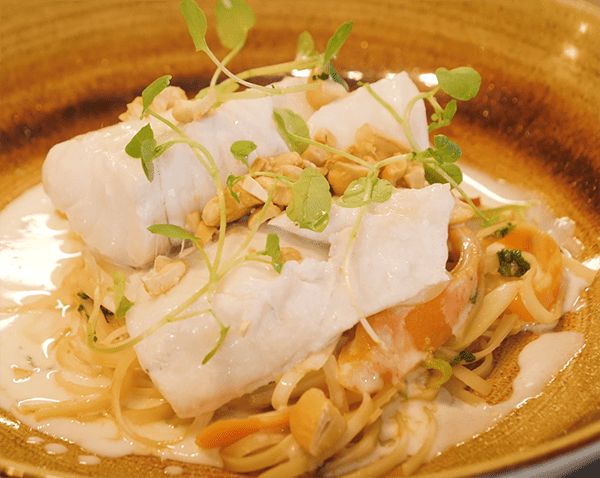
There’s cooking some fish and crafting a coconut poached cod creation that transforms your kitchen into a restaurant. This coconut milk fish recipe combines the delicate sweetness of coconut with perfectly tender cod, topped with a vibrant cashew salad that adds the perfect textural contrast.
This easy cod recipe proves that a healthy fish dinner doesn’t have to be complicated or time-consuming. In just 30 minutes, you’ll create a dish that’s elegant enough for entertaining yet simple enough for busy weeknights. The gentle poaching method ensures your cod remains moist and flaky, while the coconut milk infuses every bite with subtle tropical flavours.
Learning to cook a few meals well is the first step to mastering your kitchen through dishes you can proudly share with family and friends. This poached fish recipe will quickly become one of your signature dishes.
Table of Contents
Why This Coconut Poached Cod Recipe Works
The magic of this coconut poached cod dish lies in its gentle cooking method. Unlike pan-frying or grilling, poaching allows the fish to cook slowly in aromatic liquid, preventing it from drying out. The coconut milk acts as both a poaching medium and a sauce, creating layers of flavour that complement rather than mask the cod’s natural taste.
What makes this particularly brilliant is its versatility. The base technique works beautifully with other white fish, and the cashew salad can be adapted with seasonal ingredients. It’s also naturally gluten-free and can easily be made dairy-free, making it suitable for various dietary requirements.
Understanding Your Ingredients
The beauty of this coconut poached cod recipe lies in how each ingredient contributes to the final dish’s complex flavour profile and texture. Understanding these roles will help you make substitutions confidently and elevate your cooking technique.
Cod: forms the protein foundation with its mild, sweet flavour and firm yet flaky texture that responds beautifully to gentle poaching. Its low-fat content makes the gentle coconut milk bath perfect for maintaining moisture whilst infusing flavour.
Coconut milk serves as both a cooking medium and a sauce base. Full-fat coconut milk provides richness and subtle sweetness while creating a luxurious mouthfeel. It’s natural fats protect the delicate fish from overcooking.
Fish or vegetable stock: extends the poaching liquid and adds savoury depth, preventing the coconut milk from being too rich whilst contributing essential umami notes.
Lemongrass has a bright, citrusy fragrance with subtle ginger-like notes. When bruised, it releases essential oils that infuse the dish with aromatic complexity irreplaceable for authentic Southeast Asian flavour.
Kaffir lime leaves: provide an intense citrus aroma with a unique floral quality that regular lime zest cannot replicate. These leaves are the secret to restaurant-quality Asian cooking at home.
Fish sauce is the primary umami booster, adding depth and complexity without fishiness when used correctly. It’s the Southeast Asian equivalent of soy sauce, providing an essential savoury foundation.
Palm sugar: offers subtle caramel sweetness that balances the saltiness of fish sauce and richness of coconut milk. Unlike white sugar, palm sugar has complex flavour notes that complement rather than mask other ingredients.
Red chillies contribute gentle heat and vibrant colour. With their seeds removed, they provide warmth rather than fire, and their natural sweetness beautifully complements the coconut.
Garlic and ginger: form the aromatic base, providing warmth and depth. Together, they create the foundation that supports all other flavours.
Lime juice: brings essential acidity that brightens the rich coconut base and enhances all other flavours, providing crucial balance that prevents the dish from feeling heavy.
Roasted cashews provide essential textural contrast with their buttery crunch, while contributing healthy fats and subtle nuttiness that complement the coconut milk.
Fresh vegetables and herbs: cucumber, cherry tomatoes, red onion, coriander, and mint bring freshness, crunch, and colour contrast essential for the authentic Southeast Asian flavour profile.
How to Make Coconut Poached Cod (Step-by-Step)
The perfect coconut poached cod technique relies on understanding temperature control, timing, and the delicate balance of flavours. Each step builds upon the previous one, creating layers of taste and ensuring the fish remains perfectly tender.
Preparing the Cod
Proper cod preparation is the foundation of this dish’s success. Taking time to inspect, clean, and season your fish correctly will ensure even cooking and maximum flavour absorption during the gentle poaching process.
Inspecting Fish Quality
Start by examining your cod fillets under good lighting. Quality cod should be bright white with no yellowing or grey patches. The flesh should be firm to the touch, not soft or mushy, with a clean, briny ocean smell.
Removing Pin Bones
Run your fingers along each fillet, feeling for pin bones. Use clean tweezers to grip any bones firmly and pull in their pointing direction, never against the grain, as this tears the flesh.
Drying and Seasoning
Pat the fish completely dry with kitchen paper to remove all surface moisture. This prevents the poaching liquid from diluting and ensures proper seasoning adhesion. Season lightly with sea salt and white pepper, distributing evenly without pressing too hard.
Temperature Equilibration
Allow seasoned cod to rest at room temperature for 10 minutes whilst preparing the poaching liquid. This ensures even cooking, cold fish cooks unevenly with exterior overcooking before the centre reaches proper temperature.
Making the Coconut Poaching Liquid
Creating the perfect poaching liquid requires careful attention to aromatics, temperature control, and flavour balance. This fragrant base will gently cook your cod whilst infusing it with complex Southeast Asian flavours.
Selecting the Right Pan
Select a large, shallow pan that can fit all four cod fillets in a single layer without overcrowding. The fish shouldn’t be touched, allowing the poaching liquid to circulate freely.
Combining Base Liquids
Pour coconut milk into the pan first, followed by fish or vegetable stock. This combination creates the perfect cooking medium, rich enough to keep fish moist, but not so thick that it masks delicate flavours. Swirl gently to combine.
Preparing Aromatics
Bruise lemongrass stalks by bashing them with the flat side of a knife until pliable – this releases essential oils. Cut in half to fit your pan. Tear kaffir lime leaves along their central vein to release aromatic oils.
Crush garlic cloves with the flat side of your knife for maximum flavour release. Cut ginger into thin slices against the grain for optimal flavour extraction.
Building the Flavour Base
Place the pan over medium-low heat and bring to a very gentle simmer, with tiny bubbles occasionally breaking the surface. Never boil vigorously, as coconut milk can split.
Add fish sauce gradually, stirring gently and tasting as you go. Stir in palm sugar until dissolved completely. Add sliced red chillies (seeds removed for less heat).
Final Seasoning and Tasting
Taste the poaching liquid and adjust the seasoning. It should be aromatic, well-balanced, and slightly more seasoned than desired for the final dish, as flavours will mellow when fish is added.
Poaching the Cod
The actual poaching process is where technique becomes crucial. Gentle heat, careful timing, and minimal handling will transform your prepared cod into restaurant-quality perfection whilst preserving its delicate texture.
Temperature Control
Ensure the poaching liquid is at a gentle simmer with minimal visible bubbling. If it’s too hot, remove it from the heat briefly until it settles.
Adding the Fish
Using a fish slice, carefully lower each cod fillet into the simmering coconut mixture. Start with the thickest piece first. Lower slowly to ensure complete submersion. Add warm stock if needed to cover the fish completely.
The fish will cool the liquid slightly, allowing the temperature to return to a gentle simmer, maintaining consistent gentle heat throughout cooking.
Monitoring Cooking Progress
Cook for 8-10 minutes for 2cm thick fillets and 12-15 minutes for thicker pieces. Watch the fish change from translucent to opaque white, starting from the outside and working inward. When gently pressed, it should flake easily into neat sections.
Skim any white foam that appears; this is normal protein coagulation. Don’t move the fish during cooking, as cod is delicate when hot.
Testing for Doneness
For accuracy, use an instant-read thermometer to ensure that the cod is perfectly cooked at 63°C internal temperature. The flesh should be opaque, moist, and flaky.
Finishing the Sauce
Using a fish slice, carefully transfer cooked cod to warmed serving plates. Move slowly and support the fish well.
Strain the poaching liquid through a fine-mesh sieve, pressing solids gently to extract flavour. Return to the pan, add lime juice, and adjust seasoning.
Creating the Cashew Salad
The vibrant cashew salad is the perfect counterpoint to the rich coconut poached cod. Fresh vegetables, herbs, and crunchy nuts create textural contrast, while a tangy dressing adds brightness to balance the dish.
Preparing Vegetables
Begin preparation whilst cod is poaching, but don’t dress until just before serving to prevent wilting.
Choose firm cucumbers and wash thoroughly. Cut into neat 5mm dice, peel if skins are tough. Select ripe but firm cherry tomatoes and cut them in half through their equator to reduce juice loss.
Slice red onion as finely as possible; paper-thin slices integrate better. If it is too pungent, soak it in cold water for 10 minutes, then drain and pat dry.
Preparing Cashews and Herbs
Ensure cashews are roasted for the best flavour. If not pre-roasted, toast in a dry pan for 3-4 minutes until golden. Cool completely, then chop roughly into varied sizes for textural contrast.
Pick over fresh coriander and mint, discarding damaged leaves. Include tender coriander stems for flavour. Chop herbs just before using with swift, decisive cuts to avoid bruising.
Making the Dressing
Whisk lime juice, fish sauce, palm sugar, and sesame oil until sugar dissolves. The dressing should be bright and balanced, tangy from lime and savoury from fish sauce, with just enough sweetness to round out the flavours.
Assembling the Salad
Combine all salad ingredients in a large bowl, add dressing, and toss gently but thoroughly. Every ingredient should be lightly coated with dressing. The salad should look fresh and vibrant.
Chef’s Tips for Perfect Results
Master these professional techniques to elevate your coconut poached cod dish from good to exceptional. These insider secrets will help you achieve consistent, restaurant-quality results whenever you make this dish.
Choose the right cod: Look for thick, firm fillets with a bright white colour. Avoid any fish that looks dull or has a strong fishy smell. Sustainable cod alternatives include haddock, pollock, or coley.
Don’t rush the poaching: The gentle simmer is crucial. If the liquid boils too vigorously, the fish will become tough, and the coconut milk may curdle.
Test for doneness: Cod is perfectly cooked when it reaches an internal temperature of 63°C and flakes easily with a fork. The flesh should be opaque and moist throughout.
Make-ahead elements: The cashew salad components can be prepared several hours in advance and dressed just before serving. The poaching liquid can also be made earlier and reheated gently.
Coconut milk tip: Always use full-fat coconut milk for the richest flavour and best results. Light coconut milk may curdle during cooking.
Serving Suggestions & Wine Pairings
This coconut-poached cod dish pairs beautifully with steamed jasmine rice, which absorbs the fragrant poaching liquid beautifully. For lighter options, serve over cauliflower rice or with Asian greens like pak choi.
Wine Pairings: Crisp Sauvignon Blanc or unoaked Chardonnay complement the coconut and lime flavours. A dry Provence rosé works beautifully with the fresh herbs, whilst light lager balances the rich coconut milk.
Recipe Variations
Once you’ve mastered the basic technique, these creative adaptations keep this coconut poached cod recipe fresh and exciting. Each variation transforms the dish’s flavour profile while maintaining the gentle poaching method that makes it special.
Mediterranean Style: Replace lemongrass with fresh thyme, lime leaves with bay leaves, and add sun-dried tomatoes to the poaching liquid. Use pine nuts instead of cashews in the salad.
Indian-Inspired: Add curry leaves, turmeric, and fresh curry powder to the coconut milk. Replace the cashew salad with a cucumber raita.
Thai Green Curry Style: For a spicier version, stir in 1-2 tablespoons of green curry paste into the coconut milk. Add Thai basil to the salad.
Lighter Version: Use half coconut milk and half fish stock for a less rich result. Add vegetables like sugar snap peas or baby corn to the poaching liquid.
Sustainable Alternatives: This recipe works brilliantly with white fish such as pollack, coley, or hake. Adjust cooking times based on fillet thickness.
Nutritional Information
Per serving (including cashew salad):
Calories: 285
Protein: 28g
Carbohydrates: 12g
Fat: 15g (primarily healthy fats from coconut and cashews)
Fibre: 3g
Sodium: 890mg
This healthy fish dinner provides excellent protein while being relatively low in calories. Coconut milk provides medium-chain triglycerides, while cashews contribute healthy unsaturated fats and minerals.
Storage and Reheating Instructions
Proper storage and gentle reheating techniques will help you enjoy leftover coconut poached cod dish safely, preserving its delicate texture and complex flavours.
Refrigeration: Store in an airtight container for up to 2 days. Keep fish and cashew salad separate to maintain textures.
Reheating: Gently reheat cod in its poaching liquid over low heat until warmed. Avoid overheating. The cashew salad is best served fresh.
Freezing: To prevent freezer burn, poached cod can be frozen in portions for up to 1 month in the poaching liquid.
Prepare the cod: Check the fillets for bones, pat dry, and season with salt and pepper. Let them rest at room temperature for 10 minutes.
To make the poaching liquid, combine coconut milk, stock, lemongrass, lime leaves, garlic, and ginger in a large, shallow pan. Bring to a gentle simmer over medium-low heat.
Season the liquid: Add fish sauce, palm sugar, and chillies. Stir until sugar dissolves. Taste and adjust seasoning.
Poach the cod: Carefully add the cod fillets to the simmering liquid. Cover completely and poach for 8-12 minutes until the fish flakes easily and is opaque throughout.
Make the salad: Combine cucumber, tomatoes, onion, cashews, and herbs in a bowl.
Prepare dressing: Whisk together lime juice, fish sauce, palm sugar, and sesame oil until sugar dissolves.
Finish and serve: Transfer the cod to serving plates. Strain the poaching liquid and add lime juice. Dress the cashew salad just before serving. Serve the cod with salad and steamed rice.
Storage: Refrigerate leftovers up to 2 days. Keep fish and salad separate.
This coconut poached cod dish with cashew salad recipe represents everything wonderful about modern home cooking: healthy, flavourful, and sophisticated yet achievable in just 30 minutes. Whether cooking for a special occasion or a weeknight dinner, the gentle poaching technique delivers restaurant-quality results with minimal fuss, creating a signature dish that combines tender, aromatic cod with fresh, vibrant flavours that never fail to impress.
FAQs
1. Can I use frozen cod?
Yes, but ensure it’s completely thawed and patted dry. Frozen cod may release more water, so reduce the poaching liquid slightly if needed.
2. What can I substitute for coconut milk?
Use half coconut cream and half fish stock for a lighter version, or cashew cream thinned with stock.
3. How do I know when cod is cooked?
Cod is ready when opaque throughout, flakes easily, and reaches 63°C internal temperature.
4. What other fish work with this recipe?
Haddock, pollock, halibut, or sea bass work brilliantly. Adjust cooking times based on fillet thickness; thicker fish need longer poaching.
5. What sides work best?
Steamed jasmine rice is traditional, but quinoa, cauliflower rice, and Asian vegetables pair beautifully.