Asian Cashew Nut Salad

Asian Cashew Nut Salad You’ll Love (Ready in 15 Mins!)

Author Avatar

Updated on July 31, 2025

Reviewed by Salma Ihab

This vibrant Asian cashew nut salad delivers restaurant-quality flavours in just 15 minutes. The combination of crunchy cashews, fresh vegetables, and zesty lime dressing creates the perfect balance of textures and tastes.

Whether seeking a healthy lunch option or an impressive side dish, this Thai-inspired cashew salad never disappoints. The recipe requires no cooking skills, making it accessible for beginners while sophisticated enough for experienced cooks.

Best of all, every ingredient works harmoniously to create a satisfying, nutritious, and delicious meal. Get ready to discover your new favourite Asian salad recipe.

What Makes This Asian Cashew Salad Special

Asian Cashew Nut Salad

This Thai-inspired cashew salad stands out for its incredible texture contrast and bold flavours. Combining toasted cashews, crisp vegetables, and zesty lime dressing creates a satisfying, nutritious, and delicious meal. Unlike heavy salads, this Asian salad recipe feels light yet filling, making it perfect for warm-weather dining or as a healthy lunch option.

The secret lies in the balance of sweet, sour, and salty elements typical of Southeast Asian cuisine. Each bite delivers a symphony of textures, from crunchy cashews to tender vegetables, while the aromatic herbs add freshness that keeps you coming back for more.

Understanding Your Ingredients

Asian Cashew Nut Salad

Each component in this Asian cashew nut salad serves a specific purpose, working together to create the perfect balance of flavours, textures, and nutritional benefits.

Cashew nuts form the protein-rich foundation of this salad, providing creamy richness and satisfying crunch. Their naturally sweet, buttery flavour complements the Asian dressing beautifully whilst adding healthy fats and essential minerals.

Cucumber’s cooling freshness and high water content make the salad incredibly refreshing. Its mild flavour won’t overpower other ingredients, while its crisp texture adds an essential crunch that contrasts perfectly with the tender herbs.

Carrots contribute natural sweetness and vibrant colour and are packed with beta-carotene. When julienned, they provide a satisfying bite whilst absorbing the dressing flavours beautifully.

Bell peppers (both red and yellow) add sweetness, crunch, and stunning visual appeal. Red peppers are slightly sweeter than yellow, creating subtle flavour depth whilst both varieties provide vitamin C and antioxidants.

Sugar snap peas offer a delightful pop of sweetness and tender-crisp texture. They’re naturally sweet and provide additional protein and fibre, making the salad more filling and nutritious.

Spring onions provide a mild onion flavour without overwhelming heat. They add a sharp, fresh bite that cuts through the richness of the cashews whilst contributing essential sulphur compounds.

Fresh coriander delivers the distinctive citrusy, slightly peppery flavour essential in Asian cuisine. It brightens the entire dish while providing antioxidants and a burst of fresh green colour.

Fresh mint adds cooling properties and aromatic freshness that balances the richness of the nuts and oils. It provides a clean finish to each bite whilst offering digestive benefits.

Mixed salad leaves create the foundation base, adding volume, fibre, and essential vitamins whilst providing a neutral backdrop that allows other flavours to shine.

Lime juice brings essential acidity that brightens all other flavours whilst providing vitamin C. The citric acid also helps preserve the vegetables’ colour and crispness.

Rice vinegar adds gentle acidity with a subtle sweetness that is less harsh than other vinegars, creating the perfect tangy base for Asian-style dressings.

Soy sauce contributes umami depth and saltiness, providing that essential savoury element that makes Asian salads satisfying and complex.

Sesame oil delivers nutty richness and authentic Asian flavour. A little goes a long way; it helps carry other flavours while adding healthy fats.

Honey balances the acidity and saltiness with natural sweetness, creating harmony amongst all the bold flavours whilst adding subtle floral notes.

Garlic provides pungent depth and aromatic complexity, offering numerous health benefits, including anti-inflammatory properties.

Fresh ginger adds warming spice and digestive benefits, whilst contributing that distinctive Asian flavour profile that ties everything together.

Red chilli (optional) brings heat and vibrant colour, allowing you to customise the spice level whilst adding capsaicin for potential metabolism-boosting benefits.

Step-by-Step Instructions

Follow these detailed instructions to create the perfect Asian cashew nut salad with professional results every time.

Step 1: Prepare Your Workspace and Ingredients

Begin by gathering all your ingredients and equipment. You’ll need a large mixing bowl, a sharp knife, a cutting board, a julienne peeler (optional but helpful), a small whisk, and serving bowls. Having everything organised makes the preparation process smoother and more enjoyable.

Wash all your vegetables thoroughly under cold running water, then pat them completely dry with a kitchen towel. Excess moisture will dilute your dressing and make the salad soggy, so this step is crucial for the best results.

Step 2: Master the Vegetable Preparation 

Start with the cucumber, cut off both ends, then slice lengthwise into 3 mm-thick strips. Stack these strips and cut into matchstick pieces about 5cm long. The key is uniformity; consistent sizing ensures even distribution of flavours and an attractive presentation.

For the carrots, peel first, then use the same julienne technique. If you have a julienne peeler, this job becomes much quicker and more uniform.

The sugar snap peas need their strings removed. To do so, simply snap off the stem end and pull the string along the length of the pod.

Step 3: Perfect Your Bell Pepper Technique 

Remove the core and seeds from both peppers, then slice into thin strips about 5mm wide. If you blanch them briefly (optional for extra tenderness), try to maintain consistent thickness so they cook evenly.

The different-coloured peppers add visual appeal and provide slightly different flavour profiles, red being sweeter and yellow adding a mild, fresh taste.

Step 4: Prepare the Aromatics 

Finely chop the spring onions, using white and green parts for maximum flavour. The white parts provide more bite, whilst the green sections add colour and a milder onion taste. For the herbs, roughly chop the coriander; don’t be too precise here, as rustic pieces add character. Depending on your preference, mint leaves can be torn by hand or chopped. Hand-tearing releases the oils differently and can provide a more aromatic result.

Step 5: Toast the Cashews to Perfection 

If using raw cashews, heat a large, dry frying pan over medium heat. Add the cashews in a single layer and toast for 3-4 minutes, stirring frequently to prevent burning. Watch carefully as they can go from golden to burnt very quickly.

You’ll know they’re ready when they smell nutty and have turned golden. Remove from the heat immediately and transfer to a plate to cool. If using pre-roasted cashews, you can skip this step, but a quick warm-through in the pan will refresh their crunchiness.

Step 6: Create the Perfect Dressing 

Start by whisking together the lime juice and rice vinegar in a small bowl. This acidic base will help emulsify the oil later. Add the honey and whisk until completely dissolved. Warming the honey slightly makes this easier if it’s thick.

Gradually whisk in the soy sauce, then slowly drizzle in the sesame oil whilst whisking continuously to create a smooth emulsion. Finally, stir in the minced garlic, grated ginger, and chopped chilli. Taste and adjust; you might want more lime for brightness, honey for sweetness, or soy sauce for depth.

Step 7: The Art of Assembly

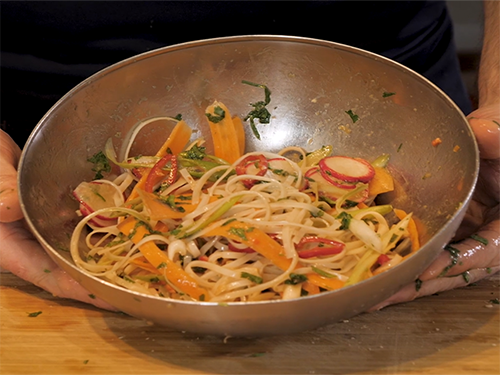
Start with the mixed salad leaves as your base in your largest mixing bowl. Add the julienned cucumber and carrots, distributing them evenly.

Layer in the sliced bell peppers and sugar snap peas, then scatter the chopped spring onions throughout. Add the fresh herbs last, as they’re delicate and bruise easily. Don’t add the dressing yet; this prevents premature wilting.

Step 8: Final Assembly and Serving 

Just before serving (this timing is crucial), add the toasted cashews to the salad. Pour the dressing around the edges of the bowl rather than directly onto the centre. This helps with even distribution.

Using clean hands or salad servers, gently toss everything together, lifting from the bottom and folding over the top. This technique ensures every ingredient gets coated without bruising delicate leaves. Taste a piece and adjust the seasoning if needed.

Step 9: Presentation and Service 

Transfer to your serving bowl or individual plates immediately. Use tongs to lift portions for the best presentation, allowing excess dressing to drain slightly so the salad doesn’t appear soggy. Garnish with a few extra mint leaves and cashews on top if desired. Serve with lime wedges on the side for those who prefer extra acidity.

Chef’s Tips for Perfect Results

Asian Cashew Nut Salad

These professional techniques will elevate your Asian cashew salad from good to exceptional, ensuring consistent results every time you make it.

Texture is key: Ensure all vegetables are cut uniformly for consistent texture and presentation. The julienned vegetables should be roughly the same size as matchsticks.

Dressing timing: Always dress the salad just before serving to prevent the vegetables from becoming soggy and maintain that essential crunch.

Cashew freshness: Store cashews in an airtight container to maintain their crispness. A quick toast in a dry pan will revive them if they’ve lost their crunch.

Herb handling: Wash herbs thoroughly and pat dry before adding to prevent excess moisture in your salad.

Nutritional Benefits

This healthy Asian salad is packed with nutrients. Cashews provide healthy fats, protein, and essential minerals like magnesium and zinc. The colourful vegetables deliver vitamin C, fibre, and antioxidants, whilst the herbs add anti-inflammatory compounds.

Per serving (approximate):

  • Calories: 285
  • Protein: 8g
  • Carbohydrates: 18g
  • Fat: 22g
  • Fibre: 4g

Serving Suggestions & Variations

With these creative adaptations, you can transform this versatile Asian cashew nut salad to suit different occasions, dietary needs, and seasonal ingredients.

As a main course: Add grilled chicken, prawns, or tofu to transform this side dish into a complete meal.

Vegetarian protein boost: Include edamame beans or extra cashews for additional protein.

Seasonal variations: Substitute vegetables based on availability. Try snap peas in spring, cherry tomatoes in summer, or thinly sliced apples in autumn.

Nut alternatives: Replace cashews with peanuts for a more traditional Thai-style salad or almonds for a different flavour profile.

Spice level: Adjust the chilli quantity to suit your preference, or add a pinch of chilli flakes for consistent heat distribution.

Storage & Make-Ahead Tips

Asian Cashew Nut Salad

Proper planning and storage techniques ensure your Asian cashew salad maintains its fresh, crispy texture and vibrant flavours even when prepared in advance.

Preparation: Vegetables can be prepped up to 24 hours in advance and stored separately in the refrigerator.

Dressing: The Asian dressing keeps well for up to one week in the fridge. Store in a sealed jar and shake before using.

Assembly: For best results, combine all ingredients just before serving. If you must assemble ahead, keep the cashews and dressing separate until the last moment.

Leftovers: This salad is best consumed fresh, but leftovers will be kept in the refrigerator for 1-2 days, though the cashews may lose some crunch.

Easy Asian Cashew Nut Salad Recipe

Asian Cashew Nut Salad

Prep Time: 10 minutes | Total Time: 15 minutes | Serves: 4 | Difficulty: Easy

Ingredients

For the Salad:

  • 200g roasted cashew nuts
  • 1 large cucumber, julienned
  • 2 large carrots, julienned
  • 1 red bell pepper, thinly sliced
  • 1 yellow bell pepper, thinly sliced
  • 200g sugar snap peas, trimmed
  • 4 spring onions, finely chopped
  • 50g fresh coriander, roughly chopped
  • 30g fresh mint leaves
  • 100g mixed salad leaves

For the Dressing:

  • 3 tbsp fresh lime juice
  • 2 tbsp rice vinegar
  • 2 tbsp soy sauce
  • 1 tbsp sesame oil
  • 1 tbsp honey
  • 1 clove garlic, minced
  • 1 tsp fresh ginger, grated
  • 1 red chilli, finely chopped (optional)

Instructions

  1. Prep vegetables: Julienne cucumber and carrots. Slice bell peppers thinly. Trim sugar snap peas.
  2. Toast cashews: Toast raw cashews in a dry pan for 3-4 minutes until golden (skip if pre-roasted).
  3. Make dressing: Whisk all dressing ingredients together. Taste and adjust.
  4. Assemble: Combine salad leaves, vegetables, and herbs in a large bowl.
  5. Finish: Add cashews and dressing just before serving. Toss gently and serve immediately.

Notes

  • Dress just before serving to maintain crunch
  • Store vegetables separately if prepping ahead
  • Substitute honey with maple syrup for a vegan option

Nutrition per serving: 285 calories | 8g protein | 18g carbs | 22g fat | 4g fibre

This Asian cashew nut salad proves healthy eating doesn’t mean sacrificing flavour. It’s a perfect blend of textures and bold Asian-inspired dressing that will become a regular feature on your dining table. Whether you’re looking for a quick lunch solution or an impressive side dish for dinner parties, this crunchy cashew salad delivers every time.

FAQs

1. Can I make this salad vegan?

Yes! For a completely plant-based Asian salad recipe, simply replace the honey in the dressing with maple syrup or agave nectar.

2. What if I can’t find rice vinegar?

White wine vinegar or apple cider vinegar are suitable substitutes, though they slightly alter the flavour profile.

3. How do I prevent the salad from going soggy?

Always dress the salad before serving, and ensure all vegetables are thoroughly dried after washing.

4. Can I use different nuts?

Absolutely! Peanuts, almonds, or pine nuts work wonderfully in this recipe, each bringing unique flavour and texture.

5. Is this salad gluten-free?

Use tamari instead of soy sauce to make this gluten-free while maintaining that essential umami flavour.

Share with our social media

Leave a Reply

Your email address will not be published. Required fields are marked *