Iraqi or Mesopotamian cuisine has a long history dating back 10,000 years—to the Sumerians, Akkadians, Babylonians, and Assyrians. As some boards found in ancient monuments in Iraq show recipes for preparing food that was prepared in temples during religious holidays. These boards are considered among the first cookbooks in the world.
Ancient Iraq, or Mesopotamia was the cradle of many advanced civilizations and highly advanced in all fields of knowledge—including the culinary arts. However, it was in the medieval era when Baghdad was the capital of the Abbasid Caliphate that Iraqi cuisine reached its peak. Today, the cuisine of Iraq reflects this rich heritage as well as strong influences from the culinary traditions of neighboring countries such as Turkey, Iran and Syria in the region. The following are some of the very popular and famous dishes in Iraq.
The history of Iraqi food goes back to a long time, when there were ancient Iraqi plates engraved with recipes for preparing some meals. The official one that was attended on the holidays, and therefore the Iraqi cuisine is one of the strongest in the world, and it has recently been affected by some other cuisines such as Turkish, Iranian and Syrian cuisine.
Add water to the bowl until the water starts to boil.
Add the biryani spices and chicken broth, and stir until the chicken broth is completely dissolved.
Add the rice and stir well, taking into account that the water level is higher than the rice.
After the rice has drunk most of the water, turn off the heat and cover the pot, stirring occasionally, until the rice is fully cooked.
In a frying pan on the stove, put a little oil and heat it.
Fry the onions in the oil until they turn golden and wilt.
Add the potatoes and fry them on the fire and stir.
Add chicken and stir.
Sprinkle with the biryani and stir.
Add the carrots, peas and the boiled corn before.
Stir well.
Remove the ingredients from the oil and set them aside.
In the meantime, the biryani rice is done, remove it from the heat.
Add the chicken and vegetable mixture to it.
In a frying pan, fry the almonds until they turn golden.
Add two tablespoons of raisins and stir until soft.
Pour the raisin and almond mixture over the biryani and stir.
In a serving dish, put the biryani.
Decorate the face with almonds and apricots.
Dolma
httpss://www.youtube.com/watch?v=PUCgBaQe1g8
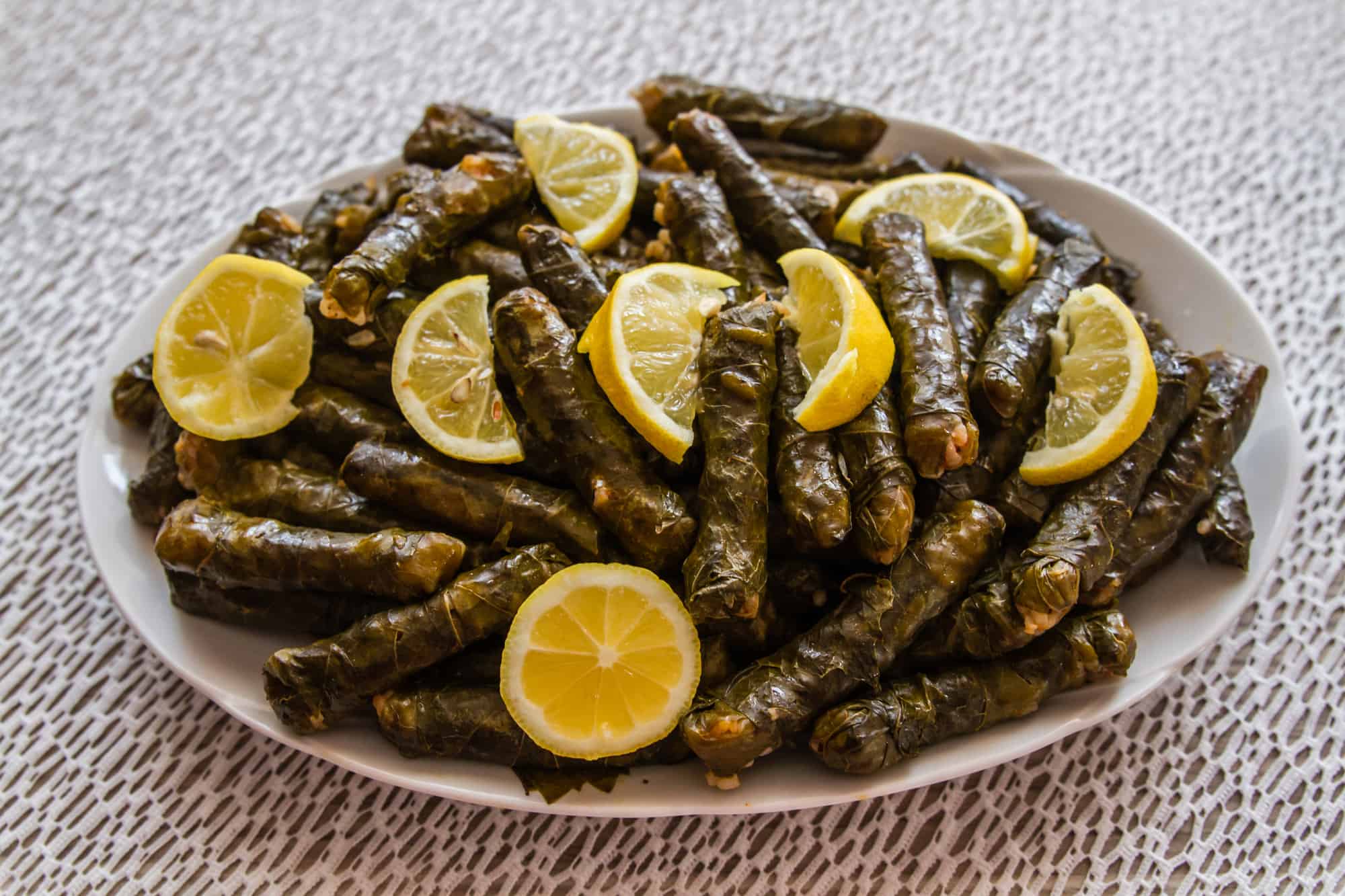
Grape leaves or Dolma is one of the important dishes in the Iraqi cuisine. It is widely spread in the Middle East; however, the Iraqi version is very rich and delicious.
Dolma filling ingredients
You can make the same ingredients, but without meat for vegetarians, and chop together the pulp of zucchini, celery, dill and leeks, each according to his taste, but with the meat dolma, I do not put dill.
3 cups of washed rice and equal number of water cups for the dolma
3 cups minced lamb fat
2 tablespoons tomato paste
1 tomato, peeled and finely chopped
2 cups minced metal
1 finely chopped onion
A pinch of salt
¼ teaspoon of lemon salt
A pinch of black pepper
A pinch of red pepper
A pinch of cumin A pinch of cardamom
A pinch of mixed spices
A pinch of nutmeg
2 teaspoons of sugar
A pinch of tandoori powder
2 tablespoons pomegranate molasses
Preparation
Mix the filling ingredients together and taste it. It should be sour, sweet and spicy.
Put the vegetable oil on the filling ingredients and mix.
Add the vegetables for the filling; the small zucchini, the small tomato, hollowed out inside, the 3 soft pitted cucumbers, the carrot, one small potato, the soft onions.
After removing its head, soak the zucchini and onions in boiling water for a quarter of an hour to separate the onion parts for stuffing and half the intensity of boiling.
Leaves the amount of grape immersed in boiling water for 10 minutes.
Add the pinch of salt, and black pepper, tandoori, sugar, cumin, pomegranate molasses and 3 cups of boiling water.
Add the eggplant, cucumbers, peppers, carrots, potatoes, and finally the tomato and the last layer is the chard or grape leaves and put it on the stove for 10 minutes until the meat is half ready.
Pour the sauce and put a plate on it so that the vegetables, do not break or ruin the shape of the dolma.
Increase the temperature for a quarter of an hour, then reduce it to the middle and leave it until its water dries up and turn off the stove.
Leave it for half an hour before serving so that it becomes solid and when serving, heat the oil and add it over the dolma before pouring it and turn it into a tray or a wide shallow plate
Iraqi Kebab
httpss://www.youtube.com/watch?v=U01O1JNA0XY
In the Iraqi kebab, nothing is used other than lamb, or thigh meat that is free of nerves, provided that the lamb barbeque technique is added to it. It can be seasoned with some chopped onions, celery and parsley as desired.
Ingredients
1 kg of finely minced lamb.
¼ kg of lamb meat.
1 tablespoon of chopped parsley.
1 tablespoon finely chopped onion.
1 tomato, cut into quarters.
4 onions, halves, chopped onions.
2 tablespoons of chopped parsley and celery.
¼ teaspoon of sumac.
1 teaspoon salt
Preparation
Mix the meat with the meat and the salt and rub it well with the hand with water.
Rub the meat with the hand, wet with water and install it on a metal skewer of aluminum or stainless-steel grilling on charcoal, grill the onion and tomato halves and grill on charcoal.
Season the onion wings with sumac and preferably green onions In its season, it is served on Iraqi tanour bread with raisin juice or black grapes and mint.
Iraqi Kabsa
Ingredients
2 chickens cut into quarters
5 cups of rice soaked for about half an hour.
5 onions, cut into wings.
1 teaspoon of mixed spices.
1 teaspoon of turmeric.
1 teaspoon of salt.
¼ teaspoon of black pepper.
¼ cup of water.
2 tablespoons of oil.
4 chicken broth cubes.
6 cardamom cloves.
6 garlic cloves.
Preparation
Wash the chicken well and cut it into four pieces.
In a deep pot boil the chicken in boiling water, on the stove.
While boiling, add cardamom, cloves, chicken broth and salt.
After the chicken is done, remove it from the boiling water and set it aside.
Add the rice to the boiling water.
After boiling, cover the pot and turn the heat down. Leave the rice until it is almost done
Meanwhile, put another pot over the stove and heat the oil in it.
Add the onions, spices and turmeric and stir until the onions soften.
Add the chicken and cover the pot.
Leave the pot on a medium heat for half an hour.
Add some water to the chicken.
After half an hour, raise the chicken with the mixture and place it on top of the rice.
Cover the pot with aluminum foil and leave it on a low heat for 10 minutes, then remove it from the heat and serve hot.
Iraqi Elgaima
Ingredients:
1 kg of chickpeas
½ kg of lamb or beef.
200 g of chopped onions.
200 g tomato paste.
100 grams of sheep fat.
1 tablespoon of ground cumin.
1 tablespoon of ground cinnamon.
1 tablespoon of sweet spice (known in Iraq as kebab spices).
2 tablespoons of dried black lemon, (Nomi Basra).
Chickpea flour is added to the broth according to its density
Preparation
Fry the onions in abundant oil, then add the fat to it and stir with it a little.
Add the meat and stir for a minute, then add the chickpeas after being soaked in water overnight.
Put on the stove until the chickpeas are mashed with the meat, then perform the manual mashing process after removing the pot from the stove until the meat mixes with the chickpeas, so that there is no trace of meat after mashing.
Then put the pot back on the fire and add a quantity of water to it, then add the paste, spices and dry lemon and keep it on a low heat with constant stirring.
Do not to leave the pot on the fire without moving it, lest it burn from the bottom and lose its flavor.
It is eaten with white rice.
Bulgur Kibbeh
httpss://www.youtube.com/watch?v=F-N-XYX1oYM
Ingredients
1 kg of fine bulgur.
1 kg of lean meat (free of fat and grease).
1 tablespoon of salt, cinnamon, cardamom, black pepper (all to taste).
1 small onion.
For the filling
1 kg of minced meat.
4 large chopped onions.
1 tablespoon of salt and pepper.
A pinch of cardamom.
A pinch of cinnamon.
Preparation
For making the outer filling
Grind the meat and bulgur with onions in a special machine, the process is repeated several times, and a cup of water is added to the previous ingredients whenever needed.
Knead the dough well until it becomes easy and soft.
For making the inner filling
Put a little oil and fry the onions and meat until they are cooked and put a little salt, pepper, cardamom and cinnamon.
For making kibbeh templates
Take a certain amount of the outer filling and make a hole in the inside, then put the inner filling inside it and closed well and it must be in the shape of an oval.
After making all the ingredients, fry the kibbeh kernels in hot oil. A quantity can be placed in the freezer for the next time, provided that it is not fried.
Chicken Maglouba with Eggplant
httpss://www.youtube.com/watch?v=CGWCjg1oe9M
Ingredients
Sliced and boiled chicken.
½ an onion.
A sprinkle of salt and red pepper powder.
3 potatoes cut into circles and fried.
3 eggplant cut into circles and fried.
2 onions cut into circles and fried
2 cups of soaked rice.
Preparation
Wash the chicken and drain it, bring a pot put the chicken and reserve the water for cooking the rice.
Squeeze half a lemon on the chicken pieces and leave it for 5 minutes and then fry it in oil until it turns red.
Layer the chicken, top with onions, potatoes, and eggplants.
Cook plain rice with the water of the chicken, add the tomato sauce paste and leave it until it absorbs the water and before it is wasted, pour it over the layers of chicken and eggplant.
If the rice is dry, sprinkle it with a very small amount of tomato juice and leave them on a low heat.
Increase the heat and leave the pot for a few minutes, and then flip it in a large plate with garnish according to taste.
Kofta with Iraqi Tahini
Ingredients
½ kg of finely chopped meat.
1 large onion.
A bunch of parsley.
1 teaspoon of salt, pepper and cinnamon.
For the sauce
1 cup of vinegar.
3/4 cup of tahini.
¼ cup of lemon juice.
A cup of water.
½ cup of butter or vegetable oil.
½ cup of pine nuts.
Preparation
Peel the onion and chop very finely, as well as the parsley after washing it.
Mix the meat, parsley and onions with salt and spices, knead well and put the meat in a tray.
Put the vinegar, water, lemon and tahini with salt in a bowl and mix until it becomes sticky.
Add the tahini sauce to the kofta and sprinkle the pine nuts over it.
Place the tray in a hot oven for half an hour, serve it hot and eat it with fried potatoes.
Al-Qaisi
Ingredients
1 cup dry apricots (soaked).
500 g of meat .
½ cup of almonds and currants.
½ cup of sugar.
2 tablespoons of fat.
Preparation
Cut the meat and mix in the fat well.
Wash the dried apricots and stir with the meat for several minutes.
Add water to it so that it immerses it and leave it to boil until the meat is cooked.
Add sugar to the apricots.
Fry the almonds until they turn red, then add the currants and stir with it a little and add them to the pot.
Leave on fire long enough until it is cooked and enough broth remains – served with rice.
Elgaimawith Saffron and Rice
httpss://www.youtube.com/watch?v=sRqiVCb4J6U
Ingredients:
500 g of finely minced lamb (for easy mashing).
2 chopped onions.
1 cup of chopped chickpeas soaked in water for 8 hours.
3 diced tomatoes.
2 tablespoons tomato paste (tomato sauce).
2 tablespoons of mixed spices.
1 teaspoon ground cardamom and salt.
1 tablespoon of crushed black lemon (Nomi Basra).
3 tablespoons of ghee.
1 teaspoon saffron, soaked in half a cup of warm water.
1 cup of water.
Preparation
put the ghee in a pot on the fire, then add the chopped onions until their color changes, we start adding meat, spices, cardamom and salt until it changes color and ripens.
Add the chopped tomatoes and tomato paste and keep stirring until the mixture mixes.
Then, add the chopped chickpeas to the mixture and stir together until the water is absorbed.
Add about a cup of water to the mixture and start beating the mixture with a wooden spoon.
try to mash the mixture and leave it on a low heat. When it begins to become sticky, add the crushed black lemon to it and stir it.
Take the saffron in half a cup of warm water, dissolve it and stir also.
Then, mash it again with the wooden spoon.
Leave it on a very low heat until it thickens, then serve it with white basmati rice with saffron.
Iraqi Rice Kibbeh
Ingredients
3 cups of short grain rice, soaked for an hour.
500 g of minced meat with a little fat.
1 large onion, finely chopped.
1 potato finely chopped and fried.
1 teaspoon of turmeric.
1 tablespoon of crushed black lemon (Nomi Basra).
1 tablespoon of mixed spices.
¼ teaspoon of black pepper.
Preparation
Cook the rice on a medium heat with the addition of water 1 cm higher than the rice until it is cooked and stirred to hold and knead by hand or a food processor.
Put a frying pan on the stove, add a little oil, add the minced meat and basil, and stir over the heat until it is cooked and the water evaporates.
Add the fried potatoes, spices and ground lemon and stir until the filling is combined.
Roll the dough into an equal size as the palm of the hand, open it, stuff it, gather its edges, and roll into discs or ovals.
Fry in hot oil until golden brown, stack on a plate and serve with salad and Iraqi sauce.
Meat Casserole with Onions
Ingredients
2 tablespoons of vegetable oil.
1 kg of meat cut into cubes.
2 sliced onions.
4 potatoes cut into slices.
2 tablespoon of olives.
1 teaspoon of Seven Spices .
1 teaspoon of ground cinnamon.
1 teaspoon of salt.
½ teaspoon of black pepper.
3 tablespoons of soy sauce.
1 cup of beef broth.
3 small tomatoes.
Preparation
In a frying pan over medium heat, heat the vegetable oil and fry the onions until softened.
Add meat and season with salt, black pepper, cinnamon and the Seven Spices.
Leave the mixture on a medium heat until it is cooked, stirring occasionally, then add the potatoes, soy sauce and half the amount of meat broth.
Leave the mixture over a medium heat, stirring occasionally, until it boils.
Pour the mixture into the tagine dish, then pour the remaining meat broth and spread the olives and tomatoes over the casserole.
Put the casserole into a preheated oven at 180 ° C for about 30 minutes.
Take the casserole out of the oven and serve it hot on your plate.
Masgouf
One of the national main dishes of Iraq, that consists of grilled fish in the Iraqi way. Usually served with different types of salads, spicy Iraqi pickled grapes, fresh green onions and spicy tanour bread.
Preparation
It consists of live or freshly caught fish, slashed from the back along the length of the fish up to its head. Then, it is opened, and the inside is cleaned with water and a bit of salt is sprinkled on it, and two or three holes are made in the fish’s skin, for the place of hanging pegs. The types of fish used for Masgouf are usually river fish.
For grilling
A fire is made of willow wood in a circular shape and wedges of fine wood or iron are placed at a height equal to the width of the fish on the outer circumference of the fire. He brings it closer or away from the ring of the fish, and after the belly of the fish has matured, he raises the fish from the stakes and puts the back of the fish on a little wood ember to grill the fish’s outer skin.
Grilled fish is served with different types of salads, spicy Iraqi pickled grapes, fresh green onions and spicy tanour bread. Masgouf is eaten by hand without a fork and knife, it is also recommended to end the dish with a cup of tea.
Masmouta
An ancient Iraqi popular dish that was unique to the southern provinces of Iraq, and then moved to some other provinces. It is a dried fish soup, especially popular on the morning of Eid al-Fitr.
Preparation
Drying
In which the fish is cleaned, the scales are removed from it and a large amount of salt is sprinkled on it, and it is hung for several days on shade ropes, or under the sun until it dries completely, by hanging it on a rope after each group of it is collected with strings in the form of a necklace for the small fish. The big fish are usually hanged individually.
Cooking
There are different ways to cook it, where the fish is washed and cut, then the necessary ingredients for preparing the mascot, such as oil, water, onions, garlic and spices, are prepared. Then, they are placed on the stove, as they produce a yellow-colored soup, served with hot bread, pickles, fresh green onions, dates, rashi, yogurt, sour noumi, and others.
Desserts
Najaf Sweet Carrots
Ingredients
750 g of shredded carrots.
1 cup of water.
½ cup of sugar.
1 teaspoon vanilla.
1 teaspoon lemon juice.
1 tablespoon of butter.
Preparation
In a saucepan, mix carrots with water. Put the pot on a medium to low heat and stir the carrots until they get tender.
Add sugar and keep stirring until it dissolves.
Add vanilla and citric acid. Keep stirring until the mixture dries up.
Add the butter and stir until the ingredients are combined. You can replace butter with any other natural ingredient.
Pour the sweetness of the carrots into serving glasses and serve it on your trip.
Znoud Al-Sitt (Lady’s Fingers)
Ingredients
1 liter of liquid milk.
1 tablespoon of rose water.
10 tablespoons of corn starch.
6 teaspoons of sugar.
500 grams of Baklava dough.
3 cups of vegetable oil.
1 cup of melted ghee.
1½ cups of sugar syrup.
½ cup of vegetable oil.
For decoration
1 cup of ground pistachios.
Preparation
In a saucepan, put the milk, orange rose water, cornstarch and sugar. Stir well on cold until the dry ingredients are dissolved.
Place the saucepan over a medium heat and stir until the mixture thickens.
Avoid making mistakes in preparing the cream that lead to its failure in order to always ensure the best result.
Remove the pot from the heat and let the cream cool completely.
Cut the baklava dough lengthwise until you get two equal parts.
Take a piece of dough, put a tablespoon of the filling on it and roll it into a roll with the ends closed.
Put it in an oven tray. Repeat the process until the quantity is all used up.
Grease the six fingers with ghee and oil.
Put the tray in the preheated oven at 180 ° C for 20 minutes, until it becomes golden in color.
Remove the tray from the oven, then water the six fingers with sugar syrup and decorate with pistachios.
Leave it to cool before serving it.
Iraqi klijah
Ingredients
For the dough
250 g of butter at room temperature.
1 cup of powdered sugar.
¼ cup vegetable oil.
¼ teaspoon of salt.
two teaspoons of vanilla.
1 egg.
1 teaspoon of crushed Mahlab.
4 cups of flour.
½ teaspoon of baking powder.
For the filling
700 g of crushed dates.
2 tablespoons of sesame.
½ tablespoons Cinnamon.
2 tablespoons of vegetable oil.
For the surface
400 grams of sesame.
Preparation
For the dough
Put the butter in a bowl, add sugar, oil, salt and vanilla.
Mix the ingredients until you get a creamy texture.
Add eggs, orange rose water and Mahlab and stir well until the ingredients are homogeneous.
Gradually add flour and baking powder and mix well.
Knead the ingredients a little until you get a soft and cohesive dough.
For the filling
Put in a bowl of dates, 2 tablespoons of sesame, cinnamon and oil and knead until the ingredients are homogeneous.
Form long fingers from the date paste and set aside on a tray.
Take a medium amount of the dough, and roll it out on a hard surface in a rectangular shape.
Put a date finger on the tip and roll the dough into a roll.
Repeat this process until supplies run out.
Cut the fingers into the size you want, dip the pieces of dough in sesame and put it in an oven tray.
Enter the tray into a preheated oven at 180°C until it is cooked and browned.
Shakarlma
One of the most famous types of Iraqi sweets that are usually prepared on official occasions and holidays, and then it was launched to Turkey, Syria and Egypt with different names. It is served with a cup of tea or a cup of coffee. It is characterized by being easy to prepare, delicious in taste, and light on the stomach.
Ingredients
1½ cup sugar.
1½ cup oil.
3 cups flour.
1 teaspoon baking powder.
½ teaspoon cardamom powder.
½ teaspoon vanilla.
½ cup whole pine nuts, for garnish.
Preparation
Mix the dry ingredients in one bowl, and the liquid ingredients in another bowl, stirring for each bowl.
Add the ingredients to each other in one bowl and stir well.
Shape the dough into round balls, and put a pine seed on top of each. Then place the balls on a greased baking tray, spaced apart.
Put it in the oven at 180°C for 12 minutes, until it is cooked and firm.
Drinks
Skenjabeil Drink
One of the most famous Ramadan drinks in Iraq, it is widely spread in Iraq in all seasons.
Ingredients
1 cup of sugar.
5 leaves of fresh mint.
1 cup of water.
½ cup rose water.
Preparation
Put a pot on the stove.
Put vinegar, sugar and water.
Tie the mint bouquet with a thread and place it on top of the mixture.
Cover the pot and leave it on the fire until it boils.
Leave it to boil for a quarter to an hour, taking into account that the mixture does not evaporate and that the texture begins to become heavy and become like the consistency of syrup.
Lift the pot from the fire.
Add rose water.
Leave the mixture to cool.
Pour it into a glass bottle to serve with, noting that it is diluted upon serving, either with water or the ship’s drink, with a percentage of
Add 1 cup of the drink you prepared for 6 cups of water or seven up depending on what you are going to add.


 Maha Yassin
 Miranne Khaled